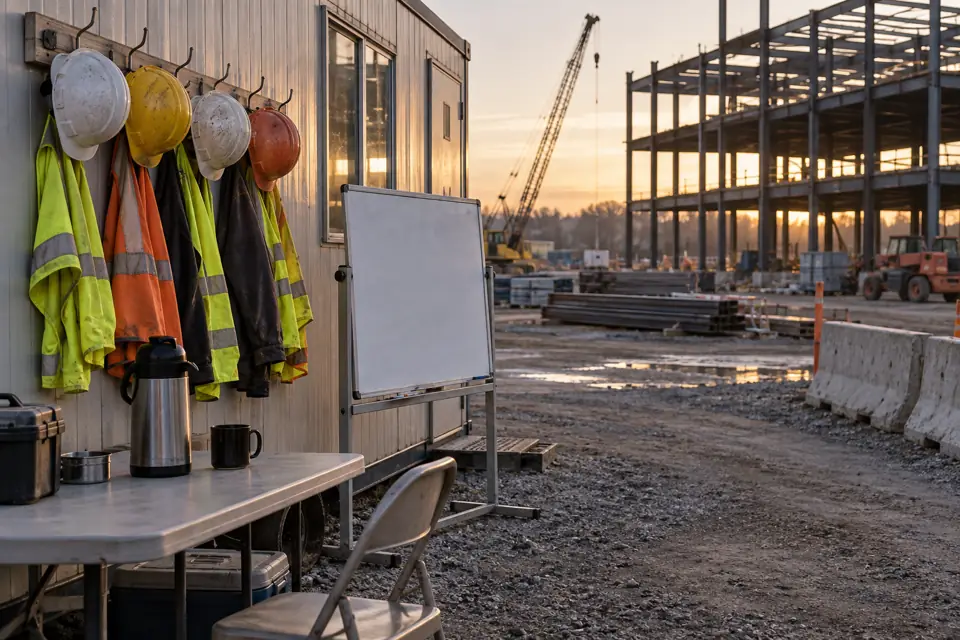
Construction jobsite culture is the set of habits, expectations and unwritten rules that decide how a crew works when nobody from the office is watching. On commercial projects with a dozen or more trades on site at once, that culture shows up in safety, in quality and in whether good people come back for the next job.
Safety That People Actually Believe In
Every commercial builder has a safety manual. The difference on a strong site is that the crew treats it as the way work gets done rather than paperwork for an inspector. Superintendents who stop work for an unsafe condition without blaming anyone, and who thank the person who raised it, build that trust quickly.
Falls remain the hazard OSHA focuses on most in construction, and the agency runs an annual National Safety Stand-Down to Prevent Falls in Construction. Many contractors use that week, and their own daily huddles, to talk openly about near misses. A near miss reported is a lesson learned for free.
Respect Across Trades
A commercial job is a shared workplace. The electrician needs the framer to finish on time, the drywall crew needs the mechanical rough-in inspected, and everyone needs the site kept clean enough to work. When one trade treats another as an obstacle, schedules slip and quality suffers.
The best sites make coordination a daily habit. A short morning meeting where each foreman says what they need from the others, and what they will hand over that day, prevents more problems than any software.
Clear Plans and Honest Schedules
Crews lose heart when the plan changes every morning or when the schedule on the wall has nothing to do with reality. Strong project teams publish a look-ahead schedule, update it weekly and admit when something has moved. People will work hard to recover a delay they understand. They will not work hard for a schedule they know is fiction.
Looking After the Whole Person
The industry has started to talk more openly about mental health. Groups such as the Construction Industry Alliance for Suicide Prevention provide toolbox talks and resources that contractors can use on site, and many firms now include mental health in their regular safety meetings. A foreman who notices that someone is struggling, and knows where to point them, can make a real difference.
Practical things matter too: clean facilities, shade and water on hot days, reasonable start times when the schedule allows, and pay that arrives correctly and on time.
A Path Forward for the Crew
People stay with builders who invest in them. Apprenticeship programs, paid training, and a visible route from laborer to lead to foreman to superintendent give a crew member a reason to stay. When owners see the same superintendent and foremen on every project a builder runs, it is usually a sign that the company treats its people well.
Why Owners Should Care
For a project owner, jobsite culture is not a soft topic. A builder with a stable, well-led crew tends to deliver better quality, fewer safety incidents and fewer surprises. When you interview commercial builders, ask how long their superintendents have been with the company, how they handle safety concerns and how they train new hires. The answers say a lot about the job you are about to buy.
Are you a commercial contractor proud of how your crews work? Join our builder network. If you are planning a project, get matched with licensed commercial builders who fit it.