Tenant Improvement Allowance: Coverage, Negotiation and a Worked Example
A tenant improvement allowance is money a landlord contributes toward building out leased space, usually stated per square foot and paid against invoices. It is one of three common ways to fund a fit-out, with turnkey build-outs and rent abatement. Cushman & Wakefield puts the 2026 U.S. average office fit-out cost at $162 per square foot.
What a tenant improvement allowance is
When a business leases commercial space, the space is rarely ready to use. Someone has to pay for walls, ceilings, lighting, ductwork, restrooms, finishes and code upgrades. A tenant improvement allowance, often shortened to TI allowance or TIA, is the landlord's contribution to that cost, written into the lease as a fixed amount, usually expressed per square foot of the premises. The landlord gets a tenant and a better building; the tenant gets help with an expense that can exceed a year's rent.
Tenant improvements: Construction inside leased space to make it fit for a particular tenant: partitions, ceilings, lighting, power and data, HVAC distribution, plumbing fixtures, finishes and any code-required upgrades.
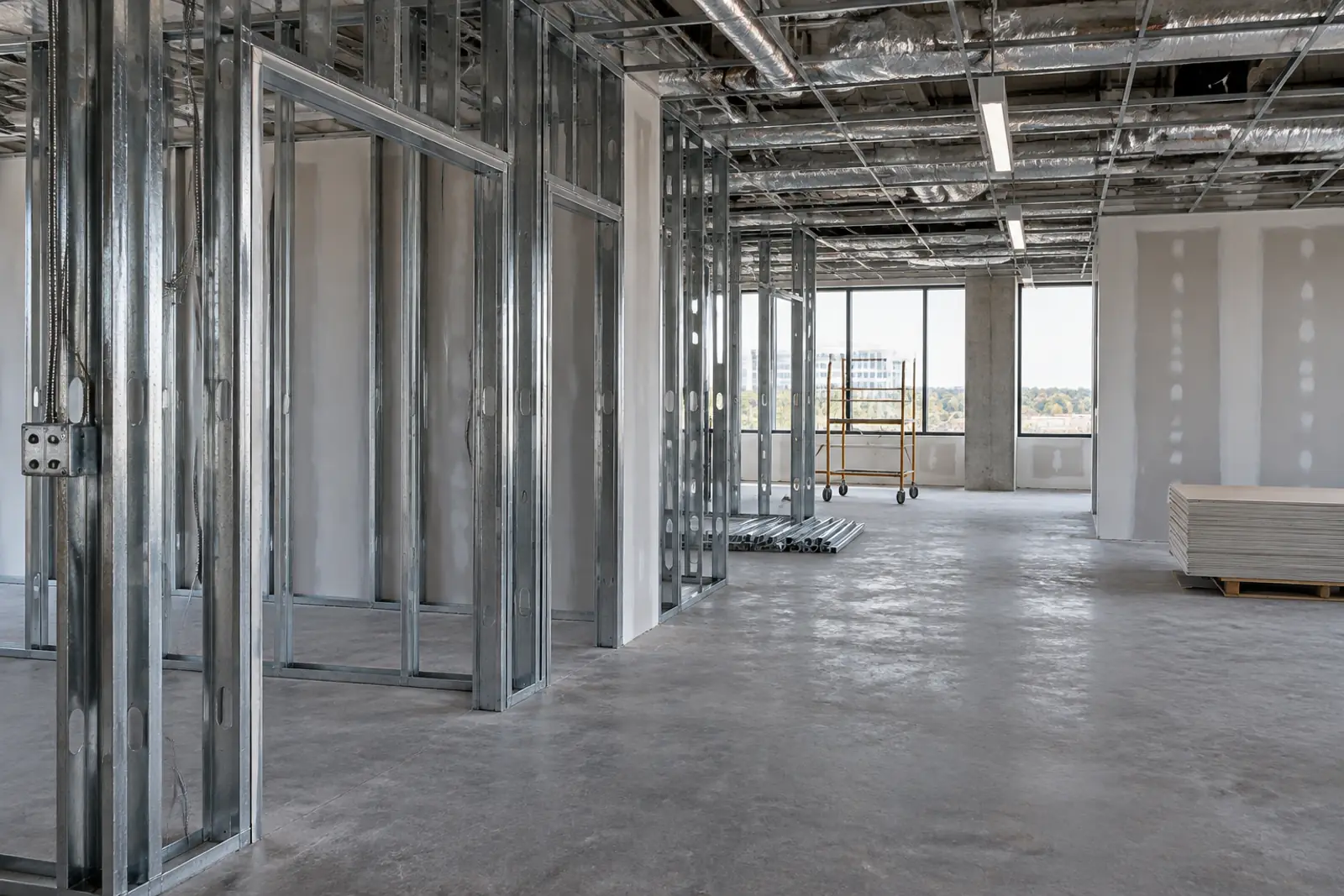
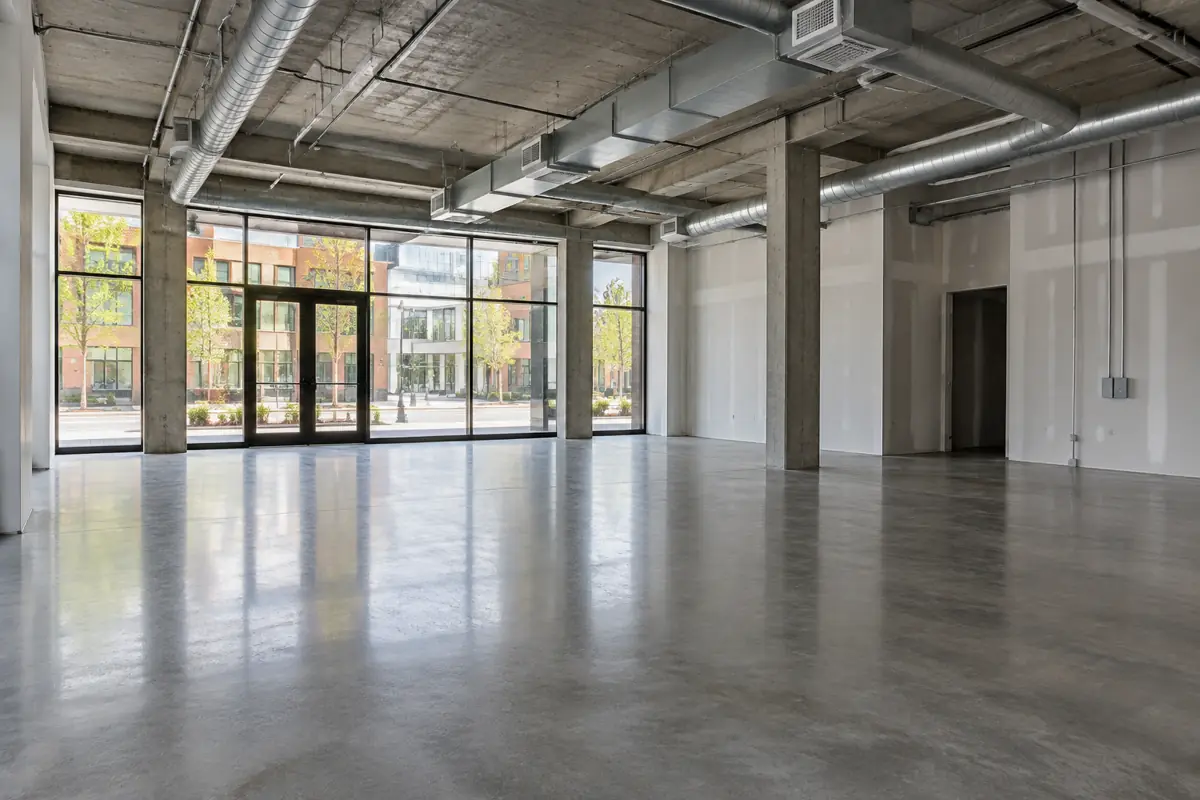
Shell, warm shell and second-generation space: A shell has structure, envelope and base utilities only. A warm shell or vanilla box adds basic services such as restrooms, HVAC and finished perimeter walls. Second-generation space was built out for a previous tenant and may be reusable in part.
Turnkey build-out: The landlord designs and builds the space to an agreed plan and hands over keys; the tenant pays only for changes beyond that plan.
Rent abatement: A period of free or reduced rent, often used alongside or instead of an allowance to compensate the tenant for building out the space.
The starting condition of the space decides how far an allowance goes. The same dollar figure can fully fund a refresh of second-generation offices and cover only a fraction of a restaurant built from a cold shell. Before negotiating, get a test fit and a budget for your specific space; our tenant improvement contractors page explains how builders price that work.
What the allowance usually covers
There is no legal standard for what a tenant improvement allowance pays for. The lease decides, and the language varies widely between landlords. The table shows how common lease language tends to treat each category; always read your own draft lease line by line.
| Cost item | Commonly eligible for the allowance? | Notes |
|---|---|---|
| Partitions, doors, ceilings, flooring, paint | Usually yes | Core of most tenant improvement scopes |
| HVAC distribution, lighting, power, plumbing fixtures | Usually yes | Base building systems are often the landlord's cost outside the allowance |
| Code upgrades triggered by the tenant's work | Varies | Negotiate which upgrades are base building and which are tenant cost |
| Architecture, engineering, permits, project management | Often, subject to a cap | Many leases cap soft costs as a share of the allowance |
| Data and phone cabling, security, audiovisual | Varies | Sometimes allowed, sometimes excluded as tenant personal property |
| Furniture, signage, moving costs | Often excluded | Some leases allow a separate moving or furniture allowance |
| Landlord supervision or management fee | Varies | Check whether it is deducted from the allowance |
General description of common lease drafting, not a standard. Your lease controls.
Two lease clauses deserve particular attention. The first is any cap on soft costs, which limits how much of the allowance can pay for design, engineering, permits and project management. The second is whether unused allowance can be applied to rent or other costs, or is simply forfeited after a deadline. Both can shift tens of thousands of dollars between landlord and tenant without changing the headline amount.
Turnkey vs allowance vs rent abatement
Landlords can fund a build-out in three main ways, and many leases combine them. The right mix depends on who you want controlling design and construction, who carries the risk of overruns and how much cash you have at the start of the lease.
| Feature | TI allowance | Turnkey | Rent abatement |
|---|---|---|---|
| Who manages design and construction | Usually tenant | Landlord | Tenant |
| Who carries cost overruns | Tenant, above the allowance | Landlord, within the agreed plan | Tenant |
| Tenant control over specification | High | Limited to agreed plan | High |
| When the tenant gets the value | During construction, as draws | At handover | Over the free-rent months |
| Main tenant risk | Allowance too small or slow to disburse | Plan built to minimum standard | Large cash outlay up front |
Many leases combine methods, for example an allowance plus a few months of abatement.
A tenant with strong design requirements, such as a medical practice or restaurant, usually prefers an allowance and its own builder, so it controls the specification. A tenant that wants certainty and little involvement may prefer turnkey, accepting that the landlord will build to the agreed plan and no further. Rent abatement helps cash flow later in the year rather than paying construction invoices now, so it suits tenants who can finance the build-out themselves. See medical office construction and restaurant build-out contractors for sector-specific scopes.
How tenant improvement allowances are negotiated
Allowances are a market price like rent, set by supply, demand and the cost of construction. Published evidence points in one direction for 2026. Cushman & Wakefield's 2026 Americas Office Fit Out Cost Guide reports that Class A tenant improvement allowances are increasing as landlords compete for high-credit tenants and respond to higher build-out costs, and that demand is concentrated in trophy and Class A buildings. The same guide notes the office development pipeline at a 25-year low.
Build-out costs keep rising. The guide puts the U.S. average office fit-out at $162 per square foot and the Americas average at $149, up 5.5% from the prior edition, with San Francisco the most expensive market at $228. It also found that 79% of general contractors expect labor and material costs to rise over the next six months. Electrical work is the largest single share of fit-out cost, at 24%.
- Amount and basis. Per rentable or usable square foot, and whether it is fixed or tied to a budget.
- Eligible costs. Hard costs only, or soft costs, cabling and furniture too, and any caps.
- Disbursement. Progress draws against invoices and lien waivers, or a lump sum after completion and a certificate of occupancy.
- Deadline. The date by which the allowance must be used, and what happens to any unused balance.
- Construction management fee. Whether the landlord charges a supervision fee on tenant-managed work, and how much.
- Approvals. Landlord approval of plans, contractors and insurance, with response times.
- Base building work. Which code or system upgrades are the landlord's cost outside the allowance.
- Restoration. Whether improvements must be removed at lease end, and at whose cost.
Context helps in negotiation. Census data show private office construction spending, excluding data centers, fell 9.4% in the year to August 2026, and annual office spending in the latest twelve months was well below 2019, while health care and commercial building spending rose. Less new office supply can mean landlords of existing buildings compete harder for tenants with allowances; the commercial construction spending tracker follows these trends monthly.
Billions of dollars; latest period September 2025 to August 2026
Source: U.S. Census Bureau, Value of Construction Put in Place (August 2026 release), via CB&C Research
Why the same allowance buys less each year
An allowance is a fixed number in a lease that may have been negotiated months before construction starts, while the trades that build interiors keep raising prices. BLS producer price indexes for nonresidential work by specialty contractors show how far those prices have moved since January 2020: electrical contractors up 39.1%, plumbing and HVAC contractors 34.9%, concrete contractors 43.5% and roofing contractors 66.5%. Copper wire and cable, a large input to electrical work, rose 27.2% in the 12 months to August 2026 alone.
BLS producer price indexes for nonresidential building work, percent change
Source: U.S. Bureau of Labor Statistics, Producer Price Indexes (August 2026 release), via CB&C Research
If your lease is signed well before the build-out, ask for the allowance to be confirmed against a current builder estimate, or build escalation into the amount. The CB&C Construction Price Index tracks these series each month, and our cost per square foot guide explains how to escalate an older estimate.
Tax rules that apply to TI allowances
Retail allowances under Section 110. Under 26 U.S.C. 110, a lessee's gross income does not include cash or rent reductions received from a lessor under a short-term lease of retail space for constructing or improving qualified long-term real property, up to the amount the lessee actually spends. A short-term lease means 15 years or less, retail space means space used to sell tangible goods or services to the general public, and the improvements must revert to the lessor at the end of the lease. The improvements are then treated as the lessor's nonresidential real property.
Qualified improvement property. Section 168(e)(6) defines qualified improvement property as an improvement made by the taxpayer to an interior portion of a nonresidential building after the building was first placed in service, excluding enlargements, elevators and escalators, and the internal structural framework. IRS Publication 946 lists qualified improvement property placed in service after 2017 as 15-year property and lets taxpayers elect to treat it as section 179 property; the section 179 deduction for tax years beginning in 2026 is limited to $2,560,000, reduced when qualifying purchases exceed $4,090,000.
Special depreciation allowance. Publication 946 explains that P.L. 119-21, the One Big Beautiful Bill Act, reinstated a 100% special depreciation allowance for certain qualified property acquired and placed in service after January 19, 2025, with an election to take 40% instead in the first tax year ending after that date. Whether a particular improvement qualifies is a question for your adviser.
Landlord-funded improvements at lease end. Under Section 168(i)(8)(B), an improvement made by a lessor for a lessee that the lessor irrevocably disposes of or abandons when the lease ends is treated as disposed of at that time for purposes of gain or loss.
| Provision | What it says | Who it affects |
|---|---|---|
| 26 U.S.C. 110 | Excludes from a lessee's income allowances for qualified long-term real property in retail space under leases of 15 years or less, up to amounts spent | Retail tenants |
| 26 U.S.C. 168(e)(6) | Defines qualified improvement property: interior improvements to nonresidential buildings, excluding enlargements, elevators, escalators and internal structural framework | Whoever makes the improvement |
| IRS Publication 946 | Lists qualified improvement property placed in service after 2017 as 15-year property; section 179 limit $2,560,000 for 2026 | Taxpayer that owns the improvement |
| P.L. 119-21 (per Publication 946) | Reinstated 100% special depreciation allowance for certain qualified property acquired and placed in service after January 19, 2025 | Taxpayer that owns qualified property |
| 26 U.S.C. 168(i)(8)(B) | Lessor improvements abandoned at lease end treated as disposed of for gain or loss | Landlords |
Summary of statutory text and IRS guidance as opened October 2026. Not tax advice.
Worked example: comparing three offers
The example below is an illustration with hypothetical numbers, not market data. It shows how to compare three landlord offers for the same 8,000 square foot office. The build-out budget uses the Cushman & Wakefield 2026 U.S. average fit-out cost of $162 per square foot as a placeholder, giving $1,296,000. The allowances, rent of $40 per square foot per year and 8% amortization rate are invented for the example.
| Line | A: allowance only | B: allowance plus free rent | C: larger allowance, amortized |
|---|---|---|---|
| Allowance per sq ft | $60 | $40 | $80 |
| Allowance total | $480,000 | $320,000 | $640,000 |
| Free rent | None | 6 months at $40 per sq ft per year, worth $160,000 | None |
| Tenant cash for a $1,296,000 build-out | $816,000 | $976,000 | $656,000 |
| Added rent to repay extra allowance | None | None | $1,941.24 a month, $23,294.90 a year, $2.91 per sq ft per year, for 10 years at 8% |
| Total added rent over the term | None | None | $232,948.98 |
Illustration, not market data. Build-out budget uses the Cushman & Wakefield 2026 U.S. average of $162 per sq ft times 8,000 sq ft; allowances, rent and rate are hypothetical.
Source: [1]
Offer A leaves the tenant to fund $816,000. Offer B gives the same total landlord concession as A, $480,000, but only $320,000 arrives during construction, so the tenant needs $976,000 up front and gets the rest back as six months of free rent. Offer C funds the most construction, cutting the tenant's cash need to $656,000, but adds $2.91 per square foot to the annual rent for ten years, or $232,948.98 in total. Which is best depends on the tenant's cash, cost of capital and how long it expects to stay.
From letter of intent to reimbursement
- Test fit and budget before the letter of intent.
An architect's test fit and a builder's budget tell you what allowance to ask for.
- Negotiate the work letter.
The work letter, usually an exhibit to the lease, sets the allowance, eligible costs, approvals, schedule and disbursement.
- Design and landlord approval.
Construction documents go to the landlord for approval, then to the building department. See our commercial building permits guide.
- Select the builder.
Many leases require landlord approval of the contractor; vet bidders with our guide on how to choose a commercial contractor.
- Record the Notice of Commencement in Florida.
Under Fla. Stat. 713.13, a lessee who contracts for improvements is an owner for lien purposes and must be listed as the owner, with a statement that the interest is a leasehold.
- Draw the allowance.
Submit invoices, payment applications and lien waivers as the work letter requires.
- Close out.
Provide the certificate of occupancy, final lien releases and as-built drawings to collect the final draw.
Getting your build-out priced
The strongest negotiating position comes from a real number for your space. CB&C can introduce licensed builders for tenant improvements, commercial renovations and retail construction, so you can price the work before you sign the lease. More owner guides are on the guides hub.
Frequently asked questions
What is a tenant improvement allowance?
It is money a landlord agrees in the lease to contribute toward building out the tenant's space, usually stated per square foot and paid against invoices or after completion. Anything the build-out costs above the allowance is normally the tenant's responsibility.
How much is a typical tenant improvement allowance?
We could not find a reliable public data set of allowance amounts, and they vary with building class, space condition, lease length and tenant credit. Cushman & Wakefield reports that Class A allowances are increasing in 2026, and puts the average U.S. office fit-out cost at $162 per square foot, a useful yardstick for how far an allowance will go.
What does a TI allowance usually not cover?
Furniture, moving costs, signage and sometimes data cabling and security are often excluded, and soft costs such as design and permits are frequently capped. The lease work letter decides.
Is turnkey better than an allowance?
Turnkey shifts cost-overrun risk to the landlord but limits the tenant to the agreed plan. An allowance gives the tenant control of design and builder but leaves overruns with the tenant. Tenants with specialized needs often prefer the allowance.
Can unused allowance be applied to rent?
Only if the lease says so. Many leases forfeit any unused balance after a deadline; others allow it to be credited against rent or used for other costs, sometimes with a cap.
Is a tenant improvement allowance taxable?
It depends on the facts. 26 U.S.C. 110 excludes certain allowances for retail tenants under leases of 15 years or less from income, up to the amount spent on qualifying improvements. Other situations follow different rules, so ask a tax adviser.
What is qualified improvement property?
Under 26 U.S.C. 168(e)(6), an improvement to an interior portion of a nonresidential building placed in service after the building was first placed in service, excluding enlargements, elevators and escalators and internal structural framework. IRS Publication 946 treats it as 15-year property when placed in service after 2017.
Who records the Notice of Commencement for tenant work in Florida?
The party that contracts for the work. Under Fla. Stat. 713.13, a lessee who contracts for improvements is an owner for this purpose and must be listed as the owner, with a statement that its interest is a leasehold.
Sources
- [1] Cushman & Wakefield. Office Fit-Out Costs Across the Americas Rise 5.5% as Contractors Expect Further Increases. Accessed 2026-10-07.
- [2] U.S. Census Bureau. Value of Private Construction Put in Place, Seasonally Adjusted Annual Rate (privsatime.xlsx). Accessed 2026-10-03.
- [3] U.S. Bureau of Labor Statistics. PPI industry data for construction (pc.data.75.Construction). Accessed 2026-10-03.
- [4] Legal Information Institute, Cornell Law School. 26 U.S. Code 110, Qualified lessee construction allowances for short-term leases. Accessed 2026-10-07.
- [5] Legal Information Institute, Cornell Law School. 26 U.S. Code 168, Accelerated cost recovery system. Accessed 2026-10-07.
- [6] Internal Revenue Service. Publication 946 (2025), How To Depreciate Property. Accessed 2026-10-07.
- [7] The Florida Legislature. Florida Statutes 713.13, Notice of commencement. Accessed 2026-10-07.
- [8] U.S. Census Bureau. Value of Private Construction Put in Place, annual tables 2022 to 2025 (private.xlsx). Accessed 2026-10-03.