Commercial Construction FAQ for Owners and Tenants
This commercial construction FAQ answers owners' common questions in five groups: cost (prices for new nonresidential buildings rose 5.3% in the year to August 2026), contracts and delivery methods, permits and codes, contractor licensing (20 states license general contractors only locally) and schedule, with links to guides and sourced research.
Commercial Construction FAQ: Start Here
This commercial construction FAQ collects the questions owners and tenants ask us most, grouped by cost, contracts, permits, licensing and schedule. Short answers sit here; each group links to a longer owner guide or to a research report with the underlying data. For a phase-by-phase view of a project, use the project checklist, and for all owner guides, the guides hub.
| Topic | Owner guide | Data report |
|---|---|---|
| Cost and budget | Commercial construction cost per square foot | Commercial construction price index |
| Contracts and delivery | Design-build vs design-bid-build; construction management at risk | Mechanics lien laws by state |
| Permits and codes | Commercial building permits; High-Velocity Hurricane Zone construction | Commercial building permits by city |
| Licensing | How we vet builders | Commercial contractor licensing by state |
| Schedule | Commercial construction process; project checklist | Construction labor shortage |
Guides explain decisions; research reports hold the sourced numbers.
Cost Questions
Are commercial construction prices still rising?: Yes, though more slowly than in 2021 and 2022. BLS producer prices for new nonresidential buildings rose 5.3% in the 12 months to August 2026 and 46.3% since January 2020. Builders' input costs rose faster, 52.8% over the same period, so bids carry pressure from materials and energy. Our commercial construction price index tracks each building type monthly.
Why do two bids for the same drawings differ so much?: Bids differ in what they include, how they price risk and how busy the builder is. Exclusions, allowances, general conditions and fee are the usual culprits. Level them line by line before comparing totals, using the method in how to compare construction bids.
Where can I find a realistic cost per square foot?: Start with published cost drivers rather than a single number, because building type, structure and finish level move cost more than size alone. Our cost per square foot guide lists sourced ranges and what drives them.
Index, January 2020 = 100, new nonresidential construction
Source: U.S. Bureau of Labor Statistics, Producer Price Indexes and Current Employment Statistics; CB&C rebasing to January 2020
Contract and Delivery Questions
What is a notice to proceed?: A written instruction from the owner that starts the contract clock. Schedule and liquidated damages, if any, usually run from that date, so do not issue it until permits, insurance and bonds are in place.
What are liquidated damages?: A daily amount, fixed in the contract, that the builder pays if it finishes late without an excused delay. It replaces proving actual losses. Courts treat these clauses differently, so have counsel review the amount.
Which delivery method suits a fast schedule?: Design-build and construction management at risk both bring the builder in during design, which lets work packages start before the full design is done. Compare them in design-build vs design-bid-build and construction management at risk.
Can a subcontractor lien my property if I paid the builder?: In many states, yes. Notice rules vary: 15 of 51 jurisdictions require preliminary notice from a first-tier subcontractor on private commercial work. See mechanics lien laws by state and collect lien waivers with each payment.
For the federal rules and a worked life-cycle cost test, see our guide to value engineering in construction.
Permit and Code Questions
Does an interior build-out need a building permit?: Almost always, when it changes walls, exits, plumbing, electrical or mechanical systems, or the use of the space. Cosmetic work such as paint and carpet is often exempt, but the building department decides, so ask before you start.
What happens in plan review?: Reviewers check the drawings against building, fire, accessibility and energy codes and issue comments. The design team answers each comment and resubmits. Complete drawings move faster; the commercial building permits guide explains each stage.
Are coastal Florida rules different?: Yes. Miami-Dade and Broward sit in the High-Velocity Hurricane Zone, which changes product approvals, roofing and openings. See High-Velocity Hurricane Zone construction.
Licensing Questions
How do I check a license where the state does not license general contractors?: 20 states leave general contractor licensing to cities and counties, so check the registration with the local building department where the project sits, plus state trade licenses. Our licensing research lists each state's model.
Does a license mean the builder is insured and bonded?: Not necessarily. Some boards require a bond or proof of insurance to license, many do not. Ask for certificates and a surety letter separately; how we vet builders shows what to look for.
Schedule Questions
What delays commercial projects most often?: Labor is a common cause. In the AGC and NCCER 2025 workforce survey of 1,342 firms, 45% reported project delays due to worker shortages. Permit review, long-lead equipment and owner changes are the other usual suspects. Our construction labor shortage tracker follows hiring data monthly.
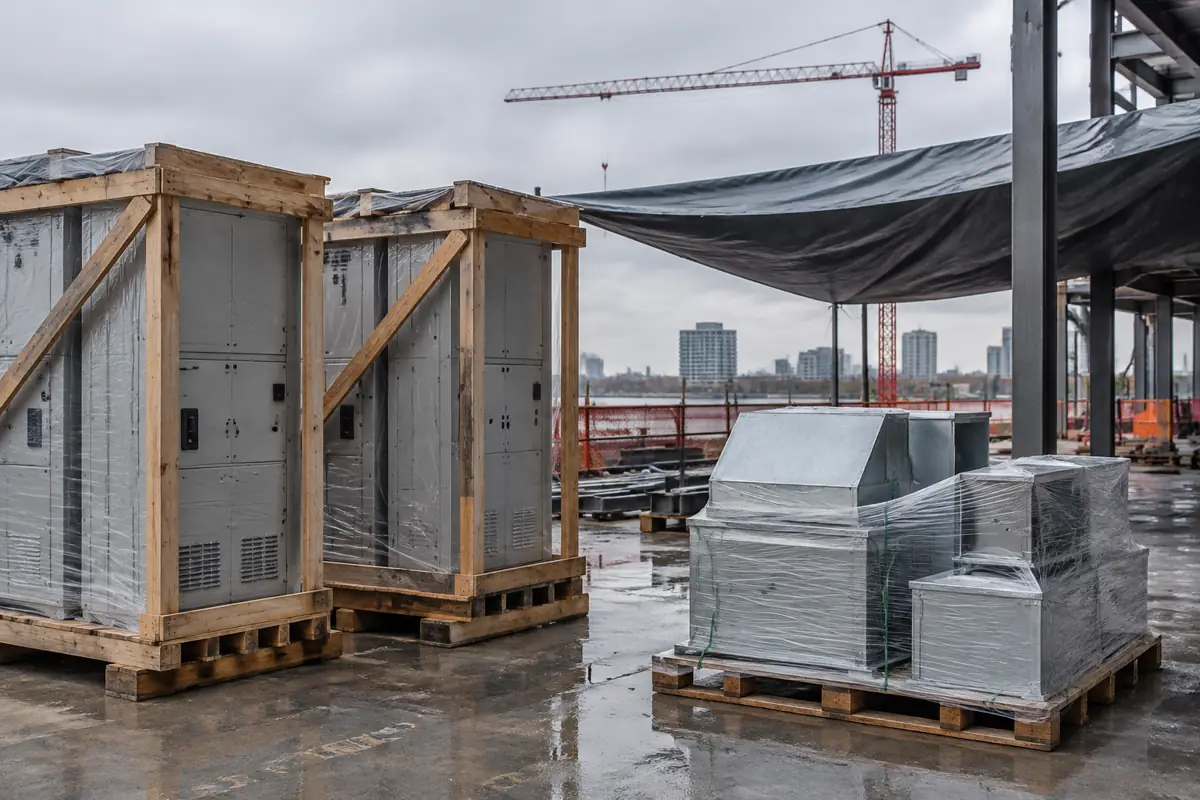
What are long-lead items?: Equipment and materials that take months to arrive, such as switchgear, transformers, rooftop units, elevators and custom storefront. Order them as early as design allows, often before the main contract is signed.
How long will my project take?: It depends on size, type, delivery method, permit review and the season. Ask bidders for a schedule with permit, procurement and inspection milestones, and read the commercial construction process guide to see where time goes.
The standard owner-contractor form is the AIA G702, explained line by line.
Frequently asked questions
How is commercial construction different from residential?
Commercial work follows different code sections, usually needs sealed drawings from licensed design professionals, involves more inspections and specialty systems, and is often bonded and financed with stricter lender oversight.
What is the difference between hard costs and soft costs?
Hard costs pay for physical construction: labor, materials, equipment and the builder's fee. Soft costs cover design, permits, legal, financing, insurance and owner project management.
Why did my price change between the budget estimate and the bid?
Budgets are priced from incomplete drawings and current market costs. Scope added during design, finish upgrades and price changes between the two dates all move the number.
What is value engineering?
A review that looks for lower-cost ways to meet the same function, such as a different system or material. Check that each change keeps performance, warranty and maintenance cost acceptable.
What is an allowance in a construction bid?
A placeholder amount for an item not yet fully specified, such as flooring or signage. When the final cost is known, the contract sum is adjusted up or down.
What is a pay application?
The builder's monthly request for payment, listing work completed against the schedule of values, less retainage. The architect or owner's representative usually certifies it before you pay.
What is a temporary certificate of occupancy?
A time-limited approval to occupy part or all of a building while minor items remain. Conditions and duration are set by the local building official.
Can I be my own general contractor on a commercial project?
Owner-builder rules for commercial property are narrower than for homes and vary by state and city. Check with your building department and licensing board before you plan on it.
How do I check whether a builder has liens or lawsuits?
Search the county recorder for recorded liens and the county and federal court dockets for lawsuits under the builder's legal name. Ask the builder to explain anything you find.
Who should review my construction contract?
A construction attorney licensed in your state. Payment terms, retainage, change orders, delay remedies and warranty provisions carry the most risk for owners.
Sources
- [1] U.S. Bureau of Labor Statistics. PPI commodity data for construction, incl. WPU801 (wp.data.80.Construction flat file). Accessed 2026-10-03.
- [2] U.S. Bureau of Labor Statistics. PPI inputs to construction industries (wp.data.80i.ConstructnInputs flat file). Accessed 2026-10-03.
- [3] U.S. Bureau of Labor Statistics. Current Employment Statistics, construction hours and earnings (ce.data.20b flat file). Accessed 2026-10-03.
- [4] Commercial Builders & Contractors research desk. Commercial Contractor License Requirements by State (licensing model counts, 50 states and DC). Accessed 2026-10-07.
- [5] Maine Office of the Attorney General. Home Construction and Repair (general contractors not licensed in Maine). Accessed 2026-10-04.
- [6] Associated General Contractors of America and NCCER. Construction Workforce Shortages Are Leading Cause of Project Delays (2025 Workforce Survey release). Accessed 2026-10-05.
- [7] Associated General Contractors of America and NCCER. 2025 Workforce Survey Analysis. Accessed 2026-10-05.
- [8] The Florida Legislature, Online Sunshine. Fla. Stat. 713.06 (notice to owner). Accessed 2026-10-04.
- [9] California Legislative Information. Cal. Civil Code 8204 (preliminary notice timing). Accessed 2026-10-04.