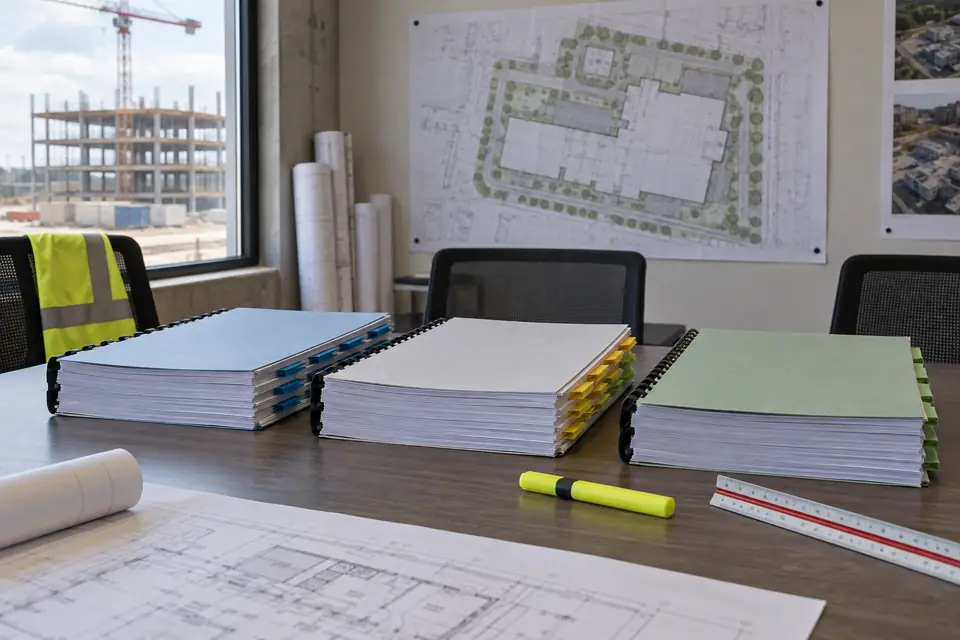
Knowing how to compare construction bids is the single most useful skill an owner can bring to a commercial project, because the three numbers on your desk almost never describe the same job. One builder carried site work, one excluded it, and one buried it in an allowance. Until you line them up on the same scope, the lowest total tells you very little.
Start With the Same Scope for Every Bidder
The fairest comparison starts before the bids arrive. Send every builder the same drawing set, the same specifications and the same bid form, and ask them to price it in the same breakdown. If the drawings change during bidding, issue a written addendum to everyone at once and ask each bidder to confirm which addenda they included.
When bids come back in different formats, rebuild them yourself on one spreadsheet. Use the trade divisions your architect used in the specifications so each line has a clear home.
Read the Exclusions Before the Price
The exclusions page is where bids really differ. Common exclusions on commercial work include permit and impact fees, utility company charges, testing and inspections, builder’s risk insurance, payment and performance bonds, after-hours work, hazardous material abatement and low-voltage cabling. Each one is a real cost that someone will pay.
For every exclusion, ask two questions: will this cost exist on my project, and if so, who is carrying it? Then add a realistic figure for that item to every bid that excluded it. The order of the bids often changes once you do.
Treat Allowances as Placeholders, Not Prices
An allowance is a sum the builder carries for work that is not fully designed yet, such as finishes, signage or a specific equipment package. If the final cost runs over the allowance, you pay the difference. A bid with low allowances looks cheaper on paper and moves the risk back to you.
Ask each bidder to list every allowance and what it is meant to cover. Where two builders carried different amounts for the same item, pick one realistic figure and apply it to all bids.
Separate the Contractor’s Own Costs
Most commercial bids include three items that belong to the builder rather than a trade: general conditions, overhead and fee, and contingency.
- General conditions cover job-site costs such as the superintendent, project manager, temporary facilities, dumpsters and site security. Compare them against the schedule each builder proposes. A short schedule with high general conditions, or a long one with very low general conditions, deserves a question.
- Overhead and fee is the builder’s markup. Ask how it applies to change orders as well as the base bid, because that rate will follow every change on the job.
- Contingency inside the contractor’s price is different from your own owner contingency. Ask who controls it and what happens to any amount left at the end.
Check the Schedule and the Team
Price is only one line of the decision. Ask each bidder for a summary schedule with long-lead items marked, such as switchgear, rooftop units, storefront systems and elevators. A builder who has already called suppliers about lead times understands your project better than one who has not.
Ask who the project manager and superintendent will be, and whether they will stay on the job from start to finish. On commercial work the superintendent shapes your experience more than almost anyone else.
Interview Before You Award
Once the bids are levelled, invite the two strongest builders to a scope review meeting. Walk through the drawings together, confirm what is included, and ask each one to explain any line that is far from the others. Write down every clarification and attach it to the contract.
A short interview often reveals more than the bid itself. Listen for builders who ask good questions about your site, your tenants and your timeline. Those are the builders who are already planning your job.
When the Low Bid Is the Right Bid
Sometimes the lowest number really is the best value: the scope is complete, the exclusions are reasonable, the team is strong and the builder can explain how they priced it. The goal of levelling is not to punish the low bidder. It is to make sure you are choosing between real prices for the same building.
If you would like help getting comparable bids in the first place, tell us about your project and we will match you with licensed commercial builders who fit it. Our guide on how to choose a commercial contractor covers the questions to ask before you shortlist anyone.