Office to residential conversion programs: US registry of incentives, by-right laws and federal guidance (2026)
- Primary data
- CB&C registry of official program pages and statutes
- Data period
- 2022 to October 2026
- Latest release used
- 2026-10-18
- Next release
- Quarterly check; next by 2027-01-18
- Geography
- United States (cities, counties, states, federal)
- Sources
- 49 (48 Tier 1)
CB&C verified 24 office to residential conversion programs and laws in force across 11 states and Washington, DC as of October 2026. By-right or zoning changes appear in 10 entries, direct financing in 6 and tax abatements in 4. Boston, Chicago and DC report 4,939 units combined. Federal help is guidance on existing loans and grants.
Office to residential conversion programs registry: cities, states and federal guidance
Checked quarterly. Last checked 2026-10-18. Entries are neutral records of public data; each links to its source record.
| Jurisdiction or program | Incentive type and key terms | Date | Evidence | Source |
|---|---|---|---|---|
| New York City: Office Conversion Accelerator | Process support. Interagency team (City Hall, DCP, DOB, HPD, BSA, LPC) acts as a single point of contact; open to owners of buildings that could yield 50 or more homes. | 2023-08-17 | program page | Record |
| New York State / New York City: RPTL 467-m (Affordable Housing from Commercial Conversions) | Property tax exemption. 90% exemption in Manhattan south of 96th Street, 65% elsewhere; 30, 25 or 20 full-benefit years by start date plus up to 3 construction years and a 5-year phase-out; 25% of units affordable at a weighted average 80% of AMI, permanently rent stabilized; 6+ units; complete by 2039-12-31. | 2024-05 | both | Record |
| New York City: City of Yes for Housing Opportunity (conversion rules) | Zoning change. Expands non-residential conversions citywide and moves eligibility to buildings built before 1991 (previously December 1961 in most areas and January 1977 in the Financial District). | 2024-12-05 | law/ordinance | Record |
| Chicago: LaSalle Street Reimagined | Tax increment financing. TIF for office-to-residential projects in the LaSalle corridor; 30% of units affordable at an average 60% of AMI. As of January 2026: 6 assisted projects, 1,765 units, more than $315 million TIF approved. | 2023-03-28 | program page | Record |
| Washington, DC: Housing in Downtown (HID) | Property tax abatement. 20-year abatement for commercial-to-residential conversions with 10+ units; 10% of units at 60% MFI or 18% at 80% MFI for 20 years; total caps $2.5M (FY24 to FY26), $5M (FY27), $41M (FY28), then +4% a year. Created by the Housing in Downtown Tax Abatement Act of 2022; eligibility map expanded to Near Northwest in October 2025. | 2024-03-22 | both | Record |
| Boston: Office to Residential Conversion Program | Tax abatement, as-of-right zoning, fast-track permitting. 121B PILOT with average abatement of up to 75% of assessed residential value for up to 29 years; as-of-right change of use downtown; 17% of units affordable at 60% AMI; apply by December 2026. | 2023-10 | program page | Record |
| Massachusetts: Commercial Conversion Program (Affordable Homes Act) | State gap funding. $7.4 million awarded to two downtown Boston office conversions (31 Milk Street, 110 units; 15 Court Square, 80 units). | 2025-06-04 | program page | Record |
| Massachusetts: Commercial Conversion Tax Credit Initiative (CCTCI) | State tax credit. $10 million credit authority in calendar year 2025; typical award $2.5M to $3M; credit up to 10% of eligible construction costs; at least 80% of units market-rate by statute. | 2025-08-20 | both | Record |
| San Francisco: Commercial to Residential Adaptive Reuse Program (Ordinance 159-23) | Planning Code waivers. Waives listed Planning Code requirements (for example streetscape, TDM, frontage rules) for downtown C-3 and eligible C-2 conversions, including expansions of up to 33% added volume. | 2023-07 | both | Record |
| San Francisco: Proposition C transfer tax waiver | Transfer tax waiver. Waives real estate transfer tax on the first sale after a commercial-to-residential conversion, citywide, for the first 5 million sq ft; Planning final approval needed before 2030-01-01. | 2024-04-12 | both | Record |
| San Francisco: inclusionary housing and impact fee waiver (Board File 240927) | Fee waiver. Waives inclusionary housing requirement and development impact fees for eligible downtown adaptive reuse, for the first 7 million sq ft. | 2025-04-07 | both | Record |
| San Francisco: Downtown Revitalization Financing District | Tax increment incentive. Annual incentive distribution based on the property tax increment a conversion generates, for 30 years; enrollment by 2032-12-31 (created under state AB 2488 of 2024). | 2026-02-12 | both | Record |
| Los Angeles: Citywide Adaptive Reuse Ordinance (No. 188,793) | By-right conversion and code flexibility. Buildings at least 15 years old in multifamily, commercial, parking or public facilities zones convert by right through LADBS; 5 to 15 years old through Administrative Review; no minimum unit size; applies to projects of 5+ units. | 2026-02-01 | both | Record |
| California: AB 2011 (Affordable Housing and High Road Jobs Act of 2022) | By-right housing in commercial zones. Makes qualifying housing a use by right with expedited ministerial review on sites where office, retail or parking is a principally permitted use; affordability and labor standards apply. | 2022-09-28 | law/ordinance | Record |
| California: SB 6 (Middle Class Housing Act) | Expedited housing approval on office and retail sites. Allows housing on sites zoned for office or retail commercial use through an expedited ministerial process subject to prevailing wage rules (Chapter 659, Statutes of 2022). | 2022-09-28 | law/ordinance | Record |
| California: AB 529 (Adaptive reuse projects) | Prohousing credit and code study. Adds adaptive reuse ordinances to prohousing policies that earn points in state funding; required HCD to convene a working group on building standards for adaptive reuse. | 2023-10-11 | law/ordinance | Record |
| California: AB 507 (Office to Housing Conversion Act) | By-right adaptive reuse. Adaptive reuse projects, including office conversions, are a use by right with ministerial approval where no local ordinance applies (Chapter 493, Statutes of 2025); operative 2026-07-01. | 2025-10-10 | law/ordinance | Record |
| Texas: SB 840 | By-right housing and conversion limits. In cities over 150,000 people (in counties over 300,000), multifamily and mixed-use allowed by right in office, commercial, retail and warehouse zones; for conversions of buildings at least 5 years old (65%+ converted): no traffic study, no added parking, no new impact fee, design rules no stricter than the IBC. | 2025-09-01 | law/ordinance | Record |
| Arizona: HB 2297 (Laws 2024, Chapter 141) | By-right objective standards. Cities of 150,000+ had to adopt, by 2025-01-01, objective standards allowing multifamily or adaptive reuse on up to 10% of existing commercial, office or mixed-use buildings without public hearings; obsolete means disrepair or 50% vacancy. | 2024-04-10 | law/ordinance | Record |
| Florida: Live Local Act (SB 102, Chapter 2023-17) | By-right approval with affordability. Local governments must allow multifamily or mixed-use residential in commercial, industrial or mixed-use zones if at least 40% of units are affordable for 30 years; subsection expires 2033-10-01. | 2023-03-29 | law/ordinance | Record |
| Seattle: Ordinance 127054 | Code exemptions. Conversions in commercial, Downtown, SM, HR and MR zones are exempt from most development standards and from design review; MHA affordable housing requirements waived in commercial, Downtown and SM zones. | 2024-07-11 | law/ordinance | Record |
| Montgomery County, MD: Expedited Bill 2-25 and ZTA 25-03 | PILOT and expedited zoning. 20-year PILOT (no County property tax) for converting office buildings at least 50% vacant; 17.5% of units MPDUs for 20 years; expedited zoning approval. Enacted over the County Executive's veto. | 2025-04-29 | law/ordinance | Record |
| Pittsburgh: Downtown Conversion Program (URA) | Gap loans. Financing for converting vacant downtown office space to housing; at least 20% of units at 80% AMI or below for at least 40 years. Not accepting new applications while the URA fundraises. | not stated | program page | Record |
| Wisconsin: Vacancy-to-Vitality loan program (WHEDA) | Low-interest loans. $100 million allocated in the 2023-25 budget; Spring 2026 terms: 0% subordinate loans up to 33% of project cost for converting vacant commercial buildings to workforce or senior housing (16+ units). Applies to commercial buildings generally. | 2024-01-31 | both | Record |
| Colorado: HB24-1125 commercial building conversion tax credit | Not enacted. Proposed refundable credit (caps $3M per project, $5M a year); the General Assembly record shows the bill as Lost. | 2024 session | law/ordinance | Record |
| Federal: White House Commercial to Residential Federal Resources Guidebook | Guidance (no new grant program). Lists 21 existing federal loan, grant, tax credit and technical assistance programs usable for conversions. Published on the prior administration's site, now archived as historical material. | 2023-10-27 | program page | Record |
| Federal: HUD Notice CPD-2023-10 (CDBG for housing) | Guidance. Confirms CDBG can support conversion of existing structures to rental housing; Section 108 guarantees up to 5 times annual CDBG allocation. Notice remains in effect until amended, superseded or rescinded. | 2023-10-26 | program page | Record |
| Federal: DOT Build America Bureau TIFIA and RRIF transit-oriented development | Federal loans. TOD projects near transit, including office-to-residential conversion with substantial upgrade, are eligible; TIFIA up to 49% of eligible costs (projects of $10M+), RRIF up to 75%. FAQ page live as of 2026-10-17. | 2023-10-27 | program page | Record |
Office to residential conversion programs in 2026: what the registry shows
Cities and states mostly use rules, not money: 10 of 24 state and local entries change approvals or zoning, while 6 provide direct financing and 4 cut property taxes.
This registry lists office to residential conversion programs, laws and zoning changes that CB&C could confirm on an official page or statute as of 2026-10-18. It holds 24 state and local entries in force or launched across 11 states and Washington, DC, 3 federal guidance items, and 1 failed state bill kept for the record. The full list sits in the registry table on this page and in the downloadable CSV.
Registry entries by incentive type, 24 state and local entries in force or launched, October 2026 (an entry can have several types)
Source: CB&C registry built from official program pages and statutes, checked 2026-10-18
By-right approval or a zoning change appears in 10 entries, from California's AB 2011 to Texas SB 840 and the Los Angeles Citywide Adaptive Reuse Ordinance. Direct financing appears in 6 entries, property tax abatements in 4, code flexibility in 4, fee or transfer tax waivers in 4, and process support in 3. Several programs combine tools: Boston pairs a tax abatement with as-of-right zoning and fast-track permitting.
| Incentive type | Registry entries | Examples |
|---|---|---|
| By-right approval or zoning change | 10 | AB 2011, SB 6, AB 507, Texas SB 840, Arizona HB 2297, Florida Live Local Act, NYC City of Yes, LA ARO |
| Direct financing (grant, loan, TIF, tax credit) | 6 | Chicago TIF, Massachusetts credit and grants, SF financing district, Pittsburgh, Wisconsin |
| Property tax abatement or exemption | 4 | NYC 467-m, DC HID, Boston 121B, Montgomery County PILOT |
| Code or standards flexibility | 4 | SF Ordinance 159-23, LA ARO, Texas SB 840, Seattle |
| Fee or transfer tax waiver | 4 | SF Prop C, SF fee waiver, Texas impact fee ban, Seattle MHA waiver |
| Process support or review exemption | 3 | NYC Accelerator, Boston fast track, Seattle design review exemption |
| Prohousing credit or code study | 1 | California AB 529 |
Counts across 24 state and local entries; an entry can have several types. Federal entries and one failed bill excluded.
Source: [1] City of New York
Tax abatements and exemptions: New York, Washington DC, Boston and Montgomery County
Four jurisdictions cut property taxes for decades in exchange for affordable units; New York's 467-m runs longest, at up to 90% for 30 full-benefit years plus a phase-out.
New York's 467-m program, enacted in May 2024, exempts converted rental buildings from 90% of property tax in Manhattan south of 96th Street and 65% elsewhere, according to the NYC Comptroller. Projects starting by June 2026 get 30 full-benefit years; projects starting from July 2028 get 20, each followed by a 5-year phase-out. HPD requires that 25% of units be affordable at a weighted average of 80% of area median income, and conversions must be completed by 2039-12-31 (HPD).
Washington, DC offers a 20-year abatement through Housing in Downtown. The program caps total abatements at $2.5 million for FY2024 to FY2026, $5 million in FY2027 and $41 million in FY2028, then grows 4% a year. The FY2028 cap is 16.4 times the opening cap. Projects need at least 10 units and must set aside 10% of units at 60% of median family income or 18% at 80% for 20 years (DMPED RFA). The current page shows $5 million for FY2027, lower than the $6.8 million in the 2024 RFA.
Boston's program offers an average abatement of up to 75% of assessed residential value for up to 29 years through a 121B PILOT, with 17% of units affordable at 60% of AMI and applications due by December 2026 (Boston Planning Department). Montgomery County, Maryland enacted a 20-year PILOT for converting office buildings at least 50% vacant, with 17.5% of units as moderately priced dwelling units, over the County Executive's veto on 2025-04-29 (Ballard Spahr; County Executive letter).
| Jurisdiction and program | Incentive | Term or size | Affordability condition | Date |
|---|---|---|---|---|
| New York City: RPTL 467-m | Property tax exemption | 90% (Manhattan south of 96th St) or 65%; 30, 25 or 20 full years plus 5-year phase-out | 25% of units at weighted average 80% of AMI | Enacted May 2024 |
| Washington, DC: Housing in Downtown | Property tax abatement | 20 years; caps $2.5M (FY24 to FY26), $5M (FY27), $41M (FY28) | 10% at 60% MFI or 18% at 80% MFI | Applications from 2024-03-22 |
| Boston: Office to Residential Conversion | 121B PILOT abatement | Average up to 75% of assessed residential value, up to 29 years | 17% of units at 60% AMI | Launched October 2023 |
| Montgomery County, MD: Bill 2-25 | PILOT | 20 years, no County property tax; office at least 50% vacant | 17.5% MPDUs for 20 years | 2025-04-29 |
| Chicago: LaSalle Street Reimagined | Tax increment financing | More than $315M approved for 6 projects | 30% at average 60% of AMI | First projects selected 2023-03-28 |
| San Francisco: Proposition C | Transfer tax waiver | First sale after conversion; first 5 million sq ft | None stated | 2024-04-12 |
| San Francisco: Downtown Revitalization Financing District | Tax increment incentive | 30 years of annual distributions | None stated in bulletin | 2026-02-12 |
| Massachusetts: CCTCI | State tax credit | $10M in 2025; up to 10% of eligible costs | At least 80% market-rate (statute) | 2025-08-20 |
| Pittsburgh: Downtown Conversion Program | Gap loans | Not accepting applications | 20% at 80% AMI for 40 years | Not stated |
| Wisconsin: Vacancy-to-Vitality | 0% subordinate loans | Up to 33% of project cost (Spring 2026) | Income up to 100% of AMI | First awards 2024-01-31 |
Terms as published on official pages checked 2026-10-18. Montgomery County terms from the County Executive letter and a Ballard Spahr alert.
Source: [3][5][11][12][15][39][40][9][21][18][32][37] NYC Department of Housing Preservation and Development; Office of the New York City Comptroller; DC Office of the Deputy Mayor for Planning and Economic Development; DC Office of the Deputy Mayor for Planning and Economic Development; City of Boston Planning Department (BPDA); Montgomery County (MD) Office of the County Executive; Ballard Spahr LLP; City of Chicago Department of Planning and Development; San Francisco Planning Department; Massachusetts Executive Office of Housing and Livable Communities; Urban Redevelopment Authority of Pittsburgh; Wisconsin Housing and Economic Development Authority
Direct financing: TIF, tax credits, grants and loans
Chicago's LaSalle Street program has more than $315 million of TIF approved, or at least $178,470 per unit; states add credits, grants and loans.
Chicago's LaSalle Street Reimagined reports 6 office-to-residential projects with City assistance as of January 2026: more than $900 million of investment, 1,765 units and 2 million square feet. City Council has approved more than $315 million in tax increment financing, and 30% of units must be affordable at an average 60% of AMI. Another 14 conversions in the area are advancing without City money. CB&C divides the TIF by units to get at least $178,470 of TIF per unit.
Massachusetts runs two state tools. The Commercial Conversion Program awarded $7.4 million in June 2025 to two Boston projects, 31 Milk Street (110 units, $4 million) and 15 Court Square (80 units, $3.4 million), or $36,364 and $42,500 per unit. The Commercial Conversion Tax Credit Initiative had $10 million of credit authority in 2025, with typical awards of $2.5 million to $3 million and a cap of 10% of eligible costs.
San Francisco's Downtown Revitalization Financing District, established 2026-02-12, returns a share of the property tax increment a conversion generates for 30 years. Pittsburgh's Downtown Conversion Program lends to projects that rent at least 20% of units at 80% of AMI for 40 years, but is not accepting applications. Wisconsin's Vacancy-to-Vitality program offers 0% loans of up to 33% of project cost for commercial buildings in general, from a $100 million allocation (Governor's office).
By-right approvals and zoning changes: California, Texas, Arizona, Florida, New York City and Los Angeles
Six state laws and three city rules let conversions skip rezoning or discretionary review; the newest, California AB 507, took effect on 2026-07-01.
California approved AB 2011 and SB 6 on 2022-09-28, allowing housing on office and retail sites through ministerial review. AB 507, the Office to Housing Conversion Act, makes adaptive reuse a use by right where no local ordinance applies; it was approved 2025-10-10 and became operative 2026-07-01 (bill status).
Texas SB 840, effective 2025-09-01, applies in cities above 150,000 people in counties above 300,000. For buildings at least 5 years old with at least 65% of floor area converted, cities may not require traffic studies, extra parking or new impact fees, or design rules stricter than the International Building Code. Arizona's HB 2297 required cities of 150,000 or more to allow by-right conversion on up to 10% of commercial, office or mixed-use buildings. Florida's Live Local Act allows residential use in commercial zones if 40% of units stay affordable for 30 years.
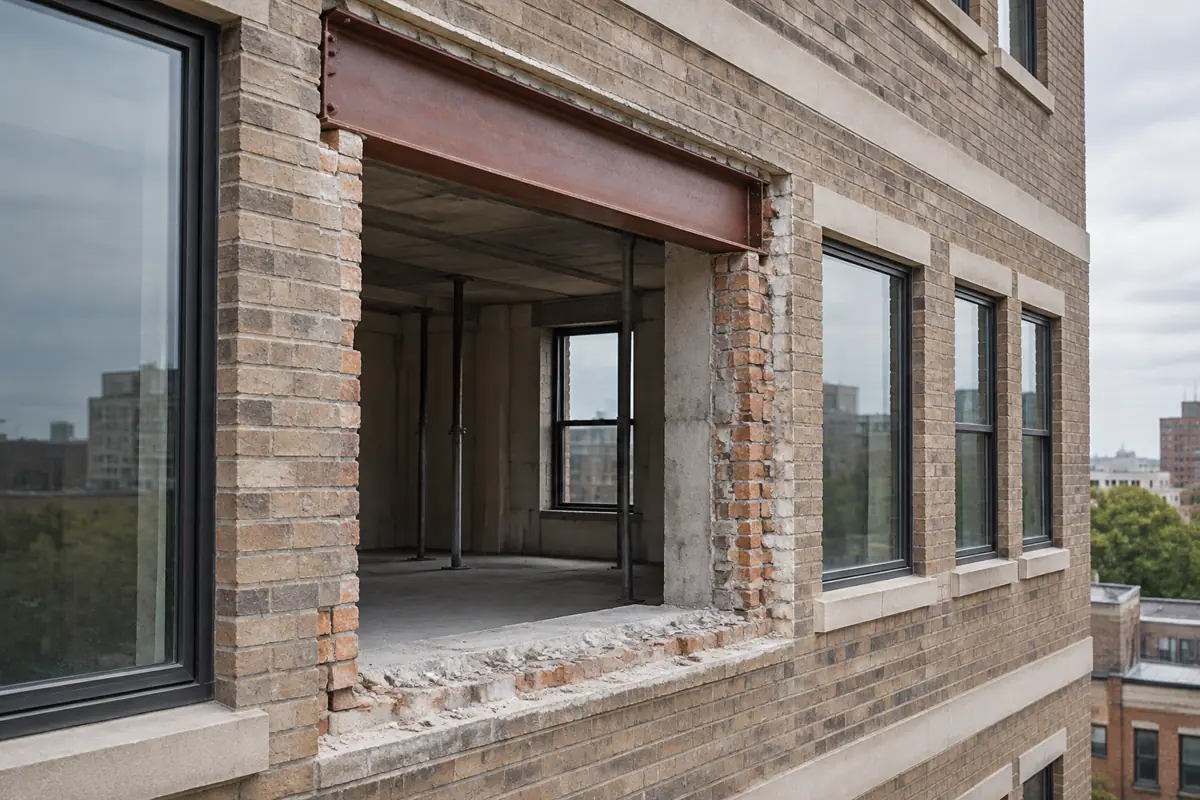
At city level, New York's City of Yes for Housing Opportunity, adopted 2024-12-05, extends conversion rules citywide to buildings built before 1991, up from December 1961 in most areas and January 1977 in the Financial District (Comptroller). Los Angeles lets buildings at least 15 years old convert by right through the building department from 2026-02-01 and dropped minimum unit sizes (LA City Planning). Seattle's Ordinance 127054 exempts conversions from most development standards and design review.
| Jurisdiction | Law or rule | Date | What it changes | Key thresholds |
|---|---|---|---|---|
| California | AB 2011 | 2022-09-28 | Housing a use by right on office, retail or parking sites | Labor rules; 50+ unit projects add apprenticeship rules |
| California | SB 6 (Ch. 659) | 2022-09-28 | Ministerial (non-discretionary) approval of housing on office or retail zoned sites | Prevailing wage |
| California | AB 507 (Ch. 493) | 2025-10-10 | Adaptive reuse a use by right, ministerial approval | Operative 2026-07-01 |
| Texas | SB 840 | Effective 2025-09-01 | By-right multifamily in commercial zones; conversion protections | Cities over 150,000; buildings 5+ years old; 65% converted |
| Arizona | HB 2297 (Ch. 141) | 2024-04-10 | Objective standards for by-right conversion | Cities of 150,000+; up to 10% of buildings |
| Florida | Live Local Act (SB 102) | 2023-03-29 | By-right residential in commercial zones | 40% affordable for 30 years; expires 2033-10-01 |
| New York City | City of Yes for Housing Opportunity | 2024-12-05 | Conversions citywide; buildings built before 1991 | Was December 1961 or January 1977 |
| Los Angeles | Citywide ARO (No. 188,793) | Effective 2026-02-01 | By-right conversion citywide; no minimum unit size | 15+ years by right; 5 to 15 years by review |
| Seattle | Ordinance 127054 | 2024-07-11 | Exempts conversions from most standards and design review; MHA waived in some zones | Commercial, Downtown, SM, HR, MR zones |
Dates are approval dates unless marked effective. Not legal advice.
Source: [24][25][27][28][29][30][34][35][36][6][22][23][33] California Legislative Information; California Legislative Information; California Legislative Information; California Legislative Information; Texas Legislature Online; Texas Legislature Online; Arizona State Legislature; The Florida Senate; The Florida Senate; NYC Department of City Planning; Los Angeles City Planning; Los Angeles City Planning; City of Seattle Office of the City Clerk
How many homes office conversion programs report
Only three city programs publish running unit totals; together they report 4,939 units, and most are not yet built.
Boston reports 28 applications covering 35 buildings, 2.1 million square feet and 2,420 units, including 463 affordable units, as of September 2026 (Boston Planning Department). One project is complete, 7 are under construction and 14 abatement agreements are signed; the city expects 321 units delivered by the end of 2026. Chicago reports 1,765 units in its 6 assisted LaSalle projects, and DC's three conditional awards in September 2024 total 754 units with at least 92 affordable (DC Mayor's Office).
Housing units as published by each program; stages differ (Boston applications Sep 2026, Chicago assisted projects Jan 2026, DC conditional awards Sep 2024)
Sources: Boston Planning Department (Sep 2026); City of Chicago DPD (Jan 2026); DC Mayor's Office (2024-09-05)
The 4,939-unit sum mixes stages: Boston counts applications, Chicago counts approved or advancing projects, and DC counts conditional awards. It is not a count of completed homes. New York City does not publish a program total; the Comptroller estimated a pipeline of 17,432 units in 44 buildings through March 2025, with 15,414 units potentially eligible for 467-m (NYC Comptroller). The 5 Times Square conversion alone plans up to 1,250 rental units, about 313 permanently affordable (Mayor's Office).
| Program | Units reported | Affordable units | What the count covers | As of | In CB&C sum |
|---|---|---|---|---|---|
| Boston Office to Residential Conversion Program | 2,420 | 463 | 28 applications, 35 buildings (1 completed, 7 under construction) | September 2026 | Yes |
| Chicago LaSalle Street Reimagined | 1,765 | 30% required (about 530 implied) | 6 projects with City financial assistance | January 2026 | Yes |
| DC Housing in Downtown | 754 | 92 (minimum) | 3 conditional awards | 2024-09-05 | Yes |
| CB&C sum of program-reported units | 4,939 | Mixed stages, not completions | |||
| Massachusetts Commercial Conversion Program awards | 190 | 38 | 31 Milk St and 15 Court Sq (already in Boston total) | 2025-06-04 | No (overlap) |
| NYC 5 Times Square (Accelerator and 467-m) | 1,250 | 313 | Single announced project | May 2025 | No (single project) |
| NYC conversion pipeline (Comptroller estimate) | 17,432 | 44 buildings, completed to potential | March 2025 | No (estimate, not a program count) | |
| Wisconsin Vacancy-to-Vitality first round | 333 | 3 commercial-to-housing projects | 2024-01-31 | No (not office-specific) |
Only published figures. Stages differ, so totals are not completions.
Source: [16][9][14][20][7][5][38] City of Boston Planning Department (BPDA); City of Chicago Department of Planning and Development; Executive Office of the Mayor, District of Columbia; Commonwealth of Massachusetts; New York City Office of the Mayor; Office of the New York City Comptroller; Office of the Governor of Wisconsin
What federal guidance provides for office conversions
CB&C found no dedicated federal conversion grant; the October 2023 guidebook listed 21 existing programs, mostly loans, and the DOT loan guidance is still online.
The White House released a Commercial to Residential Conversions guidebook on 2023-10-27 listing 21 federal programs: 7 loan or guarantee programs, 5 grant programs, 4 tax credits or deductions, 3 EPA programs that pass grants and loans through third parties, and 2 technical assistance programs. The fact sheet cited over $35 billion of TIFIA and RRIF lending capacity for transit-oriented development. Both pages now sit on an archived site labelled historical material.
21 federal programs listed for conversions in the October 2023 guidebook, by program type
Source: The White House (archived), Commercial to Residential Conversions guidebook, October 2023; CB&C count
Two pieces remain in force as published. The DOT Build America Bureau's TOD FAQ, live as of 2026-10-17, says office-to-residential conversion can qualify; TIFIA can cover up to 49% of eligible costs for projects of at least $10 million and RRIF up to 75%. HUD Notice CPD-2023-10 confirms CDBG can fund conversion of existing structures to rental housing, and Section 108 guarantees reach up to 5 times a grantee's annual CDBG allocation. Boston's September 2026 program deck still lists TIFIA, RRIF and HUD 221(d)(4) loans among outside resources (Boston Planning Department).
| Federal resource | What it offers for conversions | Status as published |
|---|---|---|
| White House guidebook (Oct 2023) | 21 existing programs: 7 loan or guarantee, 5 grant, 4 tax credit or deduction, 3 EPA third-party grant or loan, 2 technical assistance | Archived prior-administration page marked historical |
| DOT TIFIA and RRIF (TOD) | Over $35 billion lending capacity (2023); TIFIA up to 49% of eligible costs for $10M+ projects; RRIF up to 75%; maturities up to 75 years | FAQ page live, dated 2026-10-17 |
| HUD CDBG (Notice CPD-2023-10) | CDBG can fund conversion of existing structures to rental housing; Section 108 loan guarantees up to 5 times annual allocation | Notice in effect until amended or rescinded |
| HUD PRO Housing | $85 million grants (2023) with conversion financing an eligible activity | As listed in 2023 guidebook |
CB&C did not verify the current funding status of each listed program.
Source: [41][42][43][44] The White House (archived site); The White House (archived site); U.S. Department of Housing and Urban Development; U.S. Department of Transportation, Build America Bureau
Why office conversions are hard: floor plates, windows, plumbing and cost
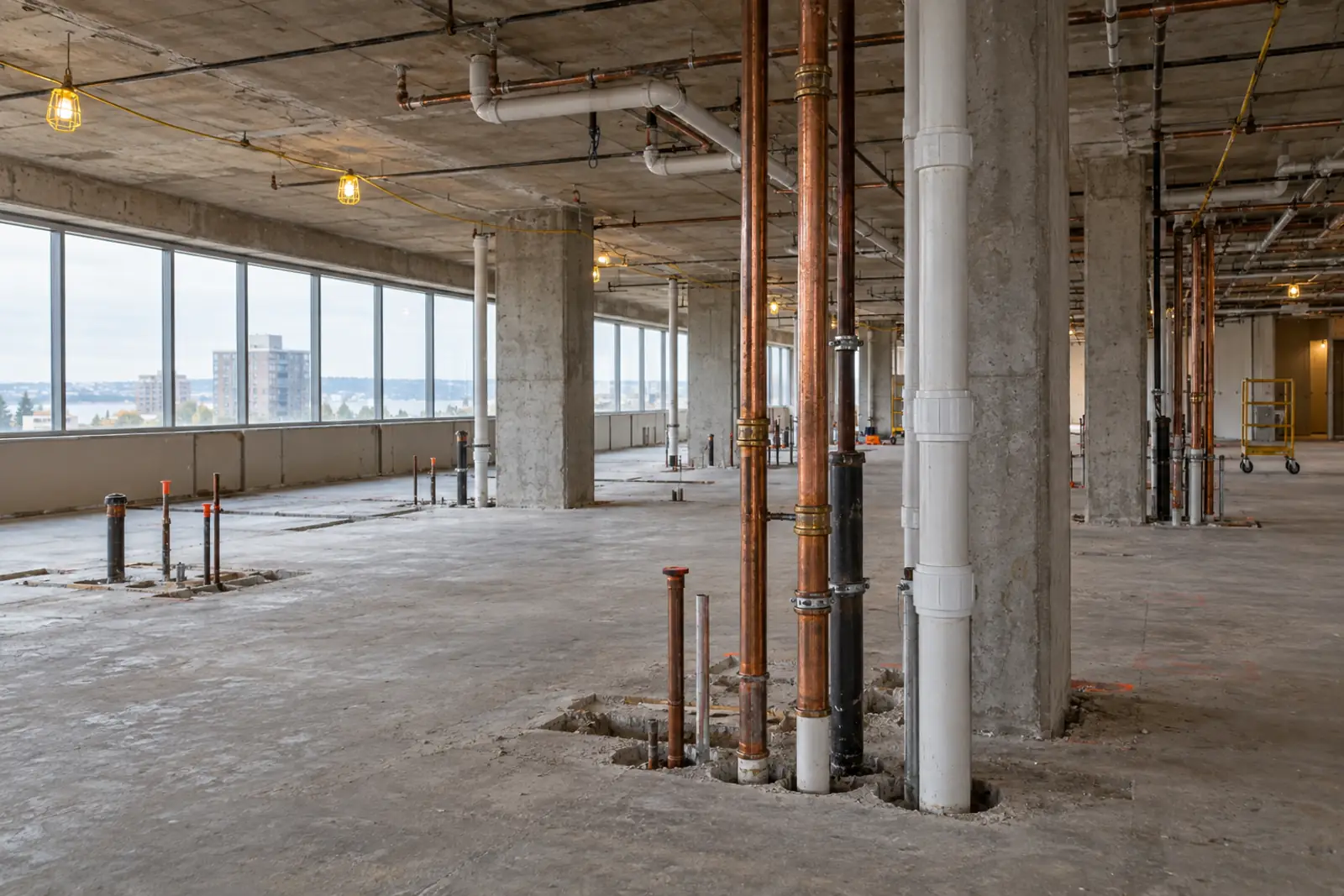
Official studies point to deep floor plates, sealed glass facades and all-new building systems, which is why programs add subsidy or waive rules.
New York's Office Adaptive Reuse Study (January 2023) found that early twentieth-century offices with shallow floor plates and operable windows convert most easily, while post-1960s towers with deep floor plates and glass curtain walls cost more because homes need operable windows and deep floors produce awkward layouts. The federal guidebook notes that converted offices often need all-new plumbing, heating and cooling, windows, doors and walls.
Codes add a second layer. Texas SB 840 bars cities from imposing window, interior or apartment-size design rules stricter than the International Building Code on conversions, and Los Angeles removed minimum unit sizes for conversions (SB 840; LA City Planning). Contractors weighing this work can compare scopes with commercial renovation contractors and local commercial building permits rules.
Adaptive reuse: Arizona law defines adaptive reuse as converting an existing building from the use for which it was built to a new use while keeping some or all of its elements (Laws 2024, Chapter 141). California's AB 507 covers retrofitting existing buildings for residential or mixed use, including office conversion projects.
The office stock these programs target
62.4% of US office floorspace predates 1990, the vintage that New York's new cutoff and Los Angeles's 15-year rule now open to conversion.
The 2018 Commercial Buildings Energy Consumption Survey, still the latest full release, counts 970 thousand US office buildings with 16,662 million square feet and a median age of 38 years (EIA CBECS Table B2). Of that floorspace, 10,399 million square feet, or 62.4%, was built before 1990, and 2,826 million square feet, or 17.0%, before 1946 (EIA CBECS Table B9). The 1980s is the largest single decade at 3,441 million square feet.
US office floorspace by year constructed, million square feet, 2018 CBECS (latest release)
Source: U.S. Energy Information Administration, 2018 CBECS Table B9 (released Sep 2021, revised Dec 2022)
CBECS age bins do not match city cutoffs exactly, and the survey does not measure floor plate depth, so these figures show the size of the older pool, not how much of it can convert. CB&C's commercial building stock age report covers all building types, and the sibling building performance standards report tracks energy rules that also apply to converted buildings.
| Year constructed | Office buildings (thousand) | Office floorspace (million sq ft) | Share of floorspace (%) |
|---|---|---|---|
| Before 1946 | 163 | 2,826 | 17.0 |
| 1946 to 1959 | 54 | 582 | 3.5 |
| 1960 to 1969 | 82 | 1,282 | 7.7 |
| 1970 to 1979 | 159 | 2,268 | 13.6 |
| 1980 to 1989 | 164 | 3,441 | 20.7 |
| 1990 to 1999 | 130 | 2,505 | 15.0 |
| 2000 to 2009 | 152 | 2,346 | 14.1 |
| 2010 to 2018 | 67 | 1,413 | 8.5 |
| All years | 970 | 16,662 | 100.0 |
EIA 2018 CBECS (latest release), Tables B8 and B9. Estimates carry sampling error.
Source: [46][47][45] U.S. Energy Information Administration; U.S. Energy Information Administration; U.S. Energy Information Administration
Timeline: office conversion policy from 2022 to 2026
State and local actions held at 6 to 7 a year from 2023 to 2025; federal activity was a single burst in October 2023.
Registry entries by date of adoption, launch or effect; 2026 through October 18; one undated program excluded
Source: CB&C registry, checked 2026-10-18
- 2022-09-28: California approves AB 2011 and SB 6.
- 2023-03-28: Chicago selects the first LaSalle Street conversions; 2023-03-29: Florida approves the Live Local Act.
- 2023-07: San Francisco adopts Ordinance 159-23; 2023-08-17: New York City launches the Office Conversion Accelerator; 2023-10: Boston launches its program.
- 2023-10-26 and 2023-10-27: HUD notice and White House guidebook released.
- 2024-03-22: DC opens Housing in Downtown applications; 2024-04-10: Arizona HB 2297 approved; 2024-04-12: San Francisco Proposition C takes effect.
- 2024-05: New York enacts 467-m; 2024-07-11: Seattle Ordinance 127054; 2024-12-05: City of Yes adopted.
- 2025-04-29: Montgomery County Bill 2-25 enacted; 2025-08-20: Massachusetts launches CCTCI; 2025-09-01: Texas SB 840 effective; 2025-10-10: California AB 507 approved.
- 2026-02-01: Los Angeles Citywide ARO effective; 2026-02-12: San Francisco financing district established; 2026-07-01: AB 507 operative.
Counts and distributions
Incentive type count
FormulaCount registry entries carrying each incentive tag (an entry can carry several)
Inputs: registry.csv; derived d1 to d10 (fact sheet rows)
Result: By-right or zoning 10; financing 6; tax abatement 4; code 4; fee waiver 4; process 3; study 1 (32 tags across 24 entries)
Jurisdictions lean on rule changes that cost little upfront; money-based programs are concentrated in large coastal cities and Chicago.
Limitations: Registry covers programs CB&C could verify on official pages; smaller cities and pending bills are not exhaustively covered.
Program-reported units
FormulaBoston units + Chicago units + DC conditional award units
Inputs: fact rows for Boston and Chicago units; derived d17 (fact sheet rows)
Result: 4,939 units (2,420 + 1,765 + 754)
Even the most active programs report a few thousand units, small next to NYC's 17,432-unit pipeline estimate.
Limitations: Stages differ (applications, assisted projects, conditional awards); not completions; NYC and statewide programs excluded.
Public subsidy per unit
FormulaChicago TIF / units; Massachusetts award / units
Inputs: derived d25, d28, d29 (fact sheet rows)
Result: Chicago at least $178,470 per unit; Massachusetts $36,364 and $42,500 per unit
Per-unit public cost varies more than fourfold between programs, which affects how many units a fixed budget can support.
Limitations: Chicago TIF is a lower bound; the Massachusetts awards are gap funding on top of Boston's abatement.
Timeline of policy actions
FormulaCount registry entries by year of adoption, launch or effect
Inputs: derived d11 to d16 (fact sheet rows)
Result: State and local: 2 (2022), 6 (2023), 7 (2024), 6 (2025), 2 (2026 to date); federal: 3 (2023)
Adoption has been steady since 2023; recent additions include statewide by-right laws in Texas and California alongside new financing tools in Massachusetts and San Francisco.
Limitations: Dates mix adoption, launch and effective dates; 2026 is partial.
Office stock age link
FormulaOffice floorspace built before 1990 / all office floorspace (CBECS 2018)
Inputs: derived d32, d33 (fact sheet rows)
Result: 10,399 of 16,662 million square feet, 62.4%
Most office space falls inside the age windows that NYC (built before 1991) and LA (15 years or older) now allow to convert.
Limitations: CBECS bins differ from city cutoffs; age is not a test of physical suitability; 2018 data.
Key findings
- CB&C verified 24 state and local office conversion programs, laws and zoning changes in force or launched across 11 states and Washington, DC, as of 2026-10-18.[1][9][11][15][21][22][30]
- By-right approval or zoning change is the most common tool, appearing in 10 of 24 entries; direct financing appears in 6 and property tax abatements in 4.[24][27][30][34][36][6][22]
- New York's 467-m exempts 90% of property tax in Manhattan south of 96th Street and 65% elsewhere, with 30 full-benefit years for projects starting by June 2026 (enacted May 2024).[5][3]
- Boston's program reported 28 applications, 2,420 units and 463 affordable units in September 2026, with 1 project completed and 7 under construction.[16]
- Chicago's LaSalle Street Reimagined had more than $315 million in TIF approved for 6 projects with 1,765 units as of January 2026, at least $178,470 per unit.[9]
- DC's Housing in Downtown abatement caps total spending at $2.5 million for FY2024 to FY2026, rising to $41 million in FY2028, 16.4 times the opening cap.[11]
- Boston, Chicago and DC together report 4,939 units in their programs, mostly not yet built.[16][9][14]
- The NYC Comptroller estimated a 17,432-unit office conversion pipeline in 44 buildings through March 2025, with 15,414 units potentially eligible for 467-m.[5]
- California's AB 507, approved 2025-10-10, made adaptive reuse a use by right from 2026-07-01.[27][28]
- Texas SB 840, effective 2025-09-01, bars new impact fees, extra parking and traffic studies for qualifying conversions in cities above 150,000 people.[29][30]
- Los Angeles's Citywide Adaptive Reuse Ordinance, effective 2026-02-01, lets buildings at least 15 years old convert by right.[22][23]
- The October 2023 federal guidebook listed 21 existing programs and created no dedicated conversion grant; it is now on an archived site.[42][41]
- Colorado's proposed conversion tax credit, HB24-1125, did not pass: the legislature records it as Lost.[31]
- 62.4% of US office floorspace, 10,399 million square feet, was built before 1990 (EIA 2018 CBECS).[46]
Executive summary
- CB&C verified 24 state and local office conversion entries in 11 states and DC, plus 3 federal guidance items, checked 2026-10-18.
- By-right approval or zoning change is the most common tool (10 entries); direct financing (6) and tax abatements (4) follow.
- The longest-running tax break is New York's 467-m: 90% off property tax in Manhattan south of 96th Street for 30 full-benefit years for early starters.
- Program-reported units total 4,939 across Boston (2,420), Chicago (1,765) and DC (754); most are applications or awards, not finished homes.
- New laws in Texas (SB 840, 2025) and California (AB 507, operative 2026-07-01) remove rezoning and some fees for conversions.
- Federal support is guidance on 21 existing programs from October 2023; DOT loan guidance and HUD's CDBG notice remain online.
- 62.4% of US office floorspace predates 1990, the pool most new rules target.
Questions people ask
Which cities offer incentives for office conversions?
As of 2026-10-18, verified city programs include New York City (467-m tax exemption, Office Conversion Accelerator, City of Yes), Chicago (LaSalle Street TIF), Washington DC (Housing in Downtown abatement), Boston (121B abatement), San Francisco (code waivers, transfer tax and fee waivers, financing district), Los Angeles (by-right Citywide ARO), Seattle (code exemptions), Pittsburgh (loans, paused) and Montgomery County, Maryland (PILOT). See the registry table for terms and dates.
How much does it cost to convert office to residential?
No reliable national public figure exists. The NYC Comptroller's 2025 model assumes $500 per gross square foot, excluding acquisition and including financing, and its 25 Water Street case study came to $663 per gross square foot. Two 2023 Chicago proposals stated total project costs of $178 million for 247 apartments and $143 million for 349 apartments, about $720,648 and $409,742 per unit. Costs vary with floor plate, facade and market.
Why are office conversions hard?
Deep floor plates leave interior space far from windows, glass curtain walls must be reworked because apartments need operable windows, and converted offices often need all-new plumbing, heating, cooling and walls (NYC DCP, January 2023; White House guidebook, October 2023). Zoning and building rules written for new construction add cost, which is why Texas and Los Angeles relaxed design and unit-size rules.
What is adaptive reuse?
Adaptive reuse is converting an existing building from its original use to a new one while keeping some or all of its structure. Arizona's 2024 law uses that definition, and California's AB 507 applies it to retrofitting buildings for residential or mixed use, including office conversions.
Does the federal government fund office conversions?
Not through a dedicated program. The October 2023 White House guidebook listed 21 existing federal programs that may help, mostly loans and guarantees, and is now on an archived site. DOT's TIFIA and RRIF guidance (TIFIA up to 49% of eligible costs, RRIF up to 75%) and HUD's CDBG notice remain published as of October 2026.
Frequently asked questions
Which cities offer incentives for office to residential conversion?
CB&C verified programs in New York City, Chicago, Washington DC, Boston, San Francisco, Los Angeles, Seattle, Pittsburgh and Montgomery County, Maryland, as of 2026-10-18. Statewide laws or programs apply in California, Texas, Arizona, Florida, Massachusetts and Wisconsin.
Which office conversion tax break lasts longest?
New York's 467-m exempts 90% of property tax in Manhattan south of 96th Street for 30 full-benefit years for projects starting by June 2026, plus a 5-year phase-out, in exchange for 25% affordable units (NYC Comptroller, July 2025).
How long is the Boston office conversion tax abatement?
Boston's 121B PILOT offers an average abatement of up to 75% of assessed residential value for up to 29 years; applications are due by December 2026 (Boston Planning Department, checked 2026-10-18).
How many units has Boston's office conversion program produced?
Boston reports 2,420 units in 28 applications as of September 2026; 1 project is complete and 7 are under construction, with 321 units expected by the end of 2026.
How much TIF has Chicago approved for LaSalle Street conversions?
More than $315 million for 6 projects with 1,765 units as of January 2026, or at least $178,470 per unit by CB&C's calculation (City of Chicago DPD).
What does DC's Housing in Downtown program offer?
A 20-year property tax abatement for conversions of 10 or more units, with total caps of $5 million in FY2027 and $41 million in FY2028; three conditional awards in September 2024 total 754 units.
Is office to residential conversion by right in California?
Yes, in many cases. AB 507, operative 2026-07-01, makes adaptive reuse a use by right with ministerial approval where no local ordinance applies, and AB 2011 and SB 6 (2022) allow housing on office and retail sites.
Does Texas allow office conversions without rezoning?
SB 840, effective 2025-09-01, requires cities over 150,000 people in counties over 300,000 to allow multifamily housing in office, commercial, retail and warehouse zones without rezoning, and bars new impact fees and extra parking for qualifying conversions.
Did Colorado pass an office conversion tax credit?
No. HB24-1125 proposed a refundable credit capped at $3 million per project and $5 million a year, but the Colorado General Assembly record shows the bill as Lost in the 2024 session.
How old is the US office stock?
The median US office building was 38 years old in 2018, and 62.4% of office floorspace was built before 1990 (EIA 2018 CBECS, the latest release).
Download the data
Every table in this report is available as a CSV under CC BY 4.0. The fact sheet lists each value with its source URL and access date.
- derived_metrics.csv (CSV)
- fact_sheet.csv (CSV)
- Office to residential conversion programs registry: cities, states and federal guidance (CSV)
- Tax and financing incentives for office conversions: terms by program (checked 2026-10-18) (CSV)
- By-right and zoning laws that ease office to residential conversion (CSV)
- Housing units reported by office conversion programs (published figures only) (CSV)
- Incentive types across 24 state and local registry entries (CSV)
- Federal resources for commercial-to-residential conversion, status as published (CSV)
- US office buildings and floorspace by year constructed, 2018 CBECS (CSV)
For journalists and researchers
If you cite only a few, cite these
- Boston, Chicago and DC report 4,939 units in their office conversion programs (2024 to 2026 data).[16][9][14]
- 10 of 24 state and local conversion policies change approvals or zoning rather than provide money.[24][30]
- 62.4% of US office floorspace was built before 1990 (EIA 2018 CBECS).[46]
Most quotable statistics
- CB&C verified 24 state and local office to residential conversion programs and laws in 11 states and Washington, DC as of October 2026.[1][9][11][15]
- Boston's office conversion program reported 2,420 units in 28 applications in September 2026.[16]
- Chicago has approved more than $315 million in TIF for 6 LaSalle Street conversions with 1,765 units, at least $178,470 per unit.[9]
- New York's 467-m program exempts 90% of property tax for converted rentals in Manhattan south of 96th Street.[5]
- By-right approval or zoning change appears in 10 of 24 verified office conversion policies.[24][30][22]
- The 2023 federal conversion guidebook listed 21 existing programs and no dedicated conversion grant.[42]
Press summary
A new CB&C registry of office to residential conversion policy finds 24 state and local programs, laws and zoning changes in force across 11 states and Washington, DC, as of October 18, 2026. Rule changes dominate: by-right approval or rezoning appears in 10 entries, against 6 offering direct financing and 4 offering property tax abatements. New York's 467-m is the longest-running tax break, at 90% in Manhattan south of 96th Street for up to 30 full-benefit years. Chicago has approved more than $315 million in TIF for 6 LaSalle Street conversions, at least $178,470 per unit. Boston, Chicago and DC report 4,939 units combined, mostly applications or awards rather than finished homes. Texas SB 840 and California AB 507 now limit rezoning and fees statewide. Federal support remains guidance on 21 existing programs from 2023. Colorado's proposed conversion tax credit did not pass. All entries link to official sources.
Suggested headlines
- 24 office-to-housing policies now in force across 11 states and DC
- Rules, not money: 10 of 24 office conversion policies change zoning or approvals
- Boston, Chicago and DC report 4,939 units in office conversion programs
- Chicago's LaSalle conversions draw at least $178,470 in TIF per unit
- 62.4% of US office space predates 1990 as states open conversion by right
How to cite this report
Commercial Builders & Contractors. (2026). Office to residential conversion programs: US registry of incentives, by-right laws and federal guidance (2026). Retrieved from https://commercialbuildersandcontractors.com/office-to-residential-conversion-programs/
Reuse license
Data and tables are licensed CC BY 4.0. Attribution: “Source: Commercial Builders & Contractors, Office to residential conversion programs: US registry of incentives, by-right laws and federal guidance (2026)” with a link to this page.
Methodology
Selection: CB&C searched for office or commercial-to-residential conversion incentives, zoning changes and laws named in the brief and in reporting, then kept only entries confirmed on an official government page, statute, ordinance or program document opened on 2026-10-18. Each registry entry records the incentive type, key terms, the date of adoption, launch or effect, an evidence label (law/ordinance, program page or both) and the source URL.
Inclusion and exclusion: Entries must be in force or launched. Colorado HB24-1125 appears in the registry as not enacted for accuracy but is excluded from counts. Denver's adaptive reuse pilot is excluded because its official documents returned server errors on 2026-10-18; Calgary is outside the US scope. Statewide by-right laws for commercial zones (California AB 2011 and SB 6, Florida, Texas, Arizona) are included because they cover office sites, although they also cover new construction.
Conflicting numbers: Where an agency page and an older document differ, the current page is used and the difference noted (DC's FY2027 cap shows $5 million on the program page against $6.8 million in the 2024 RFA). The Comptroller's NYC pipeline appears as 15.2 million gross square feet in its table and 15.3 million in its text; the table value is used. The federal fact sheet says six agencies while the guidebook list says seven; both are reported.
Derived metrics: incentive type counts, yearly action counts, unit sums, per-unit subsidy and CBECS age shares are computed in scripts/build_data.py from the fact sheet and registry, with formulas and input rows in derived_metrics.csv. Unit sums add only published figures and label the stage of each.
Limitations: The registry is not a census of every US jurisdiction. Program unit counts are self-reported and mix stages. Montgomery County's enactment date comes from a law firm alert (Tier 3) because the county bill page was unavailable. Federal program availability was not re-verified program by program. CBECS 2018 is the latest release; a newer survey cycle had not published as of the check date.
Last updated 2026-10-18. The registry is checked quarterly. Nothing here is legal, tax or financial advice.
This report presents published data with its limitations. It is not legal, financial or investment advice.
Sources, ranked by quality
Tier 1: primary and official sources (48)
- [1] City of New York. Office Conversion Accelerator. Program page, checked 2026-10-18. Accessed 2026-10-18.
- [2] New York City Office of the Mayor. Mayor Adams, DCP Director Garodnick unveil proposal to convert vacant offices to housing (release 602-23). Release dated 2023-08-17. Accessed 2026-10-18.
- [3] NYC Department of Housing Preservation and Development. 467-m: Affordable Housing from Commercial Conversions. Program page, 2026 workbook updated 2026-05-17. Accessed 2026-10-18.
- [4] NYC Department of Housing Preservation and Development. HPD Launches Comprehensive Tool for 467-m Initiative. Release dated 2024-08-06. Accessed 2026-10-18.
- [5] Office of the New York City Comptroller. Office to Residential Conversions (fiscal note). Published 2025-07-17; pipeline data through 2025 Q1. Accessed 2026-10-18.
- [6] NYC Department of City Planning. City of Yes for Housing Opportunity. Adopted 2024-12-05. Accessed 2026-10-18.
- [7] New York City Office of the Mayor. Mayor Adams, Governor Hochul announce office-to-housing transformation at 5 Times Square. Release dated May 2025. Accessed 2026-10-18.
- [8] NYC Department of City Planning (Office Adaptive Reuse Task Force). Office Adaptive Reuse Study. January 2023. Accessed 2026-10-18.
- [9] City of Chicago Department of Planning and Development. LaSalle Street Reimagined. Status as of January 2026. Accessed 2026-10-18.
- [10] City of Chicago Office of the Mayor. City of Chicago announces two additional office-to-residential conversion projects along LaSalle Street corridor. Release dated 2023-05-05. Accessed 2026-10-18.
- [11] DC Office of the Deputy Mayor for Planning and Economic Development. Housing in Downtown (HID) Program. Program page, FY2026 caps. Accessed 2026-10-18.
- [12] DC Office of the Deputy Mayor for Planning and Economic Development. Housing in Downtown Request for Applications. RFA dated 2024-03-22. Accessed 2026-10-18.
- [13] Executive Office of the Mayor, District of Columbia. Mayor Bowser launches Housing in Downtown program. Release dated 2024-03-11. Accessed 2026-10-18.
- [14] Executive Office of the Mayor, District of Columbia. Mayor Bowser announces first projects to receive Housing in Downtown support. Release dated 2024-09-05. Accessed 2026-10-18.
- [15] City of Boston Planning Department (BPDA). Office to Residential Conversion Program. Program page, checked 2026-10-18. Accessed 2026-10-18.
- [16] City of Boston Planning Department (BPDA). Office-to-Residential Conversion Program presentation, September 2026. Presentation dated September 2026 (file published 2026-09-10). Accessed 2026-10-18.
- [17] City of Boston Planning Department (BPDA). Planning Department advances largest downtown office-to-residential conversion. News item dated 2026-03-19. Accessed 2026-10-18.
- [18] Massachusetts Executive Office of Housing and Livable Communities. Commercial Conversion Tax Credit Initiative. Program page, CY2025 round. Accessed 2026-10-18.
- [19] Commonwealth of Massachusetts. Healey-Driscoll Administration launches $10 million initiative to transform commercial spaces into homes. Release dated 2025-08-20. Accessed 2026-10-18.
- [20] Commonwealth of Massachusetts. Healey-Driscoll Administration awards $7.4 million to convert downtown Boston offices into new housing. Release dated 2025-06-04. Accessed 2026-10-18.
- [21] San Francisco Planning Department. Planning Director Bulletin No. 12: Downtown Commercial to Residential. First issued February 2026. Accessed 2026-10-18.
- [22] Los Angeles City Planning. Adaptive Reuse (Citywide Adaptive Reuse Ordinance No. 188,793). Ordinance effective 2026-02-01. Accessed 2026-10-18.
- [23] Los Angeles City Planning. Citywide Adaptive Reuse Ordinance press release (Old Building, New Life). Release dated 2026-02-09. Accessed 2026-10-18.
- [24] California Legislative Information. AB 2011 Affordable Housing and High Road Jobs Act of 2022. Approved by Governor 2022-09-28. Accessed 2026-10-18.
- [25] California Legislative Information. SB 6 Local planning: housing: commercial zones (bill status). Chapter 659, Statutes of 2022. Accessed 2026-10-18.
- [26] California Legislative Information. AB 529 Adaptive reuse projects. Approved by Governor 2023-10-11. Accessed 2026-10-18.
- [27] California Legislative Information. AB 507 Office to Housing Conversion Act (chaptered text). Chaptered 2025; operative 2026-07-01. Accessed 2026-10-18.
- [28] California Legislative Information. AB 507 bill status. Chapter 493, Statutes of 2025. Accessed 2026-10-18.
- [29] Texas Legislature Online. SB 840 bill history (89th Legislature, Regular Session). Effective 2025-09-01. Accessed 2026-10-18.
- [30] Texas Legislature Online. SB 840 enrolled text. Enrolled version, 2025. Accessed 2026-10-18.
- [31] Colorado General Assembly. HB24-1125 Tax Credit Commercial Building Conversion. 2024 Regular Session; status Lost. Accessed 2026-10-18.
- [32] Urban Redevelopment Authority of Pittsburgh. Pittsburgh Downtown Conversion Program. Program page, checked 2026-10-18. Accessed 2026-10-18.
- [33] City of Seattle Office of the City Clerk. Ordinance 127054 (conversions of existing nonresidential structures to residential use). Passed 2024-07-09; approved 2024-07-11. Accessed 2026-10-18.
- [34] Arizona State Legislature. Laws 2024, Chapter 141 (HB 2297 adaptive reuse; commercial buildings; zoning). Approved by Governor 2024-04-10. Accessed 2026-10-18.
- [35] The Florida Senate. CS/CS/SB 102 (2023) Housing (Live Local Act): bill history. Chapter 2023-17; effective 2023-07-01. Accessed 2026-10-18.
- [36] The Florida Senate. CS/CS/SB 102 (2023) enrolled text. Enrolled version, 2023. Accessed 2026-10-18.
- [37] Wisconsin Housing and Economic Development Authority. Vacancy to Vitality Term Sheet for Multifamily Rental Housing (Spring 2026 cycle). Spring 2026 cycle. Accessed 2026-10-18.
- [38] Office of the Governor of Wisconsin. Gov. Evers, WHEDA announce Vacancy-to-Vitality first round recipients for affordable housing. Release dated 2024-01-31. Accessed 2026-10-18.
- [39] Montgomery County (MD) Office of the County Executive. County Executive letter urging no final vote on Expedited Bill 2-25. Letter dated 2025-04-03. Accessed 2026-10-18.
- [41] The White House (archived site). Fact Sheet: Biden-Harris Administration takes action to create more affordable housing by converting commercial properties to residential use. 2023-10-27; archived page marked historical. Accessed 2026-10-18.
- [42] The White House (archived site). Commercial to Residential Conversions: A Guidebook to Available Federal Resources (Version 1). October 2023, Version 1. Accessed 2026-10-18.
- [43] U.S. Department of Housing and Urban Development. Notice CPD-2023-10: Use of CDBG funds in support of housing. Issued 2023-10-26; in effect until amended, superseded or rescinded. Accessed 2026-10-18.
- [44] U.S. Department of Transportation, Build America Bureau. Transit-Oriented Development FAQs (TIFIA and RRIF). Page live as of 2026-10-17. Accessed 2026-10-18.
- [45] U.S. Energy Information Administration. 2018 CBECS Table B2: Summary table, totals and medians. 2018 reference year; released September 2021, revised December 2022. Accessed 2026-10-18.
- [46] U.S. Energy Information Administration. 2018 CBECS Table B9: Year constructed, floorspace. 2018 reference year; released September 2021, revised December 2022. Accessed 2026-10-18.
- [47] U.S. Energy Information Administration. 2018 CBECS Table B8: Year constructed, number of buildings. 2018 reference year; released September 2021, revised December 2022. Accessed 2026-10-18.
- [48] U.S. Energy Information Administration. Commercial Buildings Energy Consumption Survey (CBECS) home page. Checked 2026-10-18: 2018 CBECS is the latest full release. Accessed 2026-10-18.
- [49] Executive Office of the Mayor, District of Columbia. Mayor Bowser celebrates future of housing downtown DC. Release dated 2022-12-15. Accessed 2026-10-18.
Tier 3: journalism and expert commentary (1)
- [40] Ballard Spahr LLP. Multifamily June 2025 Alert. June 2025. Accessed 2026-10-18.