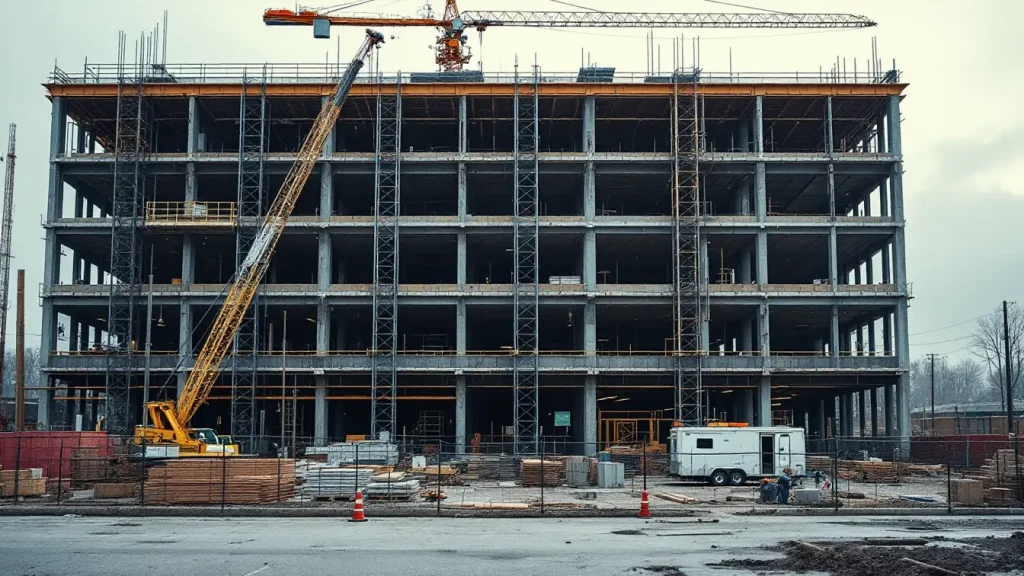
CMAR vs design-build comes down to one contract or two: CMAR keeps your architect on its own contract and adds a builder who commits to a GMP (AIA A133-2019); design-build puts design, construction and design risk in one firm.
Key takeaways
- Contract count is the core difference. Texas law defines CMAR as separate owner contracts with an architect and a construction manager-at-risk, and design-build as a single contract for design and construction (Tex. Gov’t Code 2269.251 and 2269.301).
- On 212 U.S. building projects completed after 2008, design-build was predicted to deliver 61% faster than CMAR from design start to completion and 13% faster in construction, with 1.9% lower unit cost (Molenaar and Franz, Pankow Foundation and CII, 2018).
- A 30-study meta-analysis of 4,623 projects found weighted cost growth of +2.8% for design-build and +5.8% for CMAR, but nearly equal schedule growth: +10.7% and +10.2% (Sullivan et al., ASCE, 2017).
- On highway projects of $10 million to $50 million, CM/GC agencies knew their construction price at day 329 of 662 on average, against day 765 of 1,420 for best-value design-build (FHWA-HRT-17-100, 2018).
- The builder joins at different points: CMAR firms are typically hired when design is 20% to 60% complete, design-builders at 0% to about 20% (Pankow report, 2018).
What is the difference between CMAR and design-build?
The difference between CMAR and design-build is who holds the design contract. In construction management at risk (CMAR) the owner signs two contracts: one with an architect or engineer who designs, and one with a construction manager who advises during design and then commits to a guaranteed maximum price (GMP). In design-build the owner signs one contract with a firm that does both (Tex. Gov’t Code 2269.251 and 2269.303).
Everything else follows from that structure. Under CMAR the architect works for you, so you decide design detail and you answer to the builder for the drawings. Under design-build the designer works for the design-builder, so you set requirements and the design-builder decides how to meet them. Texas even bars the owner’s architect, or any firm related to it, from serving as the CMAR on the same project (Tex. Gov’t Code 2269.252(b)).
| Question | CM at risk (CMAR, CMGC) | Design-build | Source |
|---|---|---|---|
| Contracts the owner signs | Two: architect or engineer, plus construction manager | One: design-build firm | Tex. Gov’t Code 2269.251, 2269.303 |
| Design completion when builder is hired | 20% to 60% | 0% to about 20% | Pankow 2018, p. 3 |
| Who answers to the owner for design defects | Owner, through its architect | Design-builder | United States v. Spearin, 248 U.S. 132 (1918) |
| Usual price form | Cost of the work plus fee, converted to a GMP | Lump sum, or cost plus fee with or without a GMP | Pankow 2018, p. 3 |
| Highway payment forms used | GMP 56%, unit price 38% | Lump sum 91% (best value), 85% (low bid) | FHWA-HRT-17-100, Table 4 |
| Typical AIA owner agreement | A133-2019 | A141 | AIA Contract Documents list |
| Can selection consider price? | Fee and general conditions, at a set step | Varies: qualifications only, or price plus technical | Tex. Gov’t Code 2269.253, 2269.307 |
For the 7-step CMAR process, from selection through GMP amendment and final reconciliation, see our guide to construction management at risk.
Who holds design risk in CMAR and in design-build?
In CMAR the owner holds design risk, because the owner furnishes the drawings to the builder. The U.S. Supreme Court held in United States v. Spearin (1918) that when a contractor must build to plans the owner provides, “the contractor will not be responsible for the consequences of defects in the plans.” In design-build that warranty moves to the design-builder, which produces the plans itself.
A CMAR’s design-phase review reduces drawing errors but does not transfer them. The construction manager prices and checks constructability; the architect still seals the drawings. Spearin also found the implied warranty was “not overcome by the general clauses requiring the contractor to examine the site,” so a contract must allocate design risk in plain terms if the owner wants to shift it (248 U.S. 132).
| Risk | CMAR | Design-build | Evidence |
|---|---|---|---|
| Errors and omissions in the drawings | Owner, recovers from its architect | Design-builder | Spearin, 1918 |
| Plan error change orders, highway data | 0.6% of award (CM/GC) | 0.1% (low bid), 0.5% (best value) | FHWA-HRT-17-100, Table 15 |
| Owner-directed changes, highway data | 0.7% of award | 1.6% (low bid), 1.9% (best value) | FHWA-HRT-17-100, Table 15 |
| Price rises before price is fixed | Owner until the GMP is signed | Owner until contract price is fixed | GSAR 536.7105-2 |
| Price rises after price is fixed | CM, within the GMP | Design-builder, within lump sum or GMP | GSAR 536.7105-2 |
| Unforeseen conditions, highway data | 1.5% of award | 1.8% (both types) | FHWA-HRT-17-100, Table 15 |
The trade-off is control. FHWA’s data show design-build agencies issued the most owner-directed changes (1.9% of award on best-value projects), which the report links to the lower level of design at award. If you expect to keep changing the design, CMAR keeps those decisions with your own architect at lower cost per change. This is general information, not legal advice; have counsel review the design-responsibility clauses in any agreement.
When is the price fixed in CMAR and in design-build?
In CMAR the price is fixed when the owner signs the GMP amendment, usually after the construction manager has priced developed drawings. In design-build the price can be fixed at award, often on criteria under 30% designed, or later through a negotiated GMP. FHWA found more than 75% of design-build projects reporting the figure issued the request for proposals with design under 30% complete.
Earlier is not always CMAR or always design-build. On FHWA’s $10 million to $50 million highway sample, CM/GC agencies reached a reliable price more than 60% sooner than design-bid-build, and best-value design-build about 40% sooner (FHWA-HRT-17-100, Table 11). For federal buildings, GSA’s construction-manager-as-constructor rule sets the GMP ceiling at contract award, before construction documents exist, and lets it convert to firm fixed price once design is complete (84 FR 69648, GSAR 536.7105-2).
| Delivery method (FHWA, $10M to $50M) | Mean day price known | Mean project duration (days) | Price known at % of duration |
|---|---|---|---|
| CM/GC (highway CMAR) | 329 | 662 | 49.7% |
| Design-build, best value | 765 | 1,420 | 53.9% |
| Design-bid-build | 1,184 | 2,130 | 55.6% |
The last column is our arithmetic: 329 divided by 662 is 49.7%. Measured against its own timeline, each method reaches price certainty about halfway through. The real gap is calendar time: CM/GC projects in this sample finished in 662 days, less than half the 1,420 days for best-value design-build (FHWA-HRT-17-100, Table 9). Each row has only 10 projects, so treat it as direction, not a forecast.
Do CMAR and design-build differ in cost and schedule?
For buildings, design-build was faster than CMAR in the largest recent study: 61% faster delivery speed and 13% faster construction speed on 212 projects, with 1.9% lower unit cost and 2.4% less cost growth (Molenaar and Franz, 2018). For highways, FHWA found CM/GC had the lowest cost growth, 0.9%, but no statistically significant difference between methods.
| Study | Sample | Design-build result | CMAR or CM/GC result | Source |
|---|---|---|---|---|
| Molenaar and Franz, Pankow and CII (Dec. 2018) | 212 buildings: 81 DB, 78 CMAR, 53 DBB | Unit cost 1.9% lower, cost growth 2.4% less, schedule growth 3.9% less than CMAR | Delivery speed 61% slower and construction speed 13% slower than DB | Tables 3 and 4 |
| Sullivan, El Asmar, Chalhoub, Obeid, J. Constr. Eng. Manage. 143(6) (2017) | 30 studies, 4,623 projects | Cost growth +2.8%, schedule growth +10.7% | Cost growth +5.8%, schedule growth +10.2% | Abstract |
| FHWA-HRT-17-100 (April 2018) | 291 highway projects | Cost growth 2.8% (low bid), 4.0% (best value) | Cost growth 0.9% | Table 14 |
| FHWA-HRT-17-100 (April 2018) | Award vs engineer’s estimate | Mean award growth minus 5% (low bid), minus 7% (best value) | Mean award growth plus 3%, standard deviation 6% | Table 13 |
Read the significance markers before quoting the building numbers. In Appendix B of the Pankow report, the design-build coefficient is significant at p < 0.001 for construction speed and delivery speed, but carries no significance marker for unit cost, cost growth or schedule growth. The cost growth model explained only 21.3% of variation. Speed is the finding that holds up; the cost gap is small and uncertain.
Raw medians can mislead. The Pankow data show median unit cost of $327 per square foot for design-build and $427 for CMAR, a 23% gap, yet the regression that holds facility type, size and other factors constant predicts only 1.9% (Pankow 2018, Tables 2 and 3). Design-build projects in the sample skewed toward simpler buildings, so the 23% raw gap is mostly mix, not method.
FHWA reports that CM/GC award growth was significantly higher than the other methods (p = 0.00 against design-bid-build): negotiated CM/GC prices came in 3% above the engineer’s estimate on average, while bid prices came in below. The CM/GC spread was the tightest, a 6% standard deviation, which is the predictability owners buy with a negotiated GMP (FHWA-HRT-17-100, Table 13).
Worked example: what the averages mean on a $20 million project
Applying the meta-analysis averages to a $20,000,000 contract with a 24-month planned schedule shows the scale of the difference. This illustrates published averages from 30 studies; it does not predict any single project. To rescale, multiply your own contract value by each percentage.
| Input or result | Design-build | CMAR | Arithmetic |
|---|---|---|---|
| Weighted mean cost growth (Sullivan et al., 2017) | +2.8% | +5.8% | From abstract |
| Cost growth on $20,000,000 | $560,000 | $1,160,000 | $20,000,000 x 2.8% and x 5.8% |
| Difference | $600,000 more growth under CMAR | $1,160,000 minus $560,000 | |
| Weighted mean schedule growth | +10.7% | +10.2% | From abstract |
| Months added to a 24-month plan | 2.6 | 2.4 | 24 x 10.7% and x 10.2% |
Size your construction contingency to the delivery method: a 5.8% average cost growth for CMAR argues for an owner contingency of at least that share outside the GMP, since owner changes are not covered by it. The figures in our design-build vs design-bid-build comparison set both methods against the low-bid baseline.
How are CMAR firms and design-builders selected?
Public owners must follow their state statute, and the rules differ by method. Texas Gov’t Code 2269.253 lets owners weigh a CMAR’s fee and general conditions prices in a one-step or two-step process, but bars any price factor when qualifying design-build teams. Arizona bars price at every step of qualifications-based selection for both methods. Florida runs CMAR selection under its consultants’ act.
| Jurisdiction | CMAR selection rule | Design-build selection rule | Statute |
|---|---|---|---|
| Texas (local and state facilities) | One-step or two-step; in two-step, no fees in step one, then five or fewer offerors give fee and general conditions; rank within 45 days of opening | Buildings only; RFQ plus design criteria package; no cost or price factors in qualification; a maximum of five qualified; owner may not require designs in proposals | Gov’t Code 2269.253, 2269.302, 2269.306, 2269.307 |
| Texas trade work under CMAR | CMAR must publicly advertise for trade bids on all major elements; may self-perform only by bidding like any trade and being judged best value | Not applicable | Gov’t Code 2269.255 |
| Florida (counties, cities, school districts) | Selected under the CCNA process, at least three firms ranked on qualifications; GMP optional after negotiation, with a s. 255.05 bond; continuing contracts capped at $7.5 million per project, CPI-adjusted each July 1 | Competitive proposals on a design criteria package from at least three qualified firms, or qualifications-based selection with a GMP negotiated later | s. 255.103, s. 287.055(4), (9) |
| Arizona (state and local agents) | Qualifications only: no fees, price or man-hours considered at any point; final list of three to five | Same qualifications route, or an alternative with separate technical and price proposals, a final list of three, and a stipend of at least 0.4% of budget to responsive losers | A.R.S. 34-603(C), (F) |
| Federal (GSA and FAR) | GSA CMc: technical factors significantly more important than price; GMP price competition before award | Two-phase: no price in phase one; phase two normally limited to five offerors | GSAR 536.7103, FAR 36.303-1 |
Two rules catch owners most often. Florida bars the professional who prepares the design criteria package from joining any design-build team that bids on it (s. 287.055(9)(b)). Texas design-build owners must also hire an independent architect or engineer as their representative for the whole project (Gov’t Code 2269.305). Private owners face none of these rules but can borrow them; our guide on how to choose a commercial contractor covers the qualification side.
Is CMGC the same as CMAR?
CMGC (construction manager/general contractor) is the name transportation agencies use for the same two-phase model as CMAR. Federal law has authorized it for highway projects since 2012: an agency may award “a 2-phase contract to a construction manager or general contractor for preconstruction and construction services,” then agree a price before construction (23 U.S.C. 112(b)(4), added by Pub. L. 112-141).
The main practical difference is pricing. FHWA found CM/GC highway contracts used a GMP 56% of the time and unit prices 38% of the time, while building CMAR contracts almost always end in a GMP. By the end of 2014, 17 state DOTs used CM/GC and 35 used design-build (FHWA-HRT-17-100). A 2019 Transportation Research Record paper found progressive design-build and CMGC “nearly identical” in format, differing only in whether the owner keeps design responsibility (Gransberg and Molenaar, TRR 2673(1)).
Which fits your project: CMAR or design-build?
Choose CMAR when design is already past about 20%, when you need your own architect to control detail, or when you cannot yet write performance criteria. Choose design-build when the program is definable in performance terms and the finish date matters most: the Pankow data put design-build 61% faster than CMAR on delivery speed, the one result that was statistically significant.
| If your project looks like this | Lean toward | Why, with source |
|---|---|---|
| Architect already hired and design past schematic (over about 20%) | CMAR | Design-builders are typically hired at 0% to about 20% design (Pankow 2018) |
| Hospital, lab, signature or phased campus work where you want design control | CMAR | Owner keeps the architect; Texas bars that architect from being the CMAR (2269.252(b)) |
| Warehouse, self-storage or pre-engineered metal building with a clear program | Design-build | Performance criteria are easy to write; design-build delivery 61% faster than CMAR (Pankow 2018) |
| You want one party answerable for both drawings and construction | Design-build | Spearin warranty sits with whoever furnishes the plans (248 U.S. 132) |
| You expect many owner changes during design | CMAR | Owner-directed changes ran 0.7% of award under CM/GC vs 1.9% under best-value design-build (FHWA Table 15) |
| Public building in Texas | Either | Both authorized; design-build qualification cannot use price (2269.307(a)) |
| Public road, water or drainage work in Texas | Check the subchapter | Building design-build rules exclude civil works (2269.302); civil works design-build is in Subchapter H |
| Small in-house team that cannot manage two contracts | Design-build | One contract and one point of coordination (2269.303) |
Method is not the whole answer. In the Pankow interviews, an owner-driven relational culture appeared on 78% of the best-performing projects against 14% of the worst, and earlier builder involvement predicted lower cost growth under any method (Pankow 2018). Builder input during design is the subject of our page on preconstruction services, and the standard forms for each route are compared in our guide to AIA contract documents. Firms that offer single-contract delivery are profiled in our design-build contractors guide.
A third option is progressive design-build, and the clauses that differ are compared in our design-build contract guide.
How we compiled this
We read the full text of three performance studies (the 2018 Pankow and CII report, FHWA TechBrief FHWA-HRT-17-100 and the 2019 Gransberg and Molenaar TRR paper) plus the published abstract of the 2017 Sullivan meta-analysis, whose full text is paywalled. We read the statute or regulation text for Texas, Florida, Arizona, federal highways, FAR and GSA, and the Spearin opinion, in November 2026. Percent-of-duration and dollar figures in the worked tables are our arithmetic from those sources.
Frequently asked questions
What is the main difference between CMAR and design-build?
The number of contracts. In CMAR the owner signs separately with an architect and with a construction manager who later commits to a guaranteed maximum price. In design-build the owner signs one contract with a firm that designs and builds. Texas defines both this way in Government Code sections 2269.251 and 2269.301, and the rest of the differences, including who answers for design errors, follow from that structure.
Is design-build cheaper than CMAR?
Slightly, on average, but the evidence is weak. The 2018 Pankow and CII study of 212 buildings predicted design-build unit cost 1.9% below CMAR, yet that coefficient was not statistically significant. A 2017 meta-analysis of 4,623 projects found cost growth of 2.8% for design-build against 5.8% for CMAR. Team chemistry and early builder involvement also predicted cost results under either method.
Is design-build faster than CM at risk?
For buildings, yes. The 2018 Pankow and CII study found design-build delivery speed 61% faster and construction speed 13% faster than CMAR, both significant at p below 0.001. Highway data differ: FHWA found CM/GC projects of $10 million to $50 million averaged 662 days against 1,420 for best-value design-build, though each group had only 10 projects.
When is the GMP set in CMAR?
Usually after the construction manager has priced developed drawings, when the owner signs a GMP amendment. GSA’s federal CMc rule instead sets the GMP ceiling at contract award, before construction documents exist, and converts it once design is complete. The Pankow report notes CMAR contracts often begin cost reimbursable and are converted to a GMP or lump sum later in the project.
What does CMGC mean, and is it different from CMAR?
CMGC means construction manager/general contractor, the transportation-sector name for the same two-phase model. 23 U.S.C. 112(b)(4), added in 2012, lets highway agencies award a 2-phase preconstruction and construction contract. FHWA found CM/GC contracts priced as a GMP 56% of the time and on unit prices 38% of the time, while building CMAR almost always ends in a GMP.
Can a public owner choose either CMAR or design-build?
Only as its statute allows. Texas authorizes both for buildings but limits building design-build to buildings and associated structures under section 2269.302, with civil works in a separate subchapter. Arizona section 34-603 requires qualifications-based selection for both. Florida runs CMAR selection under the CCNA in section 287.055 and sets separate design-build rules in section 287.055(9).
Sources
- Revisiting Project Delivery Performance, Final Report, Molenaar and Franz, Charles Pankow Foundation and Construction Industry Institute, December 31, 2018 (accessed November 21, 2026)
- Alternative Contracting Method Performance in U.S. Highway Construction, FHWA-HRT-17-100, Federal Highway Administration, April 2018 (accessed November 21, 2026)
- Two Decades of Performance Comparisons for Design-Build, Construction Manager at Risk, and Design-Bid-Build, Sullivan, El Asmar, Chalhoub and Obeid, Journal of Construction Engineering and Management 143(6), 2017 (abstract accessed November 21, 2026)
- Critical Comparison of Progressive Design-Build and Construction Manager/General Contractor Project Delivery Methods, Gransberg and Molenaar, Transportation Research Record 2673(1), 2019 (accessed November 21, 2026)
- Texas Government Code Chapter 2269, Subchapters F and G (accessed November 21, 2026)
- Florida Statutes s. 255.103 and s. 287.055, 2025 (accessed November 21, 2026)
- Arizona Revised Statutes 34-603 (accessed November 21, 2026)
- 23 U.S.C. 112, Letting of contracts (accessed November 21, 2026)
- FAR 36.303-1, Phase One (accessed November 21, 2026)
- GSAR Construction Manager as Constructor final rule, 84 FR 69648, December 19, 2019 (accessed November 21, 2026)
- United States v. Spearin, 248 U.S. 132 (1918) (accessed November 21, 2026)
- List of All Current AIA Contract Documents, AIA Contract Documents (accessed November 21, 2026)