Design-Build Contractors: One Contract for Design and Construction
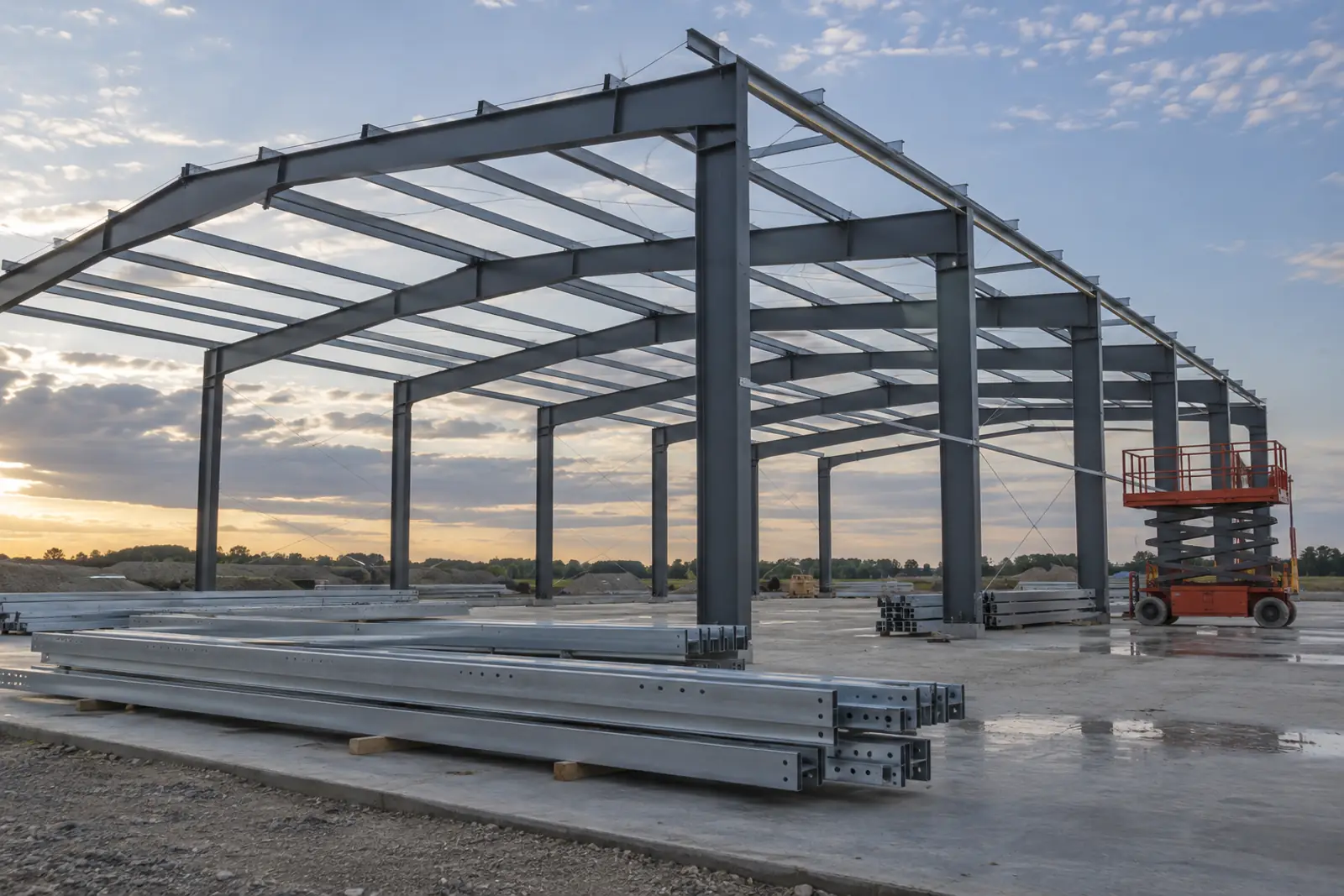
Design-build contractors take a single contract to design and construct your building, so one firm answers for drawings, price and schedule. You describe what you need in performance terms, the design-builder develops the design and a price, and construction can start before every drawing is finished. It trades some owner control for speed and single-point responsibility.
- One contractDesign and construction sit with a single firm or team.
- OverlapSite work can start while later drawings are still in progress.
- Criteria matterThe quality you get depends on how well you define what you want.
How design-build works
The Federal Highway Administration defines design-build as a project delivery method that combines two usually separate services, design and construction, in a single contract. The design-builder may be one company with architects and builders on staff, or a contractor that hires an architecture firm as its subconsultant. Either way, you hold one contract and one party answers for gaps between the drawings and the built work.
The AIA's owner and design-builder agreement (A141, current edition 2024) lays out a typical sequence. It is a useful map even if you use a different form.
- Owner's criteria
You set out the program, performance requirements, budget and schedule.
- Preliminary design
The design-builder reviews the criteria and develops site plans, building plans, the structural system and major system choices.
- Proposal
The design-builder proposes a contract sum, completion date, qualifications and key personnel.
- Design-Build Amendment
Once you agree, the amendment fixes the contract sum and records the information it is based on.
- Final design and construction
Design is completed and construction proceeds, often in overlapping packages.
Design-build is one of the services on our commercial construction services hub. For a side-by-side view with the traditional method, read design-build vs design-bid-build.
Lump-sum, progressive and bridging design-build
Design-build is a family of approaches that differ mainly in how far design goes before the price is fixed and how the firm is chosen.
Lump-sum design-build: Firms compete on a price and a concept based on your criteria. Price certainty comes early, but proposals cost bidders money and your criteria must be detailed enough to hold them to a quality level.
Progressive design-build: You select the firm mainly on qualifications, then design develops with you in stages and the price, often a guaranteed maximum price, is set once design is far enough along. DBIA publishes a dedicated progressive design-build agreement, Document 544.
Bridging: Your own architect or engineer prepares a partial design or criteria package, and design-builders price and complete it. Florida law calls this owner-side document a design criteria package for public projects.
Progressive design-build owners can compare the price-development stage with standalone preconstruction services agreements used with a separate architect.
Design-build contracts: AIA A141 and DBIA documents
Two families of standard forms dominate private design-build work in the United States. AIA Contract Documents publishes A141-2024, which replaced A141-2014 and includes the agreement plus Exhibit A (insurance and bonds), Exhibit B (the Design-Build Amendment, signed once the parties agree on the contract sum) and Exhibit C for sustainable projects. Under the 2014 edition the parties chose one of three payment types: a stipulated sum, cost of the work plus a fee, or cost of the work plus a fee with a guaranteed maximum price. The Design-Build Institute of America publishes its own set, including an owner agreement on a cost-plus-fee basis with an option for a guaranteed maximum price and a progressive design-build agreement.
| Form | Publisher | Used for | Basis of payment |
|---|---|---|---|
| A141-2024 | AIA Contract Documents | Owner and design-builder; Exhibit A Design-Build Amendment fixes the contract sum | Choice of stipulated sum, cost plus fee, or cost plus fee with a guaranteed maximum price |
| Document No. 530 | Design-Build Institute of America | Owner and design-builder | Cost plus fee with an option for a guaranteed maximum price |
| Document No. 544 | Design-Build Institute of America | Progressive design-build agreement | Firm selected first; price developed as design progresses |
| A133-2019 (for comparison) | AIA Contract Documents | Owner and construction manager as constructor, with a separate architect | Cost of the work plus a fee with a guaranteed maximum price |
Check the publisher for the current edition before use. DBIA's sample of Document 530 is the second edition; DBIA sells a full contract set.
Design-build contractors compared with other delivery methods
The three common methods differ in who you contract with, when the builder joins and when the price is set. Construction management at risk keeps a separate architect but brings the builder in during design; we cover it on our construction management at risk page.
| Question | Design-bid-build | Design-build | CM at risk |
|---|---|---|---|
| Contracts the owner signs | Architect, then builder | One design-builder | Architect and construction manager |
| Builder joins | After drawings are complete | At the start | During design |
| Price set | At bid award | At proposal or Design-Build Amendment | At guaranteed maximum price amendment |
| Design and build overlap | Little | Yes, construction can start before design is final | Yes, in packages |
| Owner control of design | Highest | Lowest, set through criteria | High, through own architect |
| Who answers for design gaps | Owner, between architect and builder | Design-builder | Owner and architect, with CM input |
Typical arrangements; contract terms can shift each item.
The most cited public evidence comes from highways, not buildings. FHWA's Design-Build Effectiveness Study (2006) drew on 140 completed design-build projects worth $5.5 billion. Project managers reported that design-build reduced project duration by 14 percent and total cost by 3 percent compared with design-bid-build, while keeping the same quality. The median responses showed no change in cost or quality, so results varied widely by project. Treat the figures as directional for buildings.
Mean of project manager responses, highway projects, 2006 report
Source: Federal Highway Administration, Design-Build Effectiveness Study (January 2006). Median responses showed no change in cost.
When design-build fits, and when it does not
- Good fit: warehouses, metal buildings, flex space and other repeatable building types where performance criteria are easy to write.
- Good fit: owners who want one accountable party and have limited in-house staff to coordinate architect and builder disputes.
- Good fit: schedules that benefit from starting site work and foundations before the interior design is final.
- Poor fit: buildings where architecture is the point, such as civic landmarks or flagship stores, and the owner wants full control of design.
- Poor fit: owners who expect to change the program often; each change after the price is set becomes a change order.
- Poor fit: projects already fully designed; there is little room left for the design-builder to add value.
Pre-engineered and tilt-up buildings are often delivered design-build; see our metal building contractors and warehouse construction pages.
Price certainty in a rising market
One reason owners choose design-build is to lock a price earlier than a fully designed bid allows. That matters when building prices keep rising. Federal producer price data shows contractors' prices for new office buildings up 54.4% from January 2020 to August 2026, warehouses up 50.6% and all new nonresidential buildings up 46.3%, with the last twelve months adding 5.3%. A price fixed months earlier can be worth real money, but only if the scope behind it is clear.
Producer Price Index, January 2020 to August 2026
Source: U.S. Bureau of Labor Statistics, Producer Price Indexes (August 2026 release); CB&C calculation
Monthly data is in our commercial construction price index. For budgeting before you approach firms, our cost per square foot guide explains which published benchmarks are useful.
Writing owner's criteria that hold up
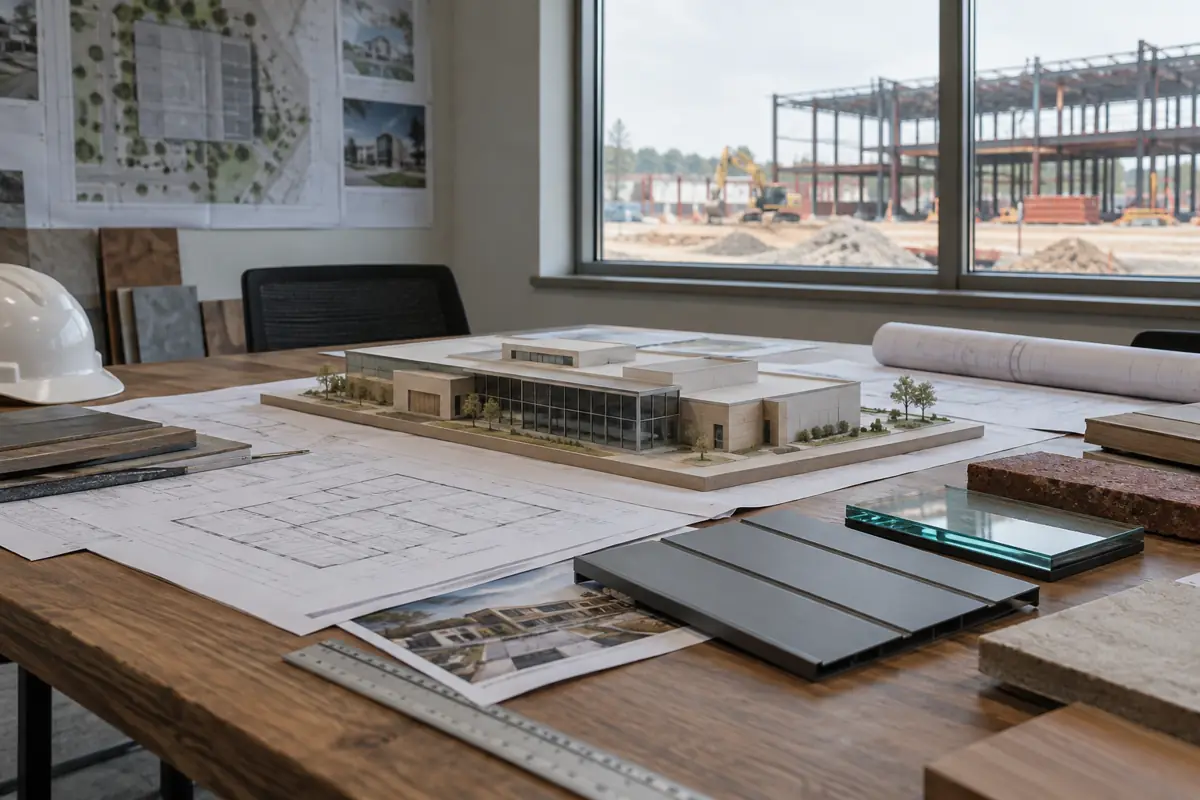
In design-build your criteria document does the job that a full set of drawings does in design-bid-build: it is the yardstick for whether you got what you paid for. Criteria that say "Class A office finishes" invite argument; criteria that name the ceiling system, the lighting levels, the HVAC zoning and the roof warranty do not. The aim is to fix performance and quality while leaving the design-builder room to choose how to meet them, which is where the method saves time and money.
- ProgramSpaces, sizes, adjacencies, occupancy and expected growth.
- SiteSurvey, geotechnical report, utility letters and any known environmental conditions, so bidders price the same ground.
- PerformanceStructural loads, clear heights, HVAC design conditions, power density, acoustic and energy targets.
- QualityNamed systems or equivalents for roof, envelope, finishes, and warranty terms you expect.
- ApprovalsWhich permits, utility approvals and landlord or association reviews the design-builder must obtain.
- DeliverablesReview stages, drawing submittals, schedule updates and closeout documents.
Many owners hire an architect or owner's representative for this stage only. It costs far less than a full design and gives you an independent reviewer during construction.
Name the closeout deliverables too, including the CAD record set and model described in our guide to as-built drawings.
Risks owners carry in design-build
- No independent design checkThe designer works for the builder; consider an owner's representative or criteria architect to review drawings.
- Vague criteriaIf the criteria do not specify finishes, systems and performance, the cheapest compliant option is what you get.
- Owner changesChanges to your program after the amendment become change orders priced by the design-builder.
- Design liabilityConfirm the design-builder or its architect carries professional liability insurance suited to the project.
- Value engineering pressureSavings proposals should show what quality or life-cycle cost changes with each one.
- Open-book termsOn cost-plus arrangements, define audit rights, contingency use and how savings are shared.
On design-bid-build jobs the same questions travel as formal requests between separate firms, which is how an RFI in construction turns into a change order.
Before accepting a savings proposal, test it on 25-year life-cycle cost using our guide to value engineering in construction and how to test a VE proposal.
Design-build in Florida, public and private
Florida's Consultants' Competitive Negotiation Act, section 287.055 of the Florida Statutes, governs design-build on public projects. A design criteria professional prepares and seals the design criteria package and cannot take part in the resulting design-build contract. Under competitive proposal selection, the agency qualifies no fewer than three design-build firms on qualifications and past work before evaluating proposals on price and technical merit; agencies may instead use qualifications-based selection and negotiate a guaranteed maximum price.
Private owners in Miami-Dade and Broward should write High-Velocity Hurricane Zone requirements into their criteria: wind design, product approvals for windows, doors and roofing, and who carries the lead-time risk. Our HVHZ construction primer explains those approvals, and the South Florida commercial construction report covers local contractor supply.
How to evaluate design-build firms
- Design teamIs the architect in-house or a partner? Have they delivered together before? Meet the lead designer.
- Licensing on both sidesThe firm needs a contractor license for the state, and design must be sealed by licensed architects and engineers.
- Comparable projectsAsk for buildings of your type and size delivered design-build, with owner references.
- Criteria responseStrong firms ask hard questions about your criteria before pricing, not after.
- Pricing transparencyAsk how the contract sum is built up and which allowances and contingencies it contains.
- Insurance and bondingProfessional liability, general liability, builder's risk and bonding capacity matching the job.
Our guide to choosing a commercial contractor covers license lookups and reference calls. State licensing rules for contractors are summarized in the contractor licensing by state registry.
Frequently asked questions
What does a design-build contractor do?
It takes responsibility for both designing and building your project under one contract, using in-house architects and engineers or design firms it hires. You deal with one party for drawings, price, schedule and fixing any gap between design and construction.
Is design-build faster than design-bid-build?
Often, because construction can start before design is complete and there is no separate bid period. FHWA's 2006 study of highway projects found a 14 percent reduction in duration on average, though results varied widely.
Is design-build cheaper?
Not reliably. FHWA's study reported a 3 percent average cost reduction, but the median response showed no change. Savings depend on clear criteria, competition at selection and how changes are handled.
What contract is used for design-build?
Common choices are AIA A141-2024 and the Design-Build Institute of America's owner agreements, including a cost-plus-fee form with a guaranteed maximum price option and a progressive design-build agreement. Have an attorney review whichever you use.
What is progressive design-build?
A version where you select the design-builder mainly on qualifications, develop the design together in stages, and set the price once design is far enough along. It gives more owner input than lump-sum design-build but less early price certainty.
Do I still need my own architect?
Not to produce drawings, but many owners hire an independent architect or owner's representative to write the criteria and review the design-builder's work. On Florida public projects a design criteria professional prepares the criteria package.
Who owns the drawings in design-build?
It depends on the contract. Standard forms address ownership and licensing of the design documents, including what happens if the contract ends early. Make sure you can use the drawings to operate, maintain and later alter the building.
How do I compare design-build proposals?
Compare what each proposal includes against your criteria before comparing price: systems, finishes, allowances, exclusions and schedule. Scoring qualifications and design separately from price helps avoid choosing the thinnest proposal.
Sources
- [1] Federal Highway Administration. Alternative Project Delivery Defined: Design-Build. Accessed 2026-10-07.
- [2] Federal Highway Administration. Design-Build Effectiveness Study, Executive Summary (January 2006). Accessed 2026-10-07.
- [3] AIA Contract Documents. Summary: A141-2014, Agreement Between Owner and Design-Builder. Accessed 2026-10-07.
- [4] AIA Contract Documents. Instructions: A133-2019, Owner and Construction Manager as Constructor, Cost of the Work Plus a Fee with a GMP. Accessed 2026-10-07.
- [5] Design-Build Institute of America. DBIA Document No. 530, Standard Form of Agreement Between Owner and Design-Builder, Cost Plus Fee with an Option for a Guaranteed Maximum Price (sample). Accessed 2026-10-07.
- [6] Design-Build Institute of America. DBIA Contract Documents store (Document 544, Progressive Design-Build Agreement, and full contract set). Accessed 2026-10-07.
- [7] General Services Administration, Federal Register (via govinfo.gov). GSAR: Adoption of Construction Project Delivery Method Involving Early Industry Engagement, Construction Manager as Constructor (CMc), final rule, 84 FR 69648. Accessed 2026-10-07.
- [8] U.S. Bureau of Labor Statistics. Producer Price Index industry data for construction (pc.data.75.Construction). Accessed 2026-10-07.
- [9] U.S. Bureau of Labor Statistics. PPI commodity data for construction, including WPU801 (wp.data.80.Construction). Accessed 2026-10-07.
- [10] The Florida Senate. Florida Statutes 287.055, Acquisition of professional architectural, engineering, landscape architectural, or surveying and mapping services (CCNA). Accessed 2026-10-07.