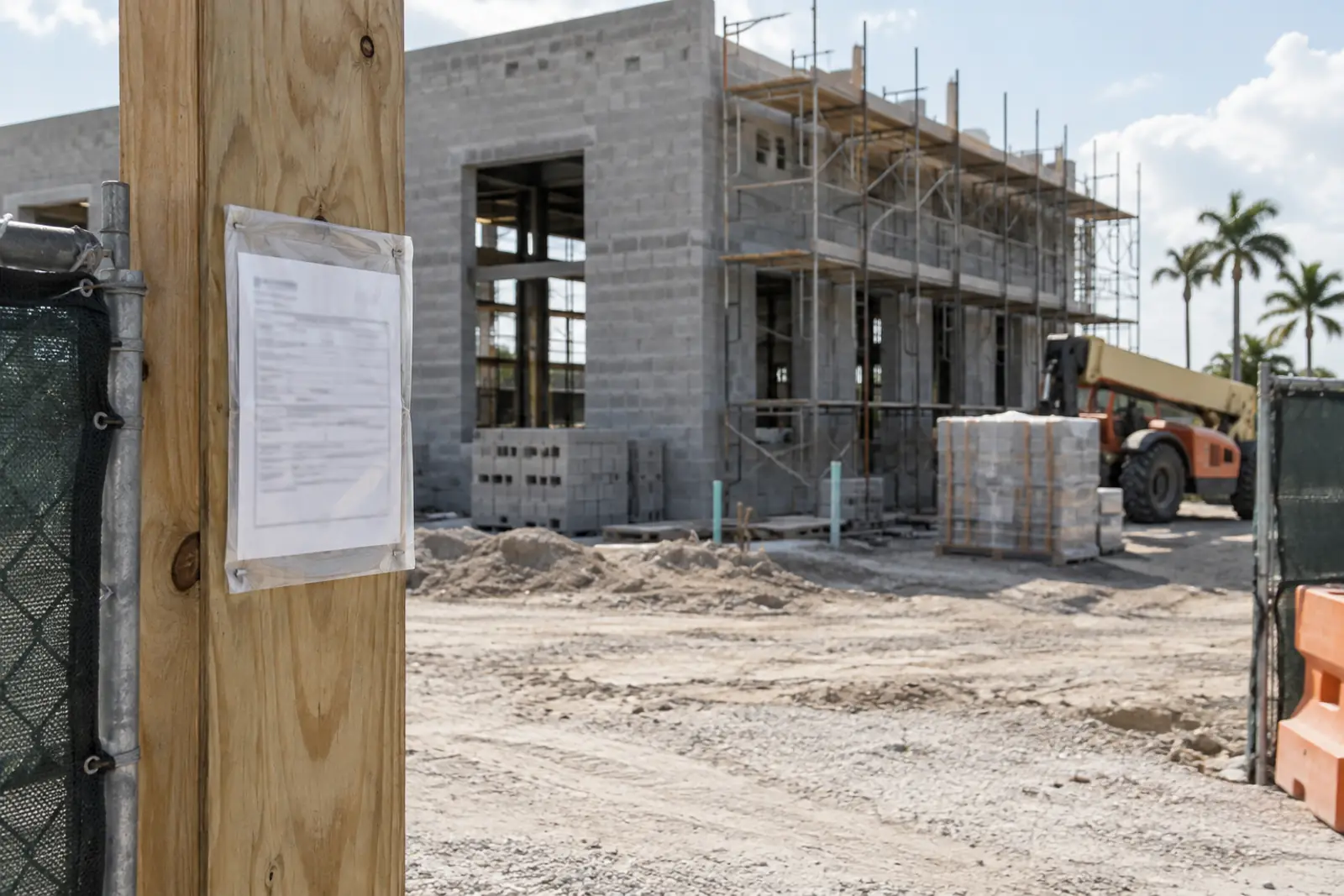
Commercial Building Permits in Florida: Review, Inspections and Occupancy
Commercial building permits are required in Florida before you build, alter, repair, demolish or change the occupancy of a building. A licensed contractor applies, plan reviewers check the drawings against the Florida Building Code, inspectors visit at set stages, and the building official issues a certificate of occupancy before the space can be used.
When commercial building permits are required
Section 105.1 of the Florida Building Code requires any owner, authorized agent or contractor who wants to construct, enlarge, alter, repair, move, demolish or change the occupancy of a building, or to install, alter or replace regulated electrical, gas, mechanical or plumbing systems, to apply to the building official and obtain a permit first. The City of Jacksonville quotes that rule on its commercial permits page, and it applies statewide. Section 105.2 lists limited exemptions, such as certain minor repairs, and local ordinances can add detail.
For a commercial project that usually means several permits rather than one: a building permit plus separate electrical, mechanical, plumbing, fire sprinkler, fire alarm, roofing and sign permits, and often site clearing or right-of-way permits. Jacksonville, for example, says site clearing, building, electrical, mechanical and plumbing permits are generally required for any new commercial project, and that commercial work needs review beyond the building code for items such as parking, landscaping and water management.
The building permit is also not the only approval. In Miami-Dade County, permits issued by municipalities can still need county approvals from environmental resources management (DERM), water and sewer, impact fees, fire rescue and the health department. Plan these approvals in parallel with design rather than after it; our commercial construction process guide shows where they fit.
Who can apply for a commercial permit
In Florida the contractor taking out a permit must give the building department its Construction Industry Licensing Board registration or certification number, under Fla. Stat. 489.119, and building departments require it as a condition of issuing the permit. The license class must cover the work: a building contractor's scope, for example, is limited to buildings of up to three stories. Our guide on how to choose a commercial contractor explains how to check a license, and the licensing by state report covers other states.
Owners can act as their own contractor only in narrow cases. Fla. Stat. 489.103 lets owners build or improve commercial buildings costing up to $75,000 for their own occupancy or use, not for sale or lease, while personally supervising the work. Anything larger needs a licensed contractor on the permit.
Certified general (CGC) plus certified building (CBC) licenses by county of address
Source: Florida DBPR Construction Industry Licensing Board licensee extract, via CB&C Research
South Florida has a deep pool of licensed builders to draw on. DBPR's licensee file shows 5,726 active certified general and building contractor licenses with Miami-Dade addresses, 4,100 in Broward and 3,511 in Palm Beach County. The South Florida commercial construction report has the full breakdown.
How plan review works and how long it takes
- Pre-application check.
Confirm zoning, the jurisdiction that will issue the permit and any county or utility approvals needed.
- Submit a complete application.
Construction documents sealed by the architect and engineers, the contractor's license number, product approvals and any other documents the department lists. Many departments take electronic submissions; Jacksonville requires them through its JaxEPICS portal.
- Completeness review.
The department must tell you within 5 business days what information is missing, or the application is deemed complete.
- Technical review.
Reviewers for building, structural, mechanical, electrical, plumbing, fire and accessibility check the drawings and issue comments.
- Respond to comments.
The design team revises the drawings and resubmits; each correction cycle adds time.
- Permit issued.
Fees are paid, the permit card is issued and work can start once the Notice of Commencement is recorded.
Florida law sets the clock. Under Fla. Stat. 553.792, a local government must approve, approve with conditions or deny a permit for a nonresidential building under 25,000 square feet within 60 business days of receiving a complete and sufficient application, unless the applicant waives the deadline in writing, and it may not demand a waiver as a condition of review. If it misses the deadline, the permit fee drops by 10% for each business day late. If the department instead sends a timely written notice listing code deficiencies, the applicant has 10 business days to submit revisions, and the department then has 10 business days to decide or face a 20% fee reduction per day.
| Step | Deadline | If missed | Statute |
|---|---|---|---|
| Notice of missing information after application | 5 business days | Application deemed complete and accepted | Fla. Stat. 553.792(1)(c) |
| Decision on nonresidential building under 25,000 sq ft | 60 business days after a complete application | Permit fee reduced 10% per business day late | Fla. Stat. 553.792(1)(a)4 |
| Applicant revisions after a timely deficiency notice | 10 business days | Application denied | Fla. Stat. 553.792(1)(f) |
| Decision after timely revisions | 10 business days | Permit fee reduced 20% per business day late | Fla. Stat. 553.792(1)(g) |
| Private provider submission: notice of incomplete documents | 10 business days | Permit deemed approved, issued next business day | Fla. Stat. 553.791 |
| Application left inactive | Abandoned 180 days after filing; extensions of up to 90 days each | New application needed | Florida Building Code 105.3.2 |
Deadlines can be waived in writing by the applicant. Local ordinances may set shorter deadlines. Summary as of October 2026, not legal advice.
Maximum time allowed by Fla. Stat. 553.792 and 553.791
Source: Florida Statutes 553.792 and 553.791 (2026), CB&C summary
An application is not open forever either. The Florida Building Code treats an application as abandoned 180 days after filing unless it is pursued in good faith or a permit has been issued, though the building official may grant extensions of up to 90 days each. Actual review times vary by department and season; the commercial building permits by city report compiles permit data from city open-data portals.
Kitchens also need health department plan review under Food Code Section 8-201.11, explained in our guide to the commercial kitchen.
Food businesses file a separate health plan review, covered in our commercial kitchen design guide.
Restaurant plan reviewers check sink counts, sizes and indirect drains, which our commercial kitchen sink requirements page lays out by code section.
The Florida Building Code and the High-Velocity Hurricane Zone
Florida has a single statewide building code, adopted by the Florida Building Commission. The Commission states that the Florida Building Code, 8th Edition (2023), took effect on December 31, 2023. Work on the 9th Edition (2026) was still under way in autumn 2026, with a second comment period on proposed glitch changes ending October 8, 2026; check the Commission's site for the effective date before you submit. The certificate of occupancy records the code edition under which the permit was issued.
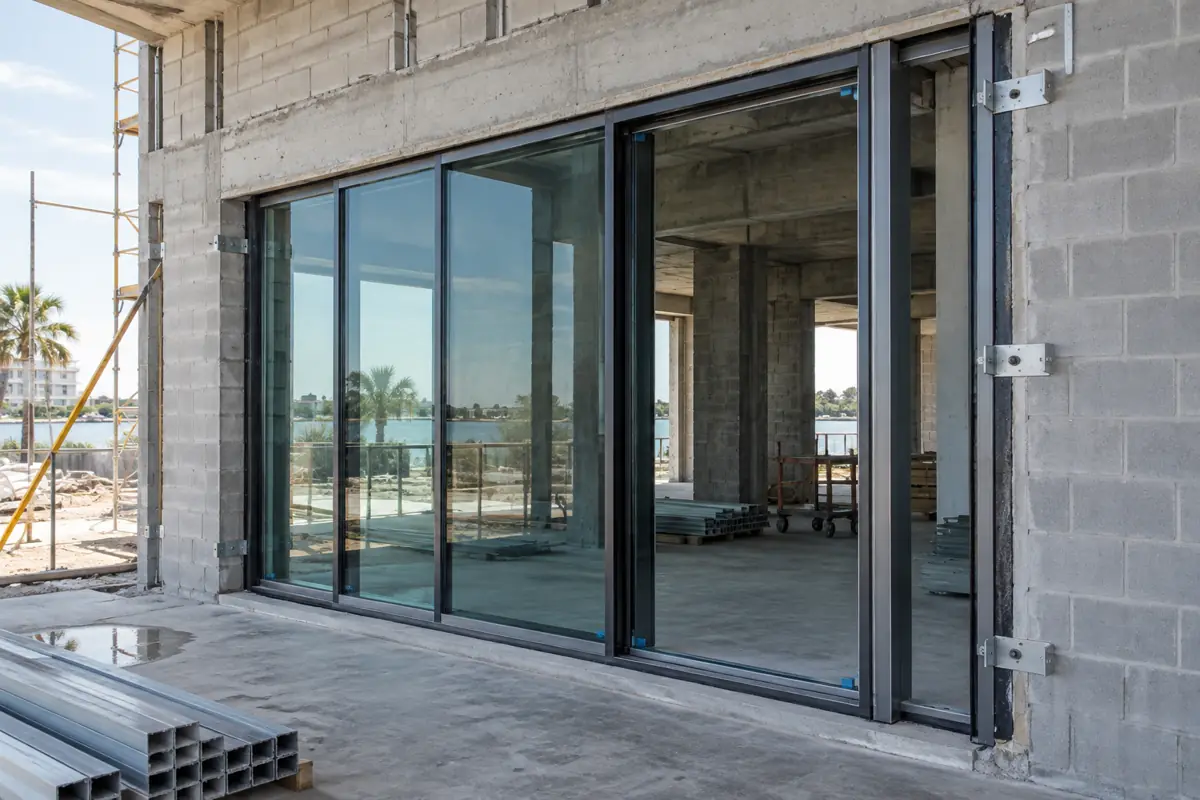
The code's definitions chapter states that the High-Velocity Hurricane Zone consists of Broward and Miami-Dade counties. Inside the zone, the code applies its strictest wind provisions to structure, roofing, masonry and exterior openings, and exterior products generally need approvals rated for the zone; Miami-Dade's Product Control section issues Notices of Acceptance for many of them. Plan reviewers check those approvals against the drawings, and inspectors check the installed product against the approval. Our article on high-velocity hurricane zone construction covers the practical effects on budget and schedule.
Building departments in Florida's main metros
The right department depends on where your parcel is, not on the city name in the mailing address. Counties issue permits in unincorporated areas, and most cities run their own building departments. In Broward, for example, the county Building Code Division covers the Broward Municipal Services District, Fort Lauderdale International Airport and cities that contract with it, while the Board of Rules and Appeals hears code appeals and adopts local amendments countywide. Confirm the jurisdiction with the property appraiser's record before you submit.
| Jurisdiction | Department | Notes | Official page |
|---|---|---|---|
| Miami-Dade County | Regulatory and Economic Resources, Building | Unincorporated areas; county approvals (DERM, water and sewer, impact fees, fire rescue, health) for municipal permits; Product Control for HVHZ products | miamidade.gov building |
| Broward County | Building Code Division | Broward Municipal Services District, the airport and contracting cities | broward.org/Building |
| Broward County | Board of Rules and Appeals | Countywide code amendments, appeals and interpretations | broward.org/CodeAppeals |
| Palm Beach County | Planning, Zoning and Building, Building Division | Unincorporated Palm Beach County | pbcgov.org building |
| City of Tampa | Construction Services Division | All building permits and inspections within city limits | tampa.gov/construction-services |
| City of Orlando | Permitting Services | Permit guide and digital plan review | orlando.gov permits |
| City of Jacksonville | Building Inspection Division | Online submission through JaxEPICS required | jacksonville.gov commercial permits |
Pages opened October 7, 2026. Cities such as Miami and Fort Lauderdale run their own building departments; their sites blocked our automated check, so look them up directly.
If you are planning work in one of these markets, our city pages for Miami, Tampa, Orlando and Jacksonville describe the local market.
Notice of Commencement
Florida's Construction Lien Law adds a step most other states do not have. Under Fla. Stat. 713.13, before starting an improvement the owner, or the owner's authorized agent, must record a Notice of Commencement with the clerk of court and post a certified copy, or a notarized statement that it has been filed together with a copy, at the job site. A tenant who contracts for the work counts as an owner and must say that its interest is a leasehold.
| Rule | Detail | Statute |
|---|---|---|
| Who records | Owner or owner's authorized agent; a contracting tenant is listed as owner with a leasehold statement | Fla. Stat. 713.13(1)(a) |
| When | Before actually commencing the improvement | Fla. Stat. 713.13(1)(a) |
| Where | Recorded in the clerk's office; certified copy or notarized statement with copy posted on site | Fla. Stat. 713.13(1)(a) |
| Contents | Property description, improvement, owner, contractor, surety, lender and designee details | Fla. Stat. 713.13(1)(a) |
| Expiry | Void if the improvement does not start within 90 days of recording; must state a longer period if completion is expected to exceed 1 year | Fla. Stat. 713.13 |
| Copy to building department | Required before the first inspection when the direct contract is greater than $5,000 | Fla. Stat. 713.135(1)(e) |
| HVAC exception | Inspection requirement does not apply to HVAC repair or replacement contracts under $15,000 | Fla. Stat. 713.135(1) |
Summary of statutory text as opened October 7, 2026. Not legal advice.
The building department has its own role under Fla. Stat. 713.135. It must print a warning on the permit card that failing to record a Notice of Commencement may result in paying twice for improvements, and it must require a copy of the notice before the first inspection when the direct contract is greater than $5,000. Contracts to repair or replace an existing heating or air-conditioning system for less than $15,000 are excluded from those inspection requirements. Lien rules in other states are compared in our mechanics lien laws by state registry.
Thresholds, form items, county recording fees and the 90-day and 1-year clocks are covered in our guide to the notice of commencement in Florida.
Inspections and the certificate of occupancy
Section 110.3 of the Florida Building Code lists the inspections the building official requires. On a typical commercial project they include footing and foundation, concrete slab and under-floor, framing, lath and gypsum board, fire- and smoke-resistant penetrations, energy efficiency and a final inspection, plus impact-resistant coverings where they apply. Trade permits carry their own rough-in and final inspections. Each inspection must pass before the work is covered.
Threshold buildings get more. Fla. Stat. 553.71 defines a threshold building as one greater than three stories or 50 feet in height, or an assembly occupancy over 5,000 square feet with an occupant content greater than 500 persons. For these, the enforcing agency requires a special inspector to carry out structural inspections under an inspection plan prepared by the engineer or architect of record and submitted before the permit is issued.
Keep the permit alive. Under Section 105.4.1, a permit becomes invalid if work does not start within 6 months of issue or is suspended or abandoned for 6 months, and work counts as in active progress when an inspection has been approved within 180 days.
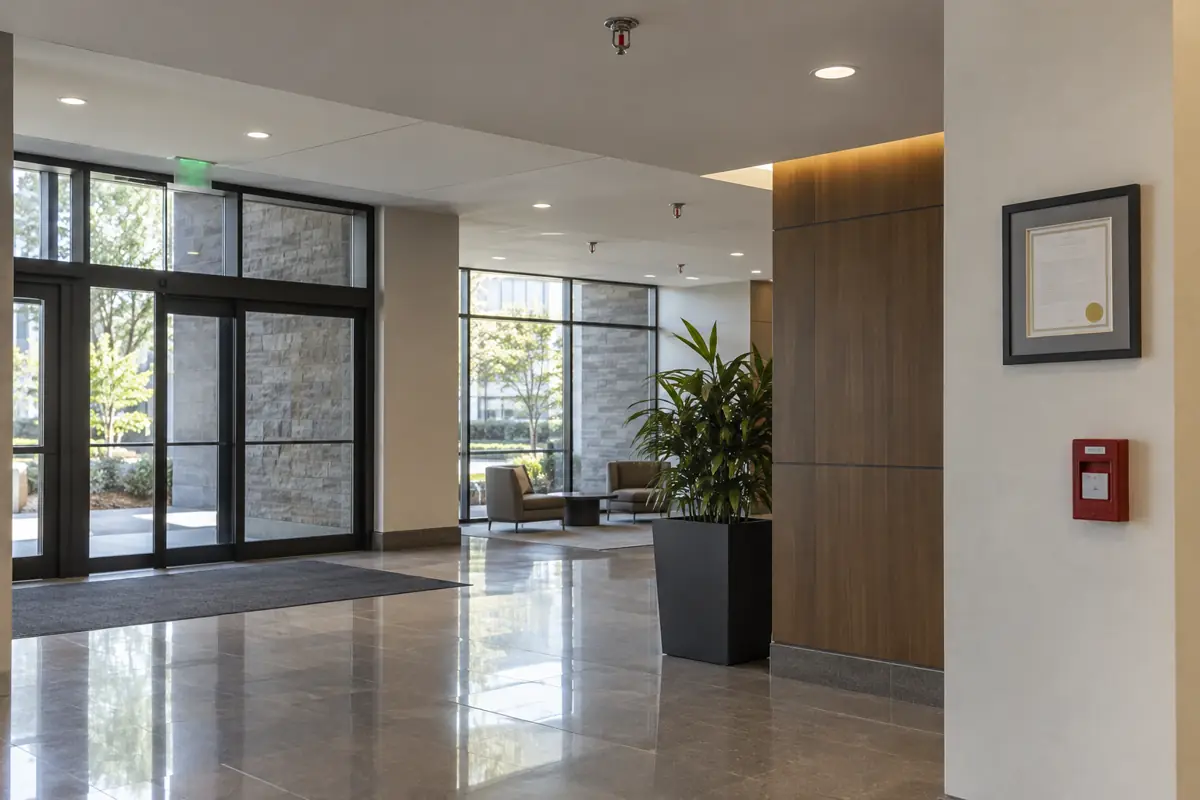
Section 111 says a building may not be used or occupied, and its occupancy classification may not change, until the building official issues a certificate of occupancy. The certificate states the permit number, address, owner, the portion of the building covered, the code edition the permit was issued under, the use and occupancy classification and the type of construction. A certificate of occupancy is not the same as the architect's certificate of substantial completion, which is a contract milestone between owner and builder.
The contract milestone, its G704 certificate and the Florida repose rule that now runs from the certificate of occupancy are explained in our guide to substantial completion in construction.
The 13 items a Florida certificate must show, temporary certificate terms and city rules are covered in our certificate of occupancy guide.
Private provider plan review and inspections
Florida lets owners and their contractors hire a private provider to perform plan review, inspections or both under Fla. Stat. 553.791. The provider, or its duly authorized representative, must be a licensed engineer or architect or hold a building code certificate under Chapter 468. The local building official keeps authority to audit the provider's work and issues the permit and certificate of occupancy.
- Faster completeness review. The building official may check private provider submissions for completeness only and must flag missing documents within 10 business days, or the permit is deemed approved and must be issued the next business day.
- Lower fees. On a commercial project, the local agency must reduce the permit fee by at least 25% of the portion attributable to the plan review or inspection services the private provider performs.
- Notice before inspections. The owner or contractor must notify the building official in writing at permit application, or by 2 p.m. two business days before the first scheduled inspection, that a private provider will inspect.
- Records. The provider must post each completed inspection record and give it to the building official within 4 business days.
- Audits. The building official may audit the provider's work and must give the provider notice at least 5 business days before an audit.
Private providers cost money, so the trade is the provider's fee against the permit fee reduction and the time saved. They are most useful on projects where review time drives the schedule. The Florida Building Commission has published proposed private provider forms based on 2026 legislation, so confirm the current forms with the provider and the department.
Getting your permit on schedule
The fastest permits start with complete drawings, current product approvals and a builder who knows the local department. Build permit time into your budget and schedule using our cost per square foot guide. CB&C can introduce licensed builders for new commercial construction and renovations. All owner guides are on the guides hub.
Frequently asked questions
Do I need a permit for a commercial renovation in Florida?
Almost always. Section 105.1 of the Florida Building Code requires a permit to construct, enlarge, alter, repair, move, demolish or change the occupancy of a building, or to install or alter regulated electrical, gas, mechanical or plumbing systems. Only the limited work listed in Section 105.2 and local ordinances is exempt.
How long does commercial plan review take in Florida?
For a nonresidential building under 25,000 square feet reviewed by local staff, Fla. Stat. 553.792 requires a decision within 60 business days of a complete application, unless you waive the deadline in writing. Correction cycles, other agency approvals and larger buildings add time.
What happens if the building department misses the deadline?
Under Fla. Stat. 553.792, the permit fee is reduced by 10% for each business day late, unless the delay is caused by the applicant, extended by agreement or due to extraordinary circumstances, or the department sent a timely written notice of code deficiencies.
Which Florida counties are in the High-Velocity Hurricane Zone?
Broward and Miami-Dade. The Florida Building Code applies its strictest wind provisions there, and exterior products generally need approvals rated for the zone.
What is a private provider?
A licensed engineer, architect or certified building code professional hired by the owner or contractor under Fla. Stat. 553.791 to perform plan review, inspections or both. On commercial projects the local permit fee must be reduced by at least 25% of the portion for the services the provider performs.
Do I need a Notice of Commencement?
In Florida, yes for most improvements. The owner records it before work starts and posts a copy on site, and the building department needs a copy before the first inspection when the direct contract exceeds $5,000.
Can I occupy the building before the certificate of occupancy?
Not without a certificate. Section 111 of the Florida Building Code prohibits use or occupancy, or a change of occupancy, until the building official issues a certificate of occupancy, but Section 111.3 lets the official issue a temporary certificate of occupancy for part or all of a building before the work is complete. See our certificate of occupancy guide for temporary certificate terms.
When does a commercial permit expire?
Under Section 105.4.1 of the Florida Building Code, a permit becomes invalid if work does not start within 6 months of issue or stops for 6 months. An approved inspection within 180 days shows the work is in active progress.
Can I pull the permit myself as the owner?
Only for commercial buildings costing up to $75,000, for your own occupancy or use and not for sale or lease, under the owner-builder exemption in Fla. Stat. 489.103. Larger projects need a licensed contractor.
Sources
- [1] The Florida Legislature. Florida Statutes 553.792, Building permit application to local government. Accessed 2026-10-07.
- [2] The Florida Legislature. Florida Statutes 553.791, Alternative plans review and inspection. Accessed 2026-10-07.
- [3] International Code Council / Florida Building Commission. 2023 Florida Building Code, Building, 8th Edition, Chapter 1 Scope and Administration. Accessed 2026-10-07.
- [4] The Florida Legislature. Florida Statutes 713.13, Notice of commencement. Accessed 2026-10-07.
- [5] The Florida Legislature. Florida Statutes 713.135, Notice of commencement and applicability of lien. Accessed 2026-10-07.
- [6] Miami-Dade County. Building and Permits (Regulatory and Economic Resources). Accessed 2026-10-07.
- [7] Broward County. Building Code Division. Accessed 2026-10-07.
- [8] Broward County. Board of Rules and Appeals. Accessed 2026-10-07.
- [9] Palm Beach County. PZB Building Division. Accessed 2026-10-07.
- [10] City of Tampa. Construction Services. Accessed 2026-10-07.
- [11] City of Orlando. Permits and Inspections. Accessed 2026-10-07.
- [12] City of Jacksonville. Commercial permits, Building Inspection Division. Accessed 2026-10-07.
- [13] The Florida Legislature. Florida Statutes 489.119, Business organizations; qualifying agents. Accessed 2026-10-07.
- [14] The Florida Legislature. Florida Statutes 489.103, Exemptions. Accessed 2026-10-07.
- [15] The Florida Legislature. Florida Statutes 553.71, Definitions. Accessed 2026-10-07.
- [16] Florida Building Commission. Florida Building Commission home page (8th Edition effective date). Accessed 2026-10-07.
- [17] Florida Building Commission. 2026 Florida Building Code development process. Accessed 2026-10-07.
- [18] International Code Council / Florida Building Commission. 2023 Florida Building Code, Building, 8th Edition, Chapter 2 Definitions. Accessed 2026-10-07.
- [19] Florida Department of Business and Professional Regulation. Construction Industry Licensing Board licensee extract (CONSTRUCTIONLICENSE_1.csv). Accessed 2026-10-03.
- [20] The Florida Legislature. Florida Statutes 489.105, Definitions. Accessed 2026-10-07.
- [21] Miami-Dade County. Product Approval Forms (Product Control). Accessed 2026-10-07.