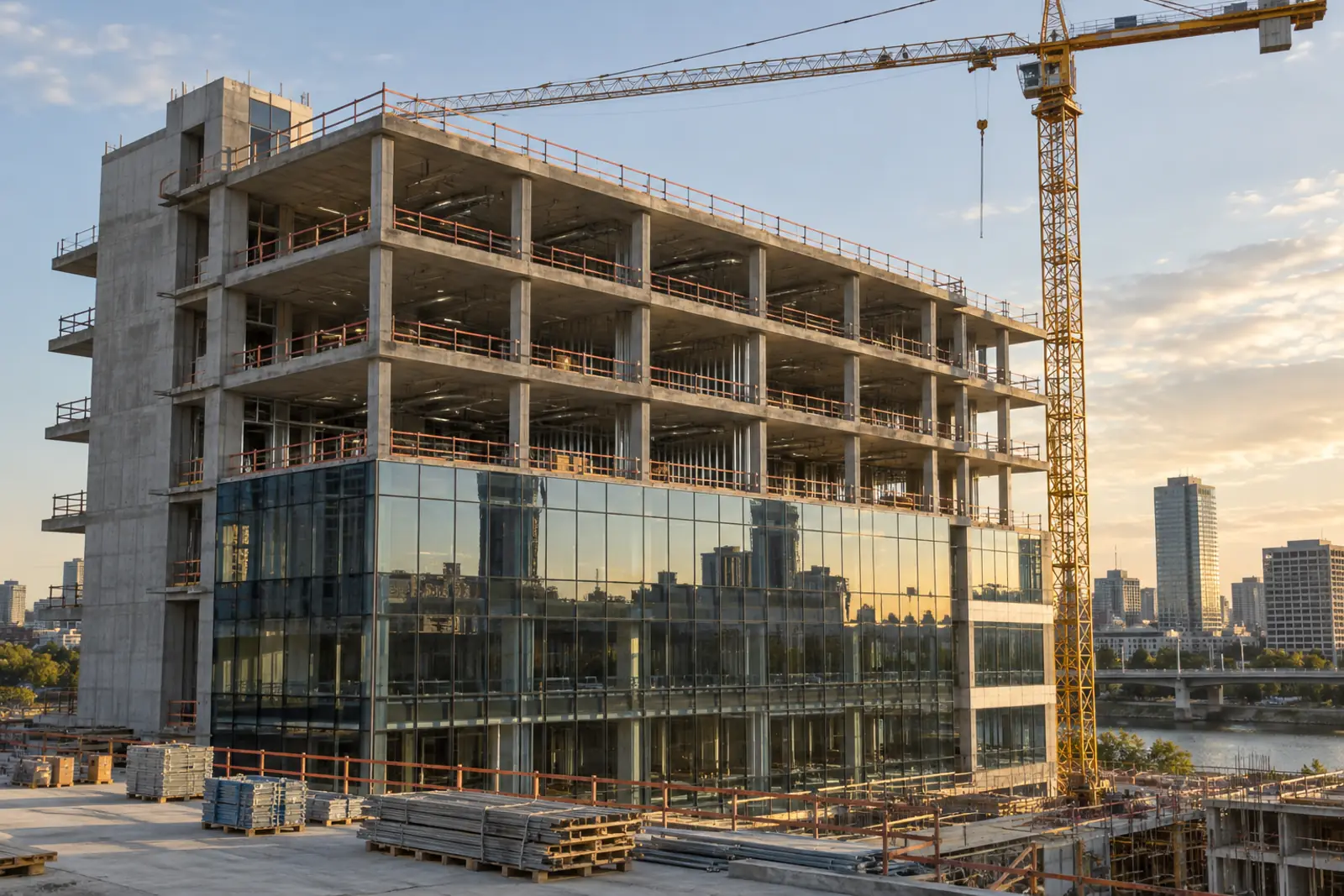
Commercial Construction Guides for Owners, Tenants and Builders
These commercial construction guides cover the decisions an owner makes before and during a project: budgeting by the square foot, choosing a contractor, the phases from feasibility to closeout, design-build versus design-bid-build, tenant improvement allowances and Florida building permits. Each guide cites named public sources and links to CB&C research data.
How to use these commercial construction guides
Commercial construction is a sequence of decisions, and most expensive mistakes come from making one of them too late. These guides follow that sequence. Start with the guide that matches where your project is today, then read forward: a budget leads to a delivery method, a delivery method decides who you hire first, and the builder you hire will steer the permit and the schedule.
Every guide is written for owners, developers and tenants rather than for the trade. We explain terms the first time we use them, show where the law or a published standard sets a rule, and keep advice separate from facts. Where a figure appears, it comes from a named source you can open, listed at the bottom of the page. Where good public data does not exist, such as a national average for soft costs, we say so instead of filling the gap with a guess. Our editorial standards explain how we check sources.
Commercial Builders & Contractors is a matching service, not a contractor. We do not build, sign construction contracts or sell materials, and owners pay nothing to use the service; some builders pay for introductions. The guides are written to be useful whether or not you ever ask us for an introduction, and you can read why the site exists on the purpose of this website.
Owner guides
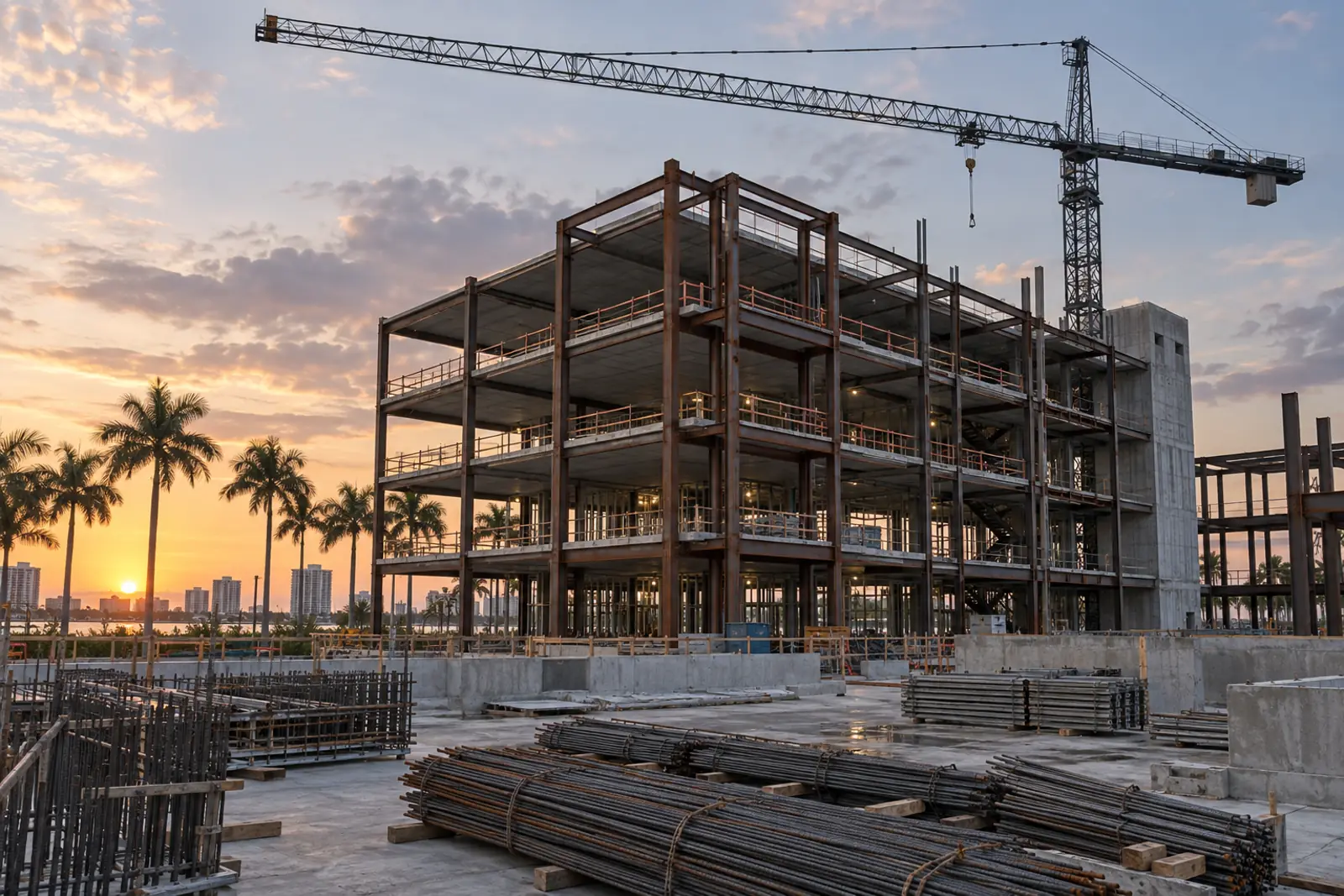
Commercial construction cost per square foot
Published cost ranges by building type, the price data that moves them, soft costs, contingency and a method for building your own budget range.
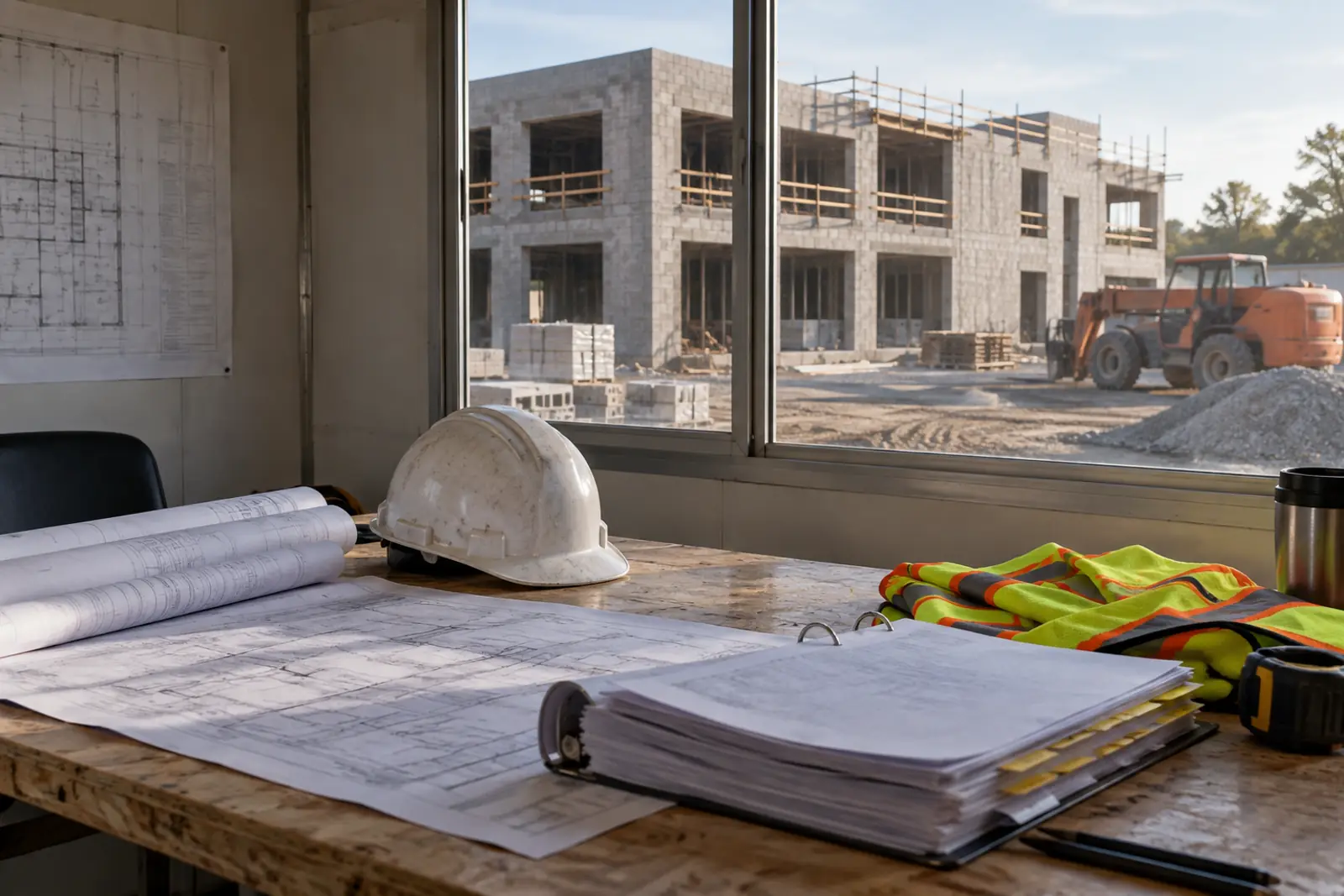
How to choose a commercial contractor
License, insurance, bonding and OSHA checks, reference questions, bid levelling, red flags and a scored evaluation template.
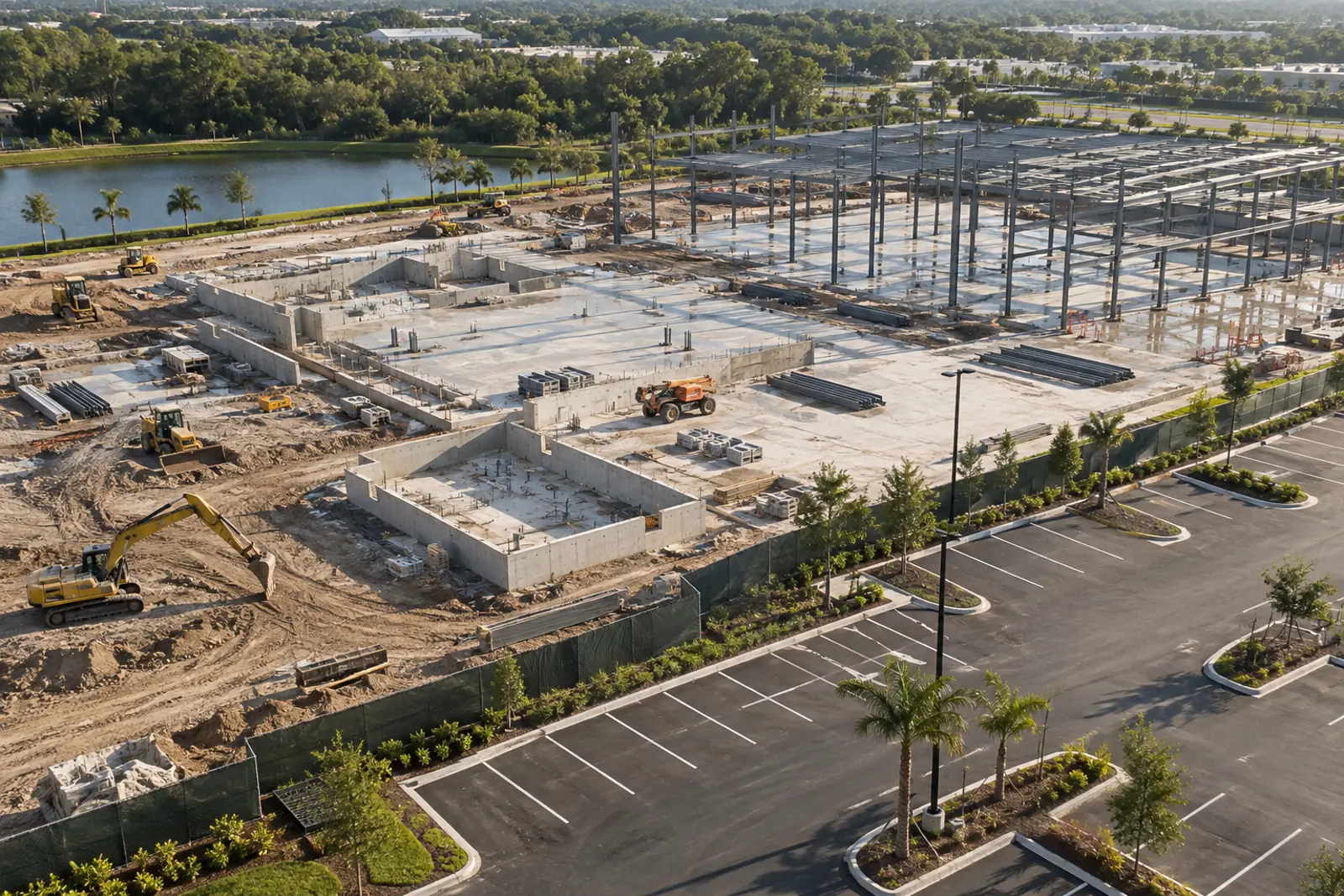
The commercial construction process
Seven phases from feasibility to closeout, who does what, the AIA forms and permits at each step and what drives the timeline.
Design-build vs design-bid-build
How the delivery methods divide risk, what published research found on cost and speed, and where CM at risk fits.
Tenant improvement allowance
What TI money covers, how it is negotiated, turnkey vs allowance vs free rent, the IRS rules that apply and a worked example.
Commercial building permits
Florida's plan review deadlines, hurricane zone rules, Notice of Commencement, inspections, certificates of occupancy and private providers.
Contract, payment and closeout terms
Plain-language guides to the documents, clauses and milestones that decide who pays what and when on a commercial job, each checked against the statute, code or standard form it describes.
AIA Contract Documents
Which AIA agreement and form fits each delivery method, what each one governs, current editions and what licenses cost.
AIA A201-2017 General Conditions
The general conditions most AIA agreements rely on: the deadlines, claims steps, insurance changes and what owners commonly edit.
AIA G702 Application and Certificate for Payment
How the pay application works line by line, how the G703 continuation sheet feeds it and what gets an application sent back.
Schedule of Values
How contractors break the contract sum into billable lines, how front-loading shows up and how owners and lenders review it.
Cost-Plus Contract
Fixed fee, percentage fee and guaranteed maximum price, what is reimbursable, audit rights and the federal rules on fee caps.
Bid Bond
How bid bonds work on federal and state public work, how the penal sum is figured and why bids get rejected over bonds.
Builder's Risk Insurance for Commercial Projects
Who buys builder's risk under the AIA forms, what public owner policies cover and exclude, and how premiums are set.
Lien waiver
Conditional and unconditional waivers, progress and final forms, and the states that prescribe their own wording.
Notice of Commencement in Florida
When a Florida owner must record the notice, what it must contain, what recording costs and how it prevents paying twice.
Preconstruction Services
What a builder delivers before construction starts, by design phase, how the service is bought and how it is priced.
Construction Management Companies
What construction management firms do, how agency and at-risk managers are paid in public contracts and how to vet one.
Value Engineering in Construction
How a value engineering study works, the federal sharing rules for contractor proposals and how to test a claimed saving.
RFI in Construction
When to use a request for information, response times in contracts and specs, and what the research says about RFI volume.
Substantial Completion in Construction
What the milestone means under AIA A201, the certificate that records it and the deadlines, warranties and retainage it starts.
Punch List in Construction
Who prepares the punch list, how holdbacks for open items work and the statutes that set punch list deadlines.
As-Built Drawings
As-built versus record drawings, who prepares them under AIA and federal specs, and the deadlines and formats owners can require.
Certificate of Occupancy for Commercial Buildings
What the building code requires before occupancy, temporary certificates and what Florida cities charge and allow.
Building Commissioning
When the energy code requires commissioning, the phases and deliverables, and what published studies show about cost and savings.
Property Condition Assessment (PCA)
What a property condition assessment covers under the ASTM standard, lender requirements, report timing and fees.
Phase 1 Environmental Site Assessment
How the federal all appropriate inquiries rule and the ASTM standard shape a Phase I, its shelf life and SBA lender rules.
Types of Construction Contracts
Lump sum, cost-plus, guaranteed maximum price, time and materials and unit price, with who carries the risk and the forms for each.
Retainage in Construction
How retainage is held and released month by month, the caps states set, flow-down to subcontractors and the federal rule.
General Conditions in Construction
The two meanings of general conditions, the contract rulebook and site overhead, with public records of what owners paid.
Construction Contingency
Owner, contractor and design contingency, the percentages public owners budget at each stage and who keeps unspent money.
Submittals in Construction
Shop drawings, product data and samples: who reviews them, how long review takes in real specs and a log you can copy.
AIA A101
The AIA owner-contractor agreement for a fixed price: every blank to fill in, what happens if you leave one empty and a filled example.
Commercial Construction Loan
How construction loans fund a commercial building: loan limits, owner equity, draws, SBA options and a worked budget.
Change Order in Construction
How change orders work under the standard AIA forms, markup limits in public contracts and a log you can copy.
SBA 504 Loan
The SBA 504 loan for owner-occupied buildings: the split between bank, lender and owner, limits, fees and a worked example.
Notice to Proceed in Construction
The owner's written order to start: how it sets the commencement date, limited vs full notices and what goes in the letter.
Construction Draw Schedule
How lenders release loan money during construction: the draw package, inspections, holdbacks and a month-by-month example.
Certified payroll
Weekly wage reports on public jobs: who files, the federal form, the statement of compliance and state filing rules.
Commercial kitchen guides
The code sections, listings and sizing rules behind a commercial kitchen, from the health department plan review to the hood, sinks and floor.
Commercial Kitchen
What legally makes a kitchen commercial, which Food Code edition your state enforces and which code governs each system.
Commercial Kitchen Design
Kitchen layout and workflow, hand sink placement rules, plan review submittals and the sizing formulas reviewers use.
Commercial Kitchen Equipment by Station
Kitchen equipment by station with its listing standards and the gas, power, water and drain it needs before rough-in.
Commercial Kitchen Hood
Type I and Type II hoods, the mechanical code airflow table, duct and makeup air sizing, listings and clearances.
Commercial Kitchen Fire Suppression System
How kitchen suppression systems work, the fire and mechanical code rules, inspection intervals and local variations.
Commercial Kitchen Hood Cleaning
How often the fire code requires hood inspection and cleaning, what the label and report must show and who may clean.
Commercial Kitchen Sink Requirements
Three-compartment, hand, prep and mop sinks mapped to their Food Code and plumbing code sections, with sizing math.
Grease Trap and Grease Interceptor Guide
Grease traps versus interceptors, when the plumbing code and city rules require each, sizing, pump-out rules and costs.
Commercial Kitchen Flooring
Food Code floor rules, coving and slope requirements, slip resistance classes and how floor systems handle heat.
Commissary Kitchen
What a commissary kitchen is, who must use one under state and city rules, and how renting compares with building one.
Metal and steel building guides
How metal building systems are engineered, bought, insulated and priced, with the code sections and federal price data behind each answer.
Pre-Engineered Metal Building
How a pre-engineered metal building system is designed: frames, purlins and girts, the codes behind it and the special inspections.
Metal Building Kits
What a metal building kit includes and leaves out, the design data the drawings must show, permits, foundations and erection rules.
Red Iron Building
Red iron framing versus tubular steel: the steel grades, strength, code path and when each one fits the job.
Steel Building Insulation
What the energy code requires for metal building roofs and walls by climate zone, and which insulation assemblies pass.
Steel Building Prices
What moves steel building prices: the federal price indexes, escalation clauses, tariffs and how to read a package quote.
Tilt-Up Construction
How tilt-up walls are cast and lifted, the codes and OSHA rules behind each step, and how it compares with other wall systems.
Trades and building systems
Cost, code and hiring guides for the systems that most often decide a commercial budget: roofing, HVAC, plumbing, fire sprinklers and painting.
Flat Roof Replacement Cost
What low-slope roof replacement costs from public awards and bids, tear-off versus re-cover rules and the energy code trigger.
TPO Roofing Cost
Installed TPO roof cost from public bids, how thickness and attachment change the price and where the money goes layer by layer.
Commercial HVAC System
Rooftop units, split systems, VRF and chillers compared, the federal efficiency and refrigerant rules and installed cost per ton.
Commercial Plumbing Contractor
What a commercial plumbing contractor does, the state license classes to check, insurance and bonding, and public hourly rates.
Fire Sprinkler System Cost
Sprinkler cost per square foot for new work and retrofits, when the building code requires sprinklers and the water supply costs.
Commercial Painting
Commercial painting cost from public bids, the specification lines to put in a bid, lead-safe rules and after-hours premiums.
3 Phase Power
What three-phase power is, the service voltages buildings get, a worked load example and utility upgrade costs.
Commercial Elevator Cost
What a commercial elevator costs to install or modernize, when one is required, and inspection and upkeep costs.
Site work, foundations and jobsite setup
What it costs and what the code requires before the building goes up: clearing, soils, slabs, temporary offices and factory-built options.
Land Clearing Cost per Acre
Commercial land clearing cost per acre from public bids, what moves the price and the stormwater permits that come with it.
Geotechnical Report
What a geotechnical report contains, when the building code requires one, how to read it, and its cost and timeline.
Concrete Slab Cost Per Square Foot
Commercial slab-on-grade cost per square foot from public bids, the specification choices that move it and worked examples.
Construction Office Trailers
Jobsite office trailer sizes, rent versus buy prices from public contracts, setup costs and the permit and code points.
Modular Construction
How commercial modular buildings are built and approved, the state programs and standards behind them, and cost and schedule evidence.
Retention Pond
Retention versus detention ponds, when stormwater rules require one, how they are sized and what they cost to build and keep.
SWPPP
When a construction site needs a stormwater pollution prevention plan, what it must contain, the deadlines and the cost.
Parking Space Dimensions
Stall and drive aisle sizes from named city codes, angled layouts, parking ratios by use and cost per space.
Accessibility and building code guides
The building code and accessibility rules owners meet on every commercial project, each answered from the standard itself with dimensioned diagrams.
ADA Ramp Requirements
Every ramp dimension in the accessibility standards: slope, rise, width, landings, handrails and edge protection.
ADA Bathroom Requirements
Accessible restroom layout: turning space, toilet and grab bar placement, sinks, mirrors, doors and fixture counts.
ADA Parking Requirements
How many accessible and van spaces a lot needs, space and aisle dimensions, signs, slopes and restriping rules.
ADA Counter Height Requirements
Counter, sink and work surface heights for sales, check-out, dining and break rooms, with knee and reach clearances.
ADA Door Width
Accessible door clear width, maneuvering clearances, thresholds, hardware, opening force and retrofit costs.
Occupancy Classification
The building code occupancy groups, how mixed-use buildings are classified and how the group sets exits and sprinklers.
Types of Construction
The five building code construction types, the fire ratings each requires and how type sets height and floor area.
Fire Rated Wall Guide
Fire walls, fire barriers and fire partitions: where each is required, how rated walls are built and what they cost.
Emergency Lighting Requirements
Where emergency lights and exit signs are required, the light levels and test schedule, and installed costs.
Handrail Height
Handrail and guard heights under the building code, the accessibility standards and both OSHA rules, side by side.
Stair Riser Height
Commercial stair riser, tread, width and headroom rules, with a worked riser calculation and inspection tolerances.
ADA Signage Requirements
Which signs need raised characters and braille, mounting height and location, and what compliant signs cost.
Fire Extinguisher Requirements for Commercial Buildings
Where extinguishers are required, travel distance and mounting height rules, inspections and a placement example.
Knox Box
When the fire code requires a key box, mounting rules across fire departments, ordering steps and cost.
Occupant Load Factor
How to calculate occupant load from floor area, with worked examples showing the exits, egress width and restrooms it sets.
Fire Separation Distance
How the distance to a lot line or street is measured and the wall ratings, opening limits and projections it controls.
Commercial Door Sizes
Standard commercial door sizes, clear width math, frame gauges, fire door limits and overhead door sizes.
Special Inspections Under IBC Chapter 17
Third-party inspections under the building code: who hires and pays, the statement of special inspections and what it costs.
Hot Work Permit
When welding and cutting need a permit, the zone rule, fire watch timing and how to fill the permit in field by field.
Bonds and insurance
How bonds and insurance protect an owner on a commercial job, what public owners require and what the paperwork must say.
Performance Bond
How performance and payment bonds work, when federal and state law requires them, how a claim runs and what bonds cost.
General Liability Insurance for Contractors
What a contractor's general liability policy covers and excludes, the limits owners require and what moves the premium.
Additional Insured in Construction
Why the endorsement, not the certificate, adds an owner to a contractor's policy, the standard forms and state limits.
Design, estimating and scheduling
How design teams are paid, what the drawing sets contain, and how to build an estimate and a schedule you can defend.
Construction Documents
Drawings and specifications by design phase, what each set contains, owner approvals and the fee share per phase.
MEP Engineering
What mechanical, electrical and plumbing engineers deliver, when a stamp is required and what MEP design costs.
Structural Engineer Cost for Commercial Buildings
What a structural engineer costs for design, assessments and special inspections, with public fee and rate records.
How to Estimate Construction Costs
A step-by-step estimating method by design stage, where to get unit prices legitimately and how markups add up.
Construction Schedule
How a commercial construction schedule is built, the critical path, typical durations and a template you can copy.
Planning and zoning approvals
The approvals that come before a building permit: site plan review, conditional uses and variances, with the statutes, fees and timelines behind each.
Site Plan
What a commercial site plan must show for zoning review, who seals it, review clocks set by law and published fees.
Conditional Use Permit
How a conditional use permit works, the hearing and findings, fees across cities and how often approvals are granted.
Zoning Variance
Area and use variances, the hardship test in state law, board timelines and fees, and what evidence boards accept.
Setback Requirements for Commercial Buildings
Front, side and rear setbacks for commercial lots: how they are measured, what may project and how codes compare.
Materials and specifications
Sizes, grades and costs for the materials that make up a commercial building, each tied to the standard that defines it.
Rebar Sizes
The full rebar size chart with diameters, areas and weights, grades, cover and lap rules, and current bid prices.
Concrete PSI
Concrete strength classes, the code minimums by exposure, how cylinders are tested and what higher strength costs.
Concrete Curing Time
How long concrete takes to cure and gain strength, when to load, strip forms or install flooring, and weather rules.
CMU Block Sizes
Concrete block nominal and actual sizes, weights, fire ratings by thickness and a worked wall quantity estimate.
Metal Stud Sizes Chart
Steel stud and track sizes decoded, gauge and thickness, limiting wall heights and when to use each.
Drywall Types for Commercial Work
Commercial gypsum board types with their standards, where the code requires each, and finish levels.
Curtain Wall Guide
Stick-built and unitized curtain walls versus storefront, the performance tests, energy code limits and cost records.
Drop Ceiling Cost for Commercial Buildings
Suspended ceiling cost per square foot from public bids, tile acoustic ratings, seismic bracing and a worked example.
Epoxy Flooring Cost per Square Foot
Resinous floor cost per square foot by system from public bids, the moisture tests and what moves the price.
Concrete Slump Test
How the slump test is run and read, typical slumps by element, tolerances and what to do when a truck fails.
W Beam Sizes
A wide flange size chart: how to read a W designation, common sizes, W vs S vs HP shapes and price per foot.
Cinder Block Wall Cost
Installed price of concrete block walls per square foot and per linear foot, from public bid records.
Polished Concrete Cost per Square Foot
Polished concrete floor prices from public awards, gloss and exposure levels, slip resistance and a worked estimate.
Guides by building type
What changes in the code, cost and approval path for specific commercial building types.
Healthcare Construction
Hospital and inpatient construction: FGI Guidelines, infection control, interim life safety and state plan review.
Dental Office Construction
What changes in a dental build-out: medical gas categories, vacuum and air, amalgam separators and x-ray shielding.
Hotel Construction
Hotel new builds and brand renovations: cost per room, the brand approval process, code sections and accessible room counts.
Church Construction
Church building codes for assembly occupancy, zoning protections under federal law, financing paths and cost escalation.
Self Storage Construction
Self storage building types, sprinkler and fire area rules, accessible units, filed development costs and SBA financing.
Office Renovation
Office renovation cost per square foot by scope, the existing-building code levels, the accessibility rule and a worked budget.
Cost to Build a Car Wash
What car washes cost to build by format, from public project registrations, plus the rules that drive cost.
Which guide to read first
If you are not sure where to start, find your situation in the table. Each row points to the guide that answers the question owners most often ask at that stage.
| Your situation | Question you are asking | Start with |
|---|---|---|
| Idea or site under review | Can we afford this building? | Cost per square foot |
| Budget set, no team yet | Who do we hire first, and under what contract? | Design-build vs design-bid-build |
| Bids or proposals coming in | Which builder should we pick? | How to choose a commercial contractor |
| Negotiating a lease | How much should the landlord contribute to the build-out? | Tenant improvement allowance |
| Drawings nearly done | How long will the permit take, and what inspections follow? | Commercial building permits |
| Any stage | What happens next, and who is responsible? | Commercial construction process |
Each guide links to the others where the topics meet.
Articles for contractors
Builders read this site too. These articles are written for people working in the trade, from those starting a career to firms bidding commercial work. If you run a licensed commercial firm, for contractors explains how introductions work.
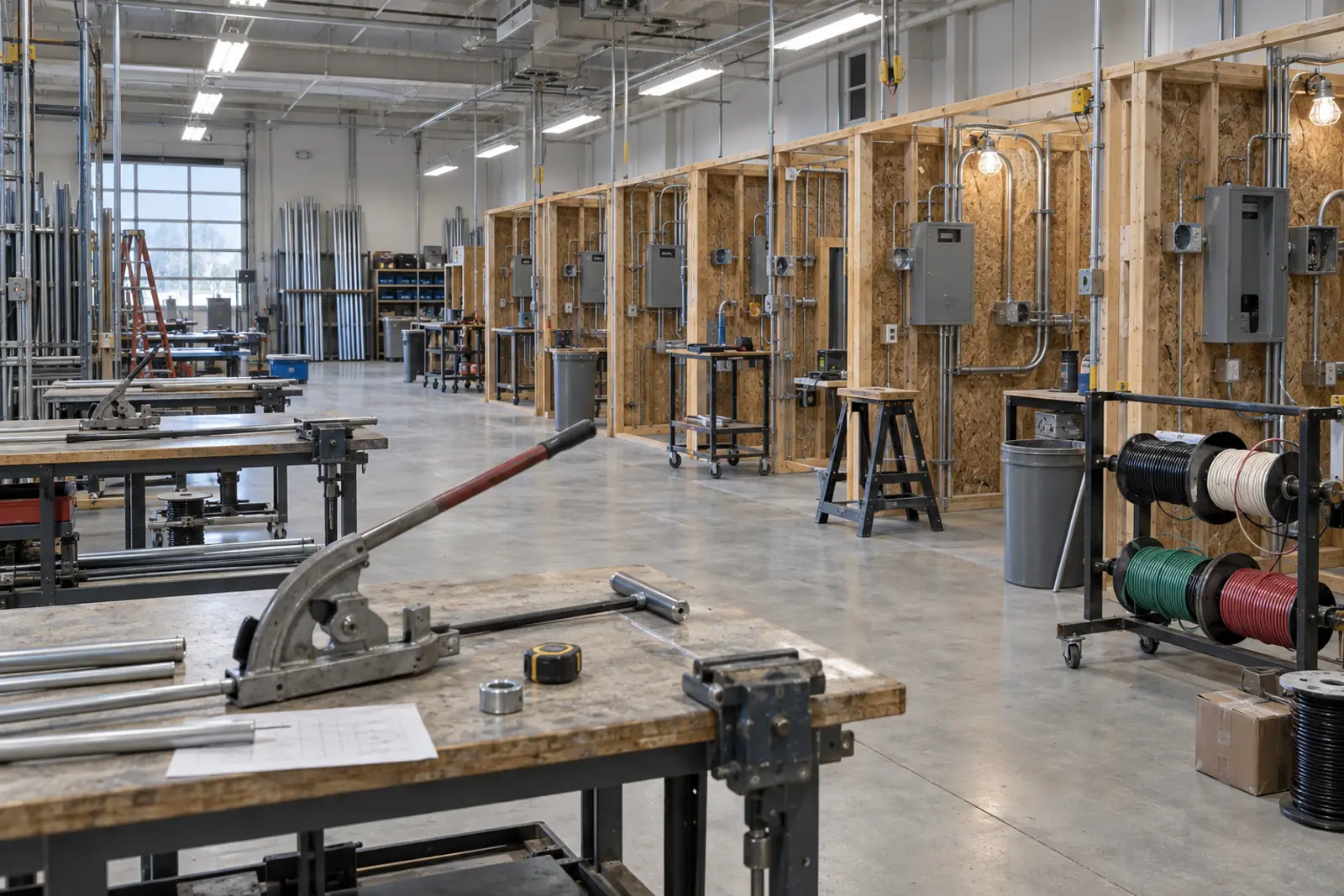
Construction careers
Paths into commercial construction, the trades and roles involved and how people move up.

How to win commercial construction bids
What owners look for when they compare bids, and how contractors can present theirs.
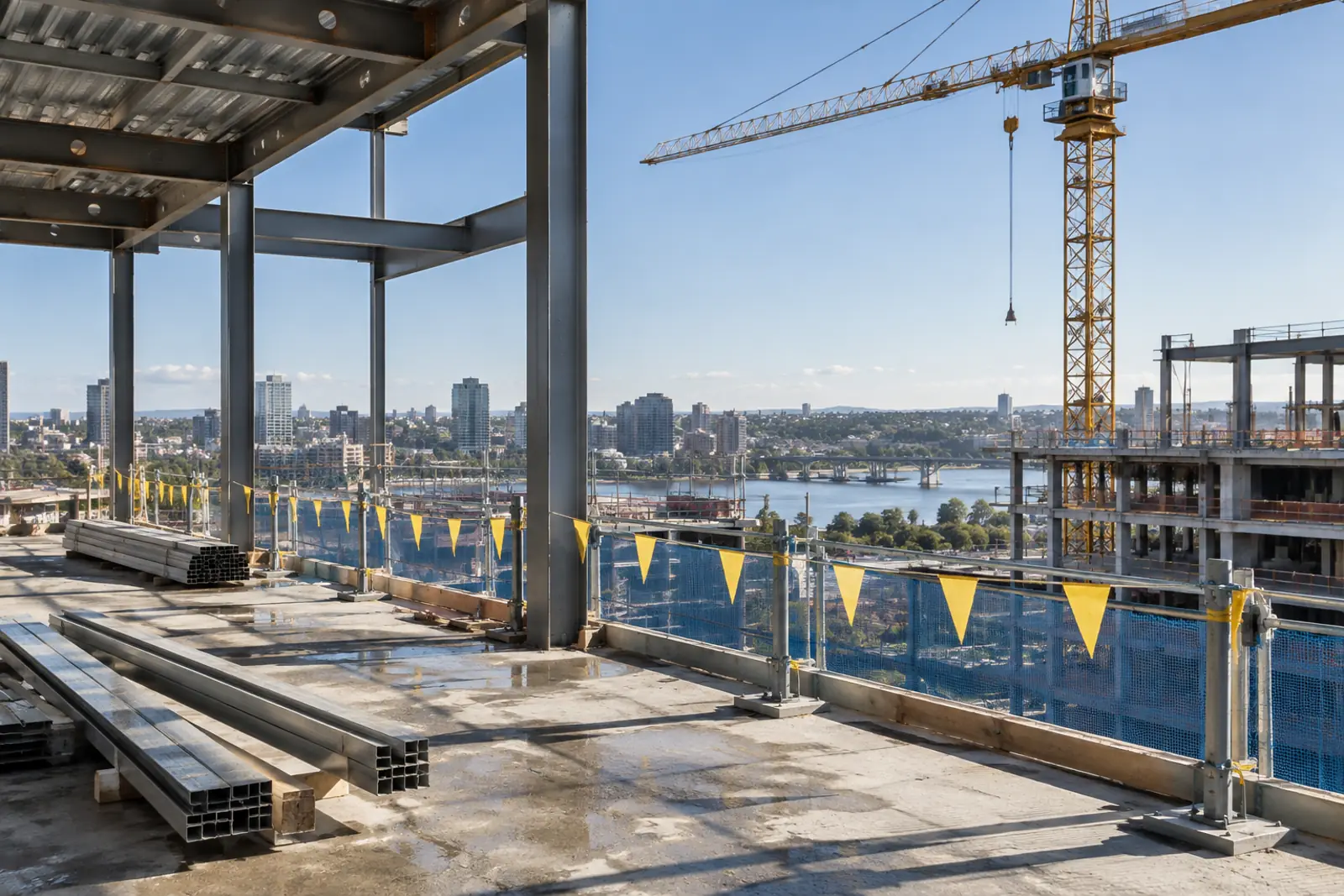
Construction safety
The hazards behind most citations on commercial sites and what a working safety program includes.
From the blog
Shorter pieces on specific topics. The full archive is on the blog.
How to compare construction bids
A step-by-step method for putting bids on the same basis before you choose.
Construction jobsite culture
What keeps good crews together, and why it matters to the owner's schedule.
High-velocity hurricane zone construction
What Miami-Dade and Broward's wind rules mean for products, budgets and schedules.
The data behind the guides
The guides draw on CB&C Research reports, which compile public data from the Bureau of Labor Statistics, the Census Bureau, OSHA, state licensing boards and statutes into tables you can download. When a guide quotes a price change, a wage or a citation count, it links to the report and cites the original government source. Browse all reports on the research page, or start with the ones the guides use most.
If you spot an error or an outdated figure in any guide, tell us through the contact page and we will check it against the source. For quick answers to common questions, see the commercial construction FAQ.
Frequently asked questions
Who are these commercial construction guides for?
Mainly for building owners, developers and business tenants planning a commercial project. The contractor articles are written for people in the trade.
Are the guides specific to Florida?
Florida rules, such as permit review deadlines, the High-Velocity Hurricane Zone and the Notice of Commencement, are explained in detail because many of our users build there. The methods for budgeting, choosing a builder and comparing delivery methods apply in any state.
Where do the numbers in the guides come from?
From named sources: government data such as BLS and Census releases, statutes and building codes, and published industry reports. Every guide lists its sources with links, and research-based figures link to the CB&C report that compiled them.
Do the guides give legal or tax advice?
No. They summarize statutes, codes and IRS guidance as facts and flag where you should ask an attorney, tax adviser or design professional about your own project.
How often are the guides updated?
Each guide shows the date it was last updated. We revise them when the underlying data, statutes or codes change, and when readers report errors.
Is CB&C a contractor?
No. CB&C is an independent matching service that introduces project owners to licensed commercial builders. It performs no construction and signs no construction contracts. Owners pay nothing; some builders pay for introductions.
Sources
- [1] U.S. Small Business Administration. 504 loans. Accessed 2026-11-08.